1865 to 1886
1. Sligo childhood
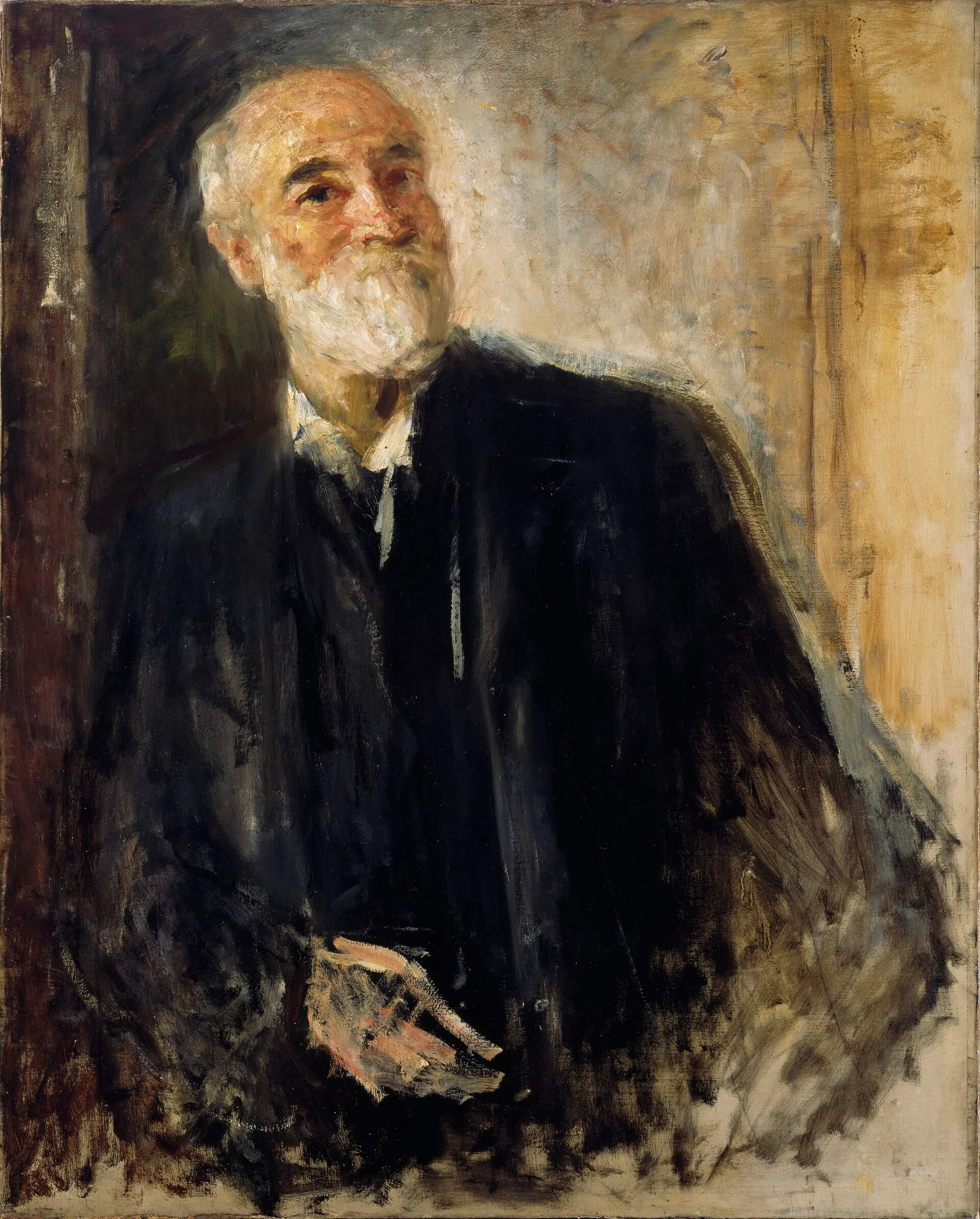
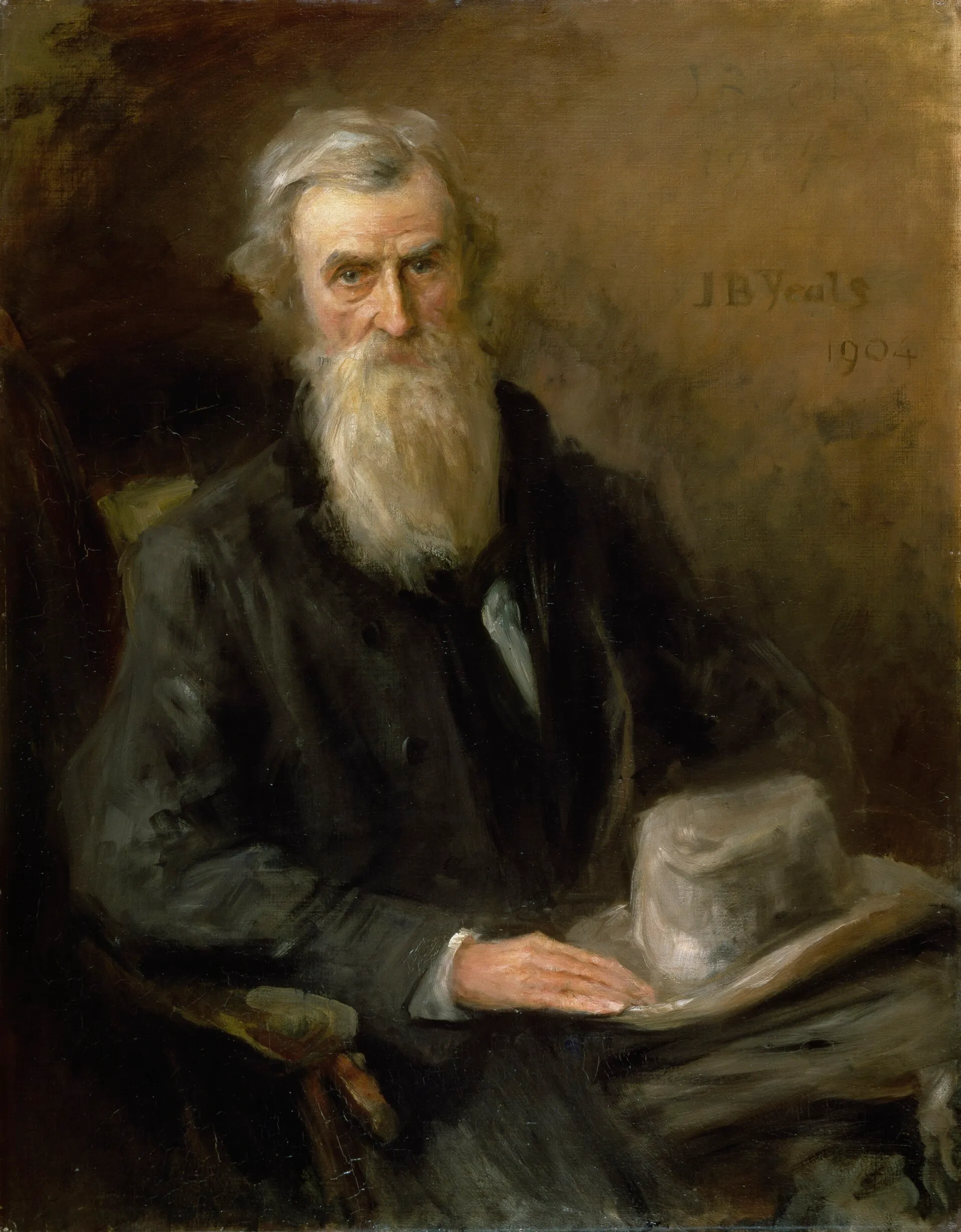
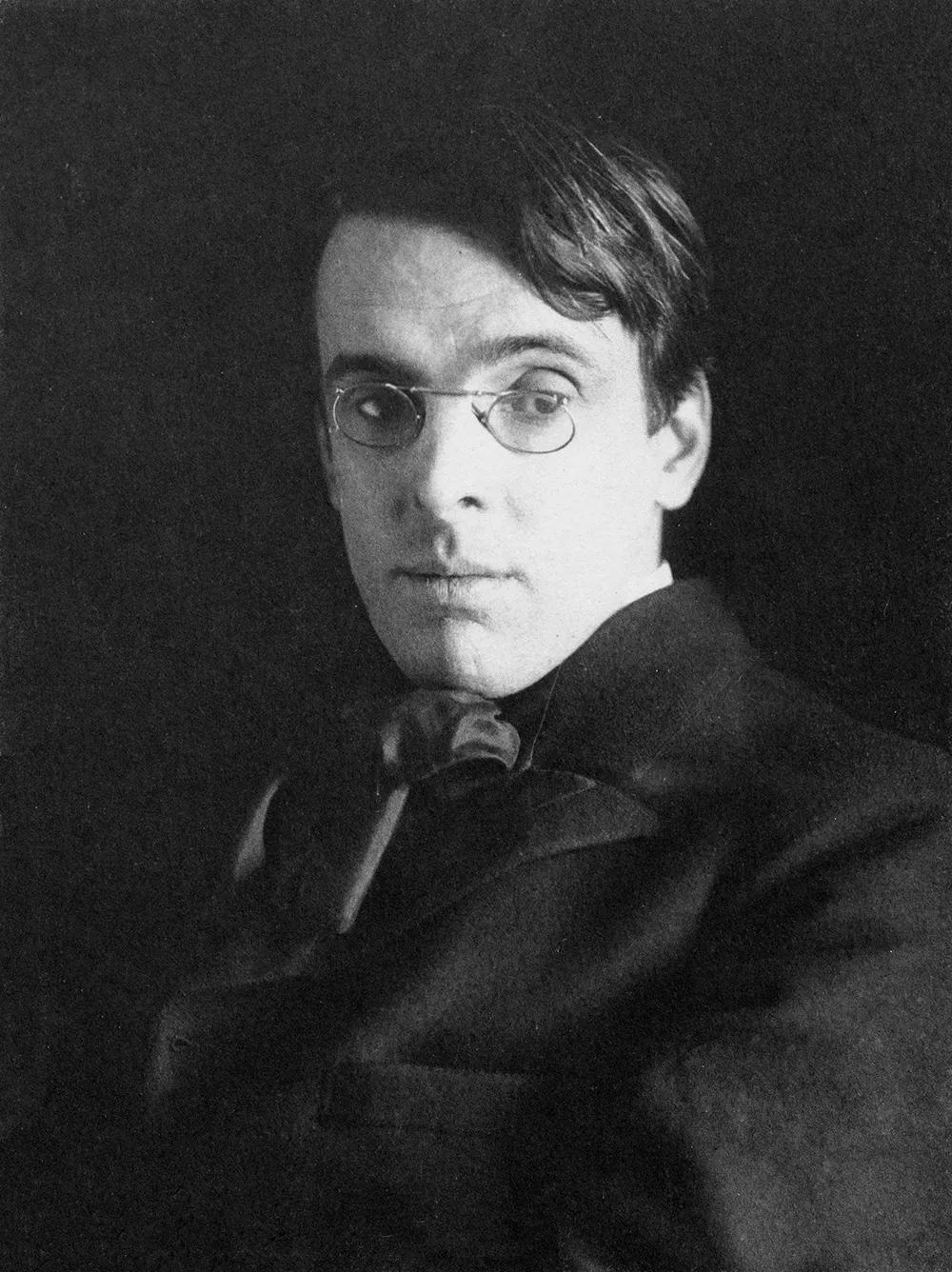
William Butler Yeats was born on 13 June 1865 at Georgeville, 5 Sandymount Avenue, in Dublin. He was the eldest child of John Butler Yeats, a barrister who gave up the law to become a painter, and Susan Pollexfen, whose family were millers and shipowners in Sligo. His sisters Lily and Lolly and his brother Jack came after him. In 1867 his father took the family to London so that he could study painting, and they settled at 23 Fitzroy Road, near Regent's Park.
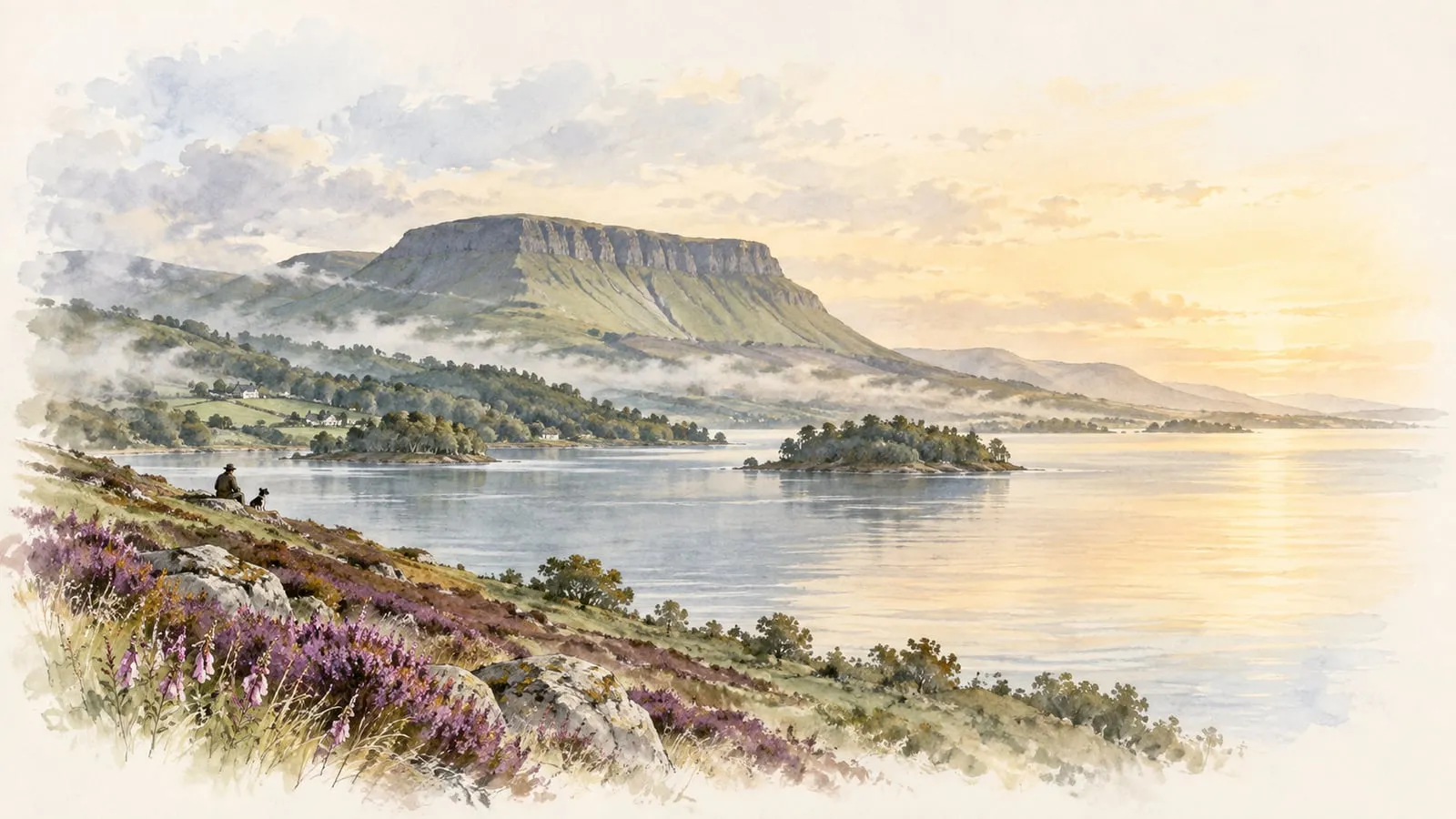
Sligo was the fixed point. His mother was homesick in London and told her children Sligo stories and folk tales. In 1872 she took them to her parents' house, Merville, where they stayed until 1874, and there were long visits after that. Jack was brought up largely by the grandparents. The boys spent summers with their Middleton cousins at Rosses Point, at the mouth of Sligo harbour. Ben Bulben, Knocknarea, Lough Gill and the waterfall at Glencar became the landscape of his imagination, and they stayed in his poems for the rest of his life.
For the world's more full of weeping than you can understand.
School was not a success. He entered the Godolphin School in Hammersmith in 1877 and stayed four years. One report called his work 'only fair' and his spelling 'very poor'. Late in 1880, for want of money, the family came back to Ireland, first to Harold's Cross and then to Balscadden House on Howth Head, where the cliffs and the sea fed his first verse. In 1884 he enrolled at the Metropolitan School of Art in Dublin. There he met George Russell, the painter and mystic who wrote as AE.
The year that mattered was 1885. The Dublin University Review printed his first poems. With Charles Johnston and others he founded the Dublin Hermetic Society, the start of a lifelong study of the occult. He also met John O'Leary, the old Fenian lately home from exile, who turned him towards Irish subjects. In 1886 his father paid for a hundred copies of Mosada, a verse play and his first separate publication. 'The Stolen Child', with its faeries calling a boy away from Sleuth Wood and Glen-Car, shows how early Sligo had become his subject.
1887 to 1897
2. London and the Nineties
By 1887 the family was back in London, and in March 1888 they settled at 3 Blenheim Road in Bedford Park, where they stayed until 1902. Yeats was in his twenties and already deep in the study of the occult. He called on Helena Blavatsky, founder of the Theosophical Society, and joined her Esoteric Section, until he was asked to resign in 1890. In March of that year he was initiated into the Hermetic Order of the Golden Dawn, which MacGregor Mathers had helped to found. The occult was never a passing interest for him. Its symbols run through his work to the end.
He earned what he could by his pen. He edited Fairy and Folk Tales of the Irish Peasantry in 1888, and his first collection, The Wanderings of Oisin and Other Poems, appeared in January 1889. With Edwin Ellis he produced a three-volume edition of William Blake in 1893. The Celtic Twilight, a book of folklore and sketches, many gathered in Sligo, came out the same year and gave its name to a whole movement. In 1890 he and Ernest Rhys founded the Rhymers' Club, whose poets met at the Cheshire Cheese in Fleet Street. Lionel Johnson, Ernest Dowson and Arthur Symons were among them, the poets he later called the 'tragic generation'.
While I stand on the roadway, or on the pavements grey
I hear it in the deep heart's core.
London also gave him his best-known early poem. In Fleet Street in 1888 a sudden memory of Sligo came to him, and out of it grew 'The Lake Isle of Innisfree', printed in the National Observer in December 1890. Innisfree is a small island in Lough Gill, and as a boy he had dreamed of living there like Thoreau. The poem is about exile as much as peace: the speaker hears the lake water while he stands 'on the roadway, or on the pavements grey'. It was collected in 1892 in The Countess Kathleen and Various Legends and Lyrics.
The theatre began to draw him. In March 1894 The Land of Heart's Desire became his first play to be staged, at the Avenue Theatre, in a season managed by Florence Farr with money from Annie Horniman. That May Lionel Johnson took him to tea with his cousin Olivia Shakespear, a novelist. In 1896, the year he took rooms at 18 Woburn Buildings in Bloomsbury, their friendship became a love affair. It ended in 1897, but they stayed close friends until her death. In 1894 he also stayed at Lissadell with the Gore-Booth sisters, Constance and Eva, a visit he would remember in a late elegy.
1889 to 1910
3. Maud Gonne
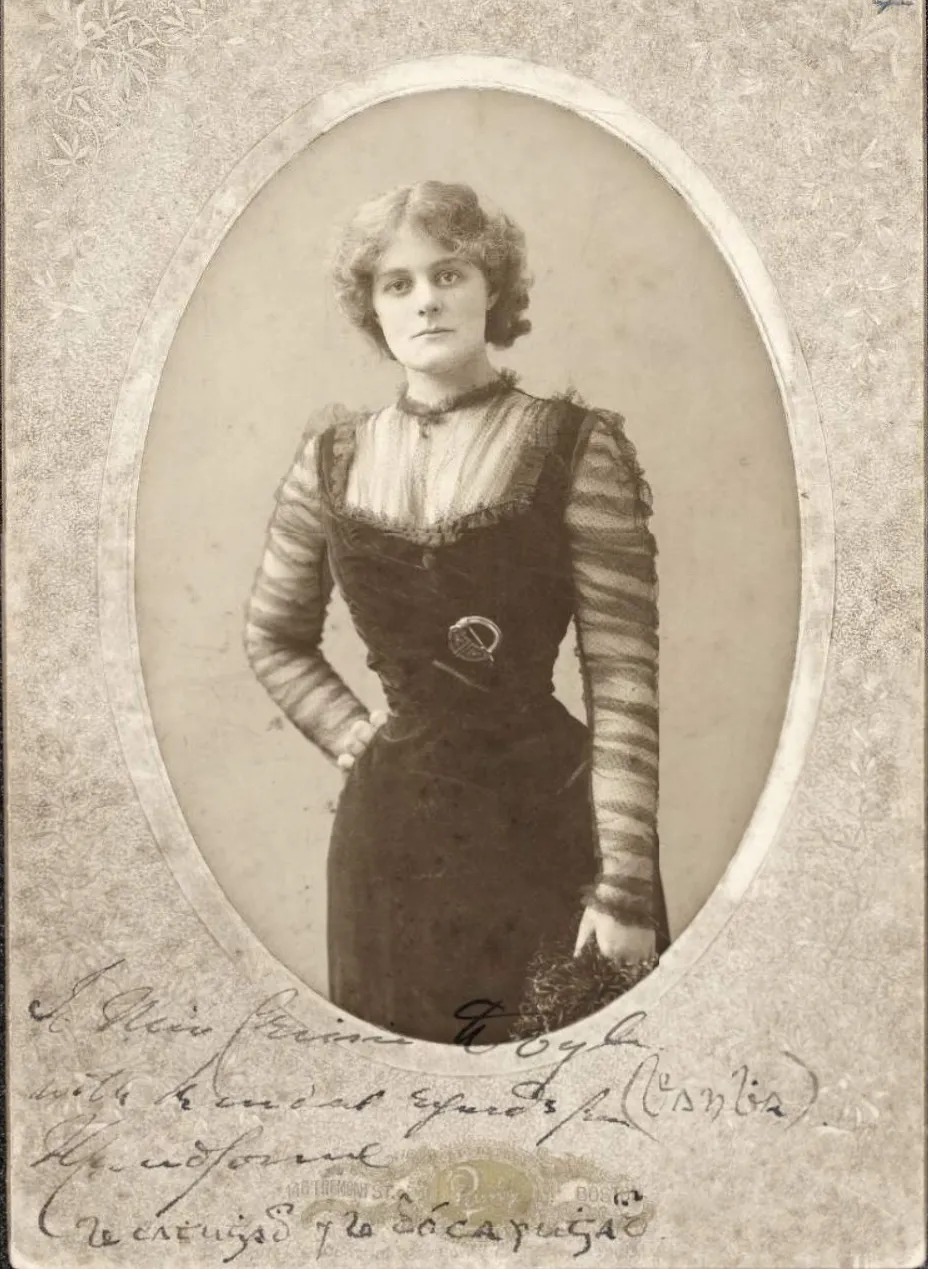
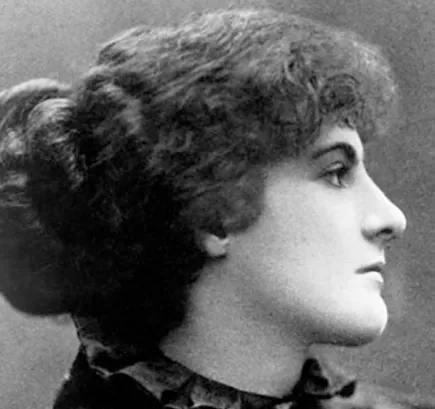
On 30 January 1889 Maud Gonne called at Blenheim Road with a letter of introduction from John O'Leary. She was twenty-two, English-born and already given to the cause of Irish nationalism. Yeats was twenty-three. He later dated 'the troubling of my life' from that day. She became the great love of his life and the central figure of his love poetry, from the lyrics of the 1890s to the poems he wrote in old age.
He first proposed to her in 1891, in Ireland, and she refused him. He asked again in 1899, 1900 and 1901, with the same answer. Meanwhile the poems gathered. 'When You Are Old', published in 1892, imagines her in age, reading his book by the fire and remembering the one man who 'loved the pilgrim soul in you'. The Wind Among the Reeds (1899) is his finest early collection. Its love poems are elaborate, hushed and hopeless, and in 'He wishes for the Cloths of Heaven' the lover has nothing to spread under the beloved's feet but his dreams.
But one man loved the pilgrim soul in you,
And loved the sorrows of your changing face
The theatre brought them together in public. In April 1902 she played the title role in Cathleen ni Houlihan, the one-act play Yeats wrote with Lady Gregory, at St Teresa's Hall in Clarendon Street. Cathleen is Ireland as a poor old woman who calls a young man away from his wedding to fight for her. Then, in February 1903, to Yeats's dismay, she married Major John MacBride, a Boer War veteran, in Paris. The marriage broke down within two years. 'Adam's Curse', collected in In the Seven Woods that August, ends on a love grown 'As weary hearted as that hollow moon'.
In 1908, in Paris, their long friendship became for a short time a physical relationship. Soon afterwards she asked that they return to a spiritual bond. His poetry was changing. The dreamy music of the 1890s gave way to plainer speech and harder thought. In 'No Second Troy', from The Green Helmet (1910), he will not blame her for his misery: her beauty is 'like a tightened bow', too proud and stern for 'an age like this'. He would propose to her once more, in 1916. She died in 1953, aged 86, fourteen years after him.
1896 to 1913
4. Coole and the Abbey
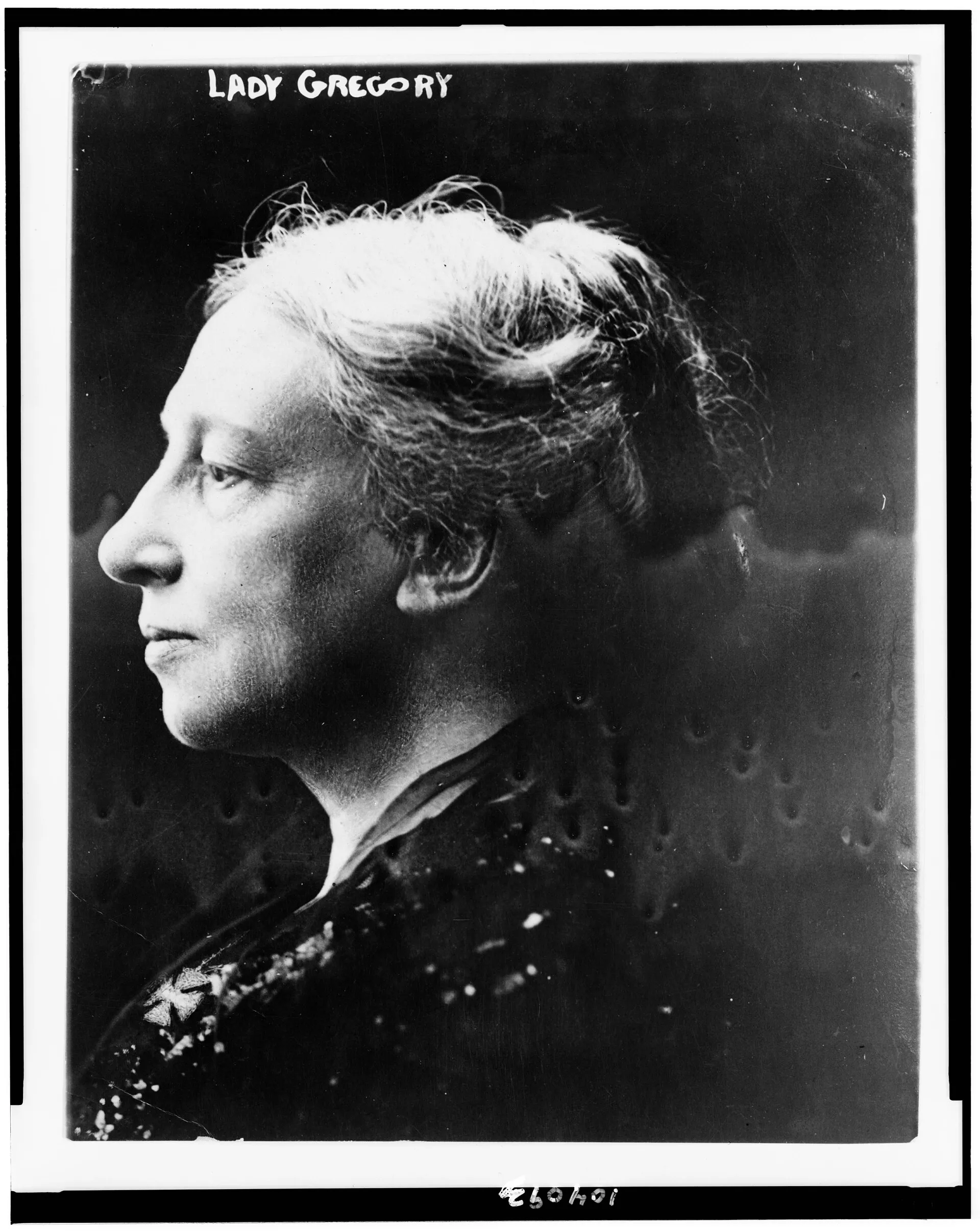
In August 1896, staying with Edward Martyn at Tulira Castle in County Galway, Yeats met Martyn's neighbour Augusta, Lady Gregory. The next summer he stayed at her house, Coole Park, near Gort, and the three of them planned a Celtic theatre for Dublin. Coole became his summer home for decades. Lady Gregory gave him a second home, collected folklore with him, wrote plays with him and ran a theatre with him. For more than thirty years she was his closest friend and ally.
The Irish Literary Theatre opened on 8 May 1899 at the Antient Concert Rooms with The Countess Cathleen, whose picture of peasants selling their souls drew protests. His mother died in London in January 1900, after years of illness. In 1902 his sisters joined Evelyn Gleeson at Dun Emer, and in 1903 Lolly's hand press printed In the Seven Woods, the first of many of his books from the family press, which became the Cuala Press in 1908. That winter John Quinn arranged a lecture tour of America. On 27 December 1904 the Abbey Theatre opened in Abbey Street, in a building paid for by Annie Horniman.
On the day's war with every knave and dolt,
Theatre business, management of men.
Running a theatre was hard. When J. M. Synge's The Playboy of the Western World opened on 26 January 1907, the audience rioted for a week. Yeats called in the police and defended the play at a public debate. He had met Synge in Paris in 1896 and, by his own account, urged him to go to the Aran Islands. Synge died in March 1909, aged 37. In 1907 John O'Leary died too, and Yeats's father left for New York, never to return. 'The Fascination of What's Difficult' names the cost: the plays, the rows, the 'Theatre business, management of men'.
Coole gave him an ideal to set against all this: a house where talent was welcomed and tradition kept. 'Upon a House shaken by the Land Agitation' defends it. The Autograph Tree in the walled garden still carries the initials of Lady Gregory's guests, among them Yeats, his brother Jack, Synge, Shaw and AE. His style grew barer and more public, and by 1913 it had turned angry, as Dublin argued over a gallery for the pictures of Lady Gregory's nephew Hugh Lane. That winter he rented Stone Cottage in Sussex with Ezra Pound as his secretary, and Pound introduced him to the Japanese Noh.
1913 to 1922
5. Revolution
On 8 September 1913, during the row over Hugh Lane's pictures, The Irish Times printed the poem later called 'September 1913'. It mocks a Dublin that would 'fumble in a greasy till' and add 'prayer to shivering prayer', and its refrain buries the old heroic nationalism with John O'Leary: 'Romantic Ireland's dead and gone, / It's with O'Leary in the grave.' Responsibilities (1914) gathered these poems of public anger. Lane was drowned when the Lusitania was sunk off Cork in May 1915, and an unwitnessed codicil leaving his pictures to Dublin began a long dispute.
On Easter Monday, 24 April 1916, the Irish Volunteers and the Citizen Army seized the GPO and other buildings in Dublin. Yeats was in England. He was shaken by the rising and by the executions that followed. John MacBride, Maud Gonne's estranged husband, was shot at Kilmainham on 5 May. Yeats wrote 'Easter, 1916' between May and September. It names MacDonagh, MacBride, Connolly and Pearse, and it admits that he had once been 'certain that they and I / But lived where motley is worn'. The refrain says what the rising did to that certainty.
All changed, changed utterly:
A terrible beauty is born.
The poem honours the dead without cheering. It warns that 'Too long a sacrifice / Can make a stone of the heart', and it was printed privately in 25 copies and kept out of his books until 1921. Constance Markievicz, the Gore-Booth girl he had known at Lissadell, fought in the rising and was sentenced to death, then spared. 'On a Political Prisoner' sets the girl he saw ride 'Under Ben Bulben to the meet' against the woman in her cell. That July he visited Maud Gonne in Normandy and proposed once more. She refused him again.
The war came to Coole. Robert Gregory, Lady Gregory's only son, a pilot in the Royal Flying Corps, was killed over Italy on 23 January 1918. Yeats wrote 'In Memory of Major Robert Gregory' and 'An Irish Airman Foresees His Death', whose airman says 'My country is Kiltartan Cross'. Then Ireland went through the War of Independence and the Civil War. 'The Second Coming', written in 1919 and published in November 1920, gave the century one of its most quoted lines: 'Things fall apart; the centre cannot hold'.
In the summer of 1922 the bridge beside his tower at Ballylee was blown up, and 'Meditations in Time of Civil War' records the fighting on the road outside his door. Michael Robartes and the Dancer (1921) had already gathered 'Easter, 1916', 'The Second Coming' and 'A Prayer for my Daughter'. In December 1922 the man who had written about the rising from England was appointed to the first Senate of the Irish Free State.
1917 to 1928
6. The Tower
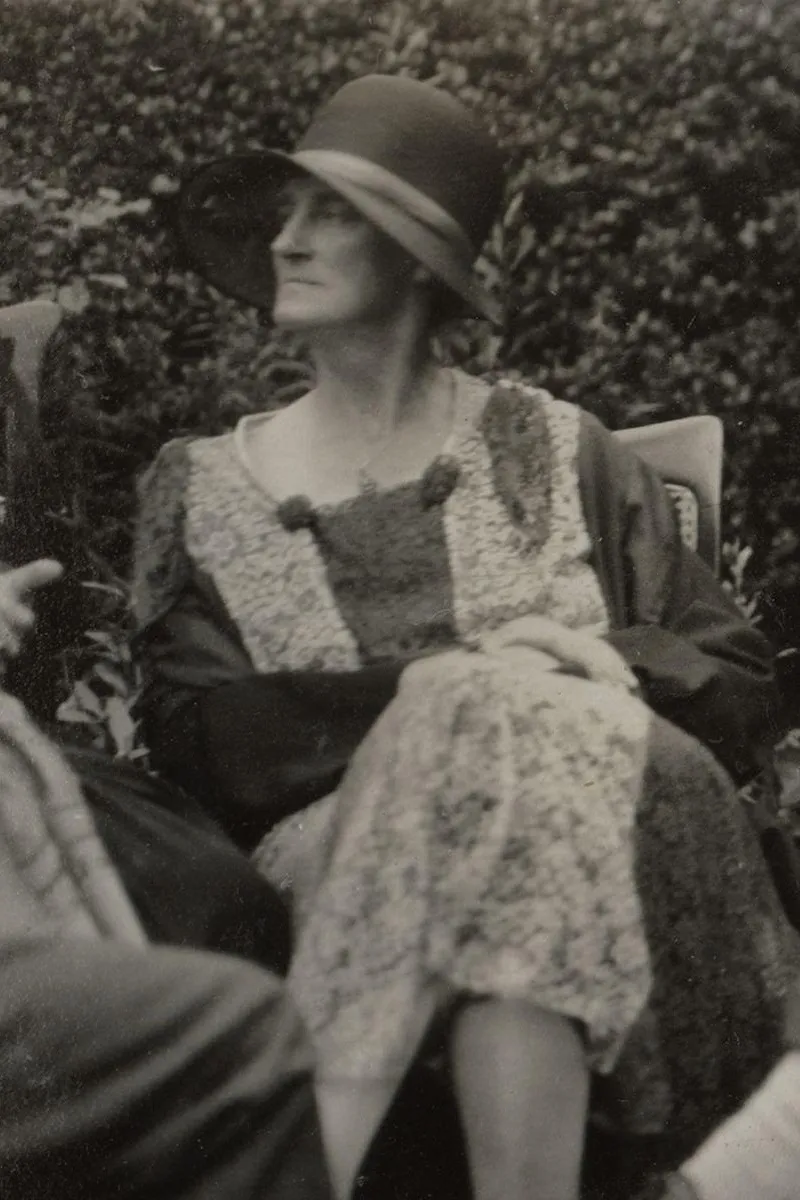
In 1917 Yeats bought a fifteenth-century tower house at Ballylee, near Coole, for 35 pounds from the Congested Districts Board, and named it Thoor Ballylee. That August he proposed to Iseult Gonne, Maud's daughter, then 23, and was refused. On 20 October 1917 he married Georgie Hyde-Lees at the register office in Harrow Road, Paddington, with Ezra Pound as a witness. He was 52 and she was 25. They had met in 1911. She was the step-niece of Olivia Shakespear. That November the Cuala Press printed The Wild Swans at Coole, whose title poem counts the swans on the lake at Coole in his 'nineteenth Autumn' there.
On their honeymoon in Ashdown Forest George began automatic writing. The 'Instructors' who seemed to speak through her supplied the system of history and personality that Yeats set out in A Vision, published in January 1926. Its gyres and phases of the moon lie behind 'The Second Coming', 'The Phases of the Moon' and much of the later work. Much of the writing was done in Oxford, where they lived in Broad Street. George also ran his affairs and kept his papers. The marriage gave him a home, children and a new source of images.
And may these characters remain
When all is ruin once again.
Through the summer of 1918 they restored the tower with the architect William A. Scott. Their daughter Anne was born in Dublin on 26 February 1919, and that summer at Ballylee Yeats wrote 'A Prayer for my Daughter'. In June 1919 he gave up his London rooms after more than twenty years. Their son Michael was born at Thame in Oxfordshire on 22 August 1921. 'To be Carved on a Stone at Thoor Ballylee' records the restoration with a builder's pride: old mill boards, sea-green slates and smithy work from the Gort forge, 'for my wife George'.
In 1922 the family bought 82 Merrion Square in Dublin, and Yeats became a public man. In November 1923 Bertie Smyllie of The Irish Times telephoned to tell him he had won the Nobel Prize in Literature. King Gustaf V presented it in Stockholm on 10 December, and in his lecture Yeats paid tribute to Synge and Lady Gregory. As a senator he chaired the committee that chose Percy Metcalfe's animal designs for the new state's coins. On 11 June 1925 he spoke against the proposed ban on divorce, declaring of the Protestant minority, 'We are no petty people.'
Many readers think the poems of these years his greatest. The Tower, published in February 1928 in Thomas Sturge Moore's cover, holds 'Sailing to Byzantium', 'Leda and the Swan', 'Meditations in Time of Civil War' and 'Among School Children', where the senator visiting a classroom sees himself as 'A sixty year old smiling public man'. The tower had become his central symbol, of an old Ireland, of the solitary mind and of an old man's quarrel with age. His Senate term ended in September 1928, and in poor health he did not seek another.
1929 to 1939
7. The last years
From 1928 the Yeatses spent their winters at Rapallo on the Italian coast, near Ezra Pound, and in Dublin they moved to a flat in Fitzwilliam Square. The summer of 1929 was their last at Thoor Ballylee: damp and distance had made it hard to use. Yeats spent much of the winter of 1931 to 1932 with Lady Gregory at Coole, and she died there on 22 May 1932, aged 80. 'Coole Park, 1929' and 'Coole Park and Ballylee, 1931' are his farewell to her and to the house. The state pulled the house down in 1941.
In July 1932 he took a lease on Riversdale at Rathfarnham, his last Irish home. The Winding Stair (1933) brought 'A Dialogue of Self and Soul', the bawdy and defiant Crazy Jane poems and his elegy for the Lissadell sisters, written after Eva died in 1926 and Constance in 1927. It remembers them as 'Two girls in silk kimonos, both / Beautiful, one a gazelle'. In 1933 he was briefly drawn to Eoin O'Duffy's Blueshirts and wrote marching songs for them, before his enthusiasm cooled. It is an uncomfortable episode, and it belongs in the story.
I am content to follow to its source
Every event in action or in thought
Old age made him bolder, not quieter. In April 1934 he had the Steinach operation, then thought to restore vigour, and he credited it with a burst of new energy. In 1935 he met the poet Dorothy Wellesley, whose house in Sussex, Penns in the Rocks, became a refuge. He went to Majorca with Shri Purohit Swami to translate the Upanishads and fell gravely ill there early in 1936. The actress and poet Margot Ruddock, with whom he had an intense friendship, broke down in Majorca the same year. His Oxford Book of Modern Verse (1936) caused a row, not least for leaving out Wilfred Owen. New Poems (1938) brought 'Lapis Lazuli', 'An Acre of Grass' and 'Beautiful Lofty Things'.
In August 1938 he went to the Abbey for the first night of his play Purgatory, his last public appearance. That year he saw Maud Gonne for the last time, at Riversdale, and in October Olivia Shakespear died. In November he and George went to Cap Martin in the south of France, where he worked on his last poems and plays at the Hôtel Idéal Séjour. He died there of heart failure on 28 January 1939, aged 73. After a quiet funeral he was buried at Roquebrune, as he had wished, until he could be moved to Sligo.
Last Poems and Two Plays appeared that July, opening with 'Under Ben Bulben', in which he asks to lie in Drumcliffe churchyard, where his great-grandfather had been rector. The Second World War delayed the move. At the request of his son Michael the government helped to bring him home, and in September 1948 the corvette LÉ Macha carried his remains to Galway, and on 17 September they were reburied at Drumcliffe, with Seán MacBride, Maud Gonne's son, representing the government. Whether every bone was his has long been doubted. His stone, under Ben Bulben, carries the epitaph he wrote for it: 'Cast a cold eye / On life, on death'.