Among School Children
Listen
I
II
III
IV
V
VI
VII
VIII
Text: Poetry, by W. B. Yeats (Standard Ebooks, 2024), from the collected editions of 1908 to 1928. Public domain.
In brief
SummaryAn ageing senator visits a school and reflects on youth, age and meaning.
Yeats, a "sixty year old smiling public man", walks through a classroom while a nun explains the lessons. Looking at the children, he remembers a woman he loved, a "Ledaean body" who once told him of a childhood grief, and suddenly imagines her as a child standing before him. Then he sees her as she is now, hollow-cheeked, and himself as "a comfortable kind of old scarecrow". He asks whether any mother would think her baby worth the pain if she could see him at sixty, and finds that even the great philosophers end as "Old clothes upon old sticks". Nuns and mothers both worship images that break hearts. The poem closes with a vision of wholeness, where labour is "blossoming or dancing" and no one can tell "the dancer from the dance".
Lines to remember
A sixty year old smiling public man.
O chestnut tree, great rooted blossomer,
How can we know the dancer from the dance?
Line by line
Lines 1 to 8The classroom visit
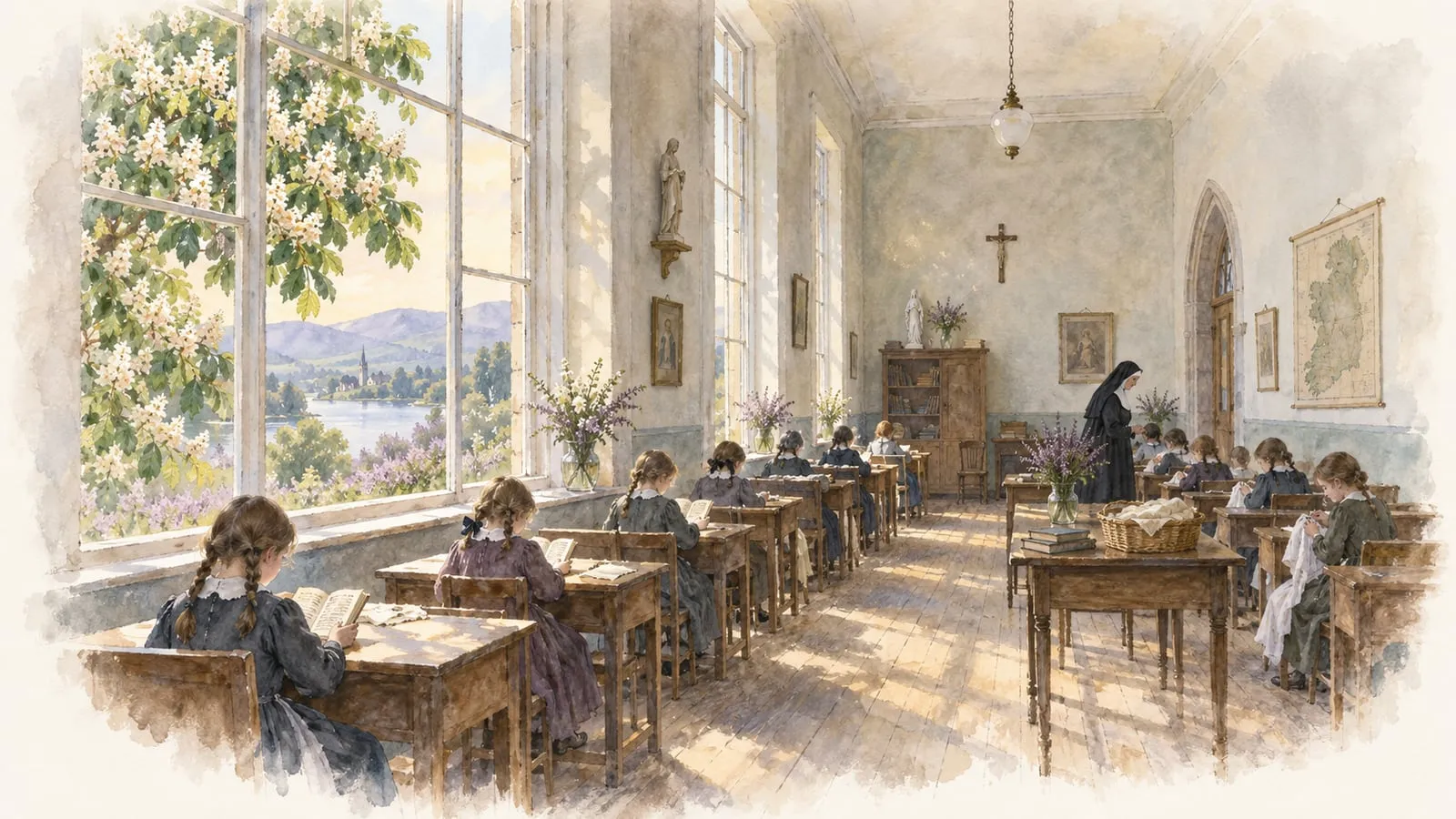
He walks through "the long schoolroom questioning" and a "kind old nun" tells him what the children learn: arithmetic, singing, history, sewing, all "in the best modern way". The children stare in "momentary wonder" at the visitor. The last line sums him up with a wry edge: "A sixty year old smiling public man".
Lines 9 to 16A remembered story
He dreams of "a Ledaean body", a woman as beautiful as Leda's daughter Helen, bent over a fire, telling him of a childhood day turned to tragedy. In sympathy their natures seemed to blend into "a sphere", or, altering "Plato's parable", into "the yolk and white of the one shell": two halves made whole.
Lines 17 to 24She appears as a child
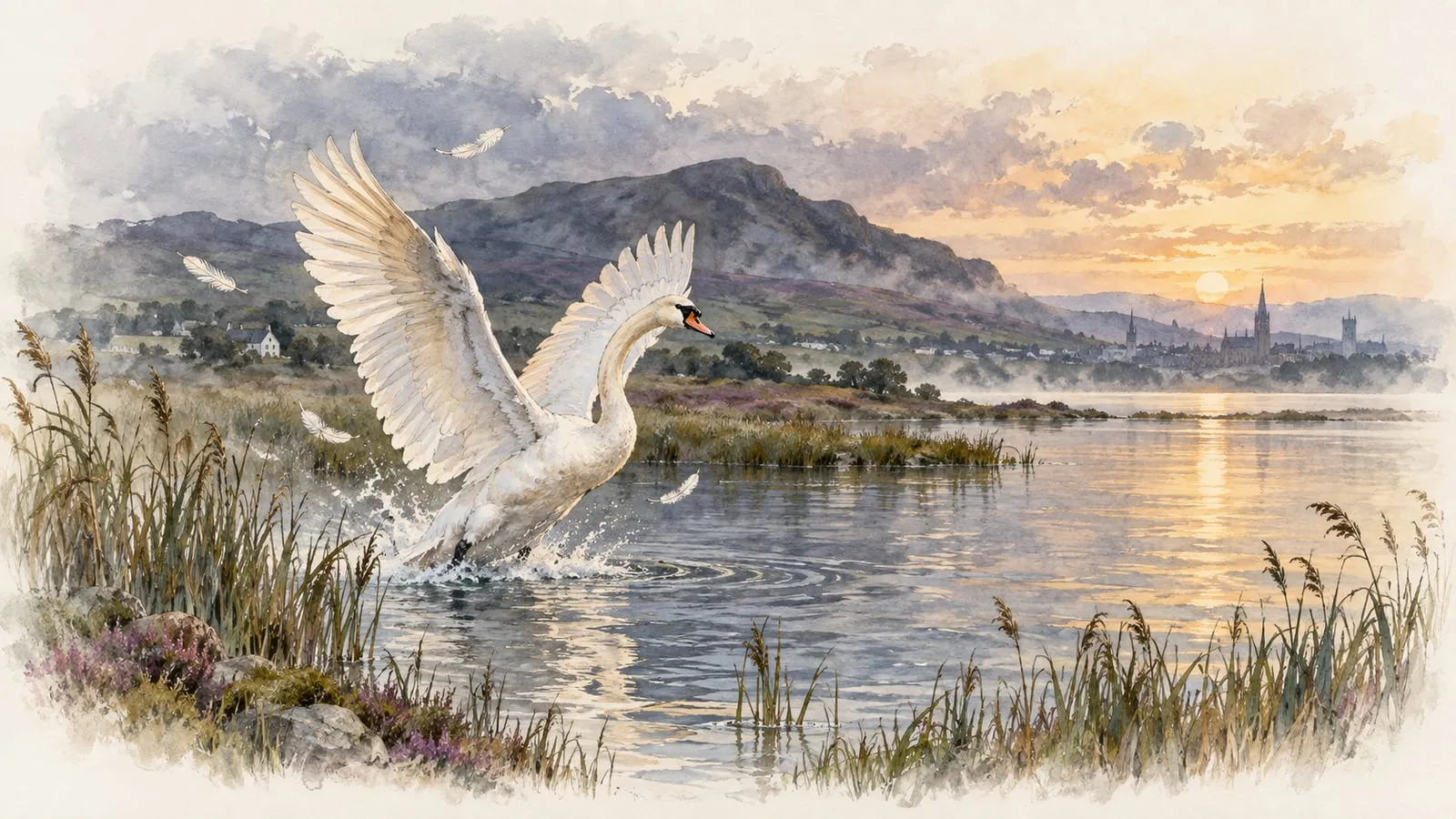
Thinking of that grief, he looks at the children and wonders if she looked like one of them at that age, for "even daughters of the swan" share something with ordinary children. His heart is "driven wild" and she seems to stand before him "as a living child".
Lines 25 to 32Her present, his present
Now her present image comes: "Hollow of cheek", as if painted by a fifteenth-century Italian master, feeding on wind and shadows. He too "Had pretty plumage once", but he breaks off, "enough of that", and settles for smiling and showing he is "a comfortable kind of old scarecrow".
Lines 33 to 40A mother's question
He asks whether any young mother, holding her baby, would think him "A compensation for the pang of his birth" if she could see him "With sixty or more winters on its head". The baby has been "betrayed" into life by the "Honey of generation", drawn from the soul's freedom before birth.
Lines 41 to 48The philosophers
Even the greatest thinkers end as scarecrows. Plato thought nature a mere "spume" on an ideal pattern; "Solider Aristotle" beat the young Alexander the Great; "golden-thighed Pythagoras" heard music in the stars. The stanza's last line reduces them all: "Old clothes upon old sticks to scare a bird."
Lines 49 to 56Images that break hearts
Nuns worship statues lit by candles, mothers worship their dreams of their children. The marble or bronze images keep still, "And yet they too break hearts". He addresses all such ideal images, the "Presences" that passion, piety and affection know, as "self-born mockers of man's enterprise": they promise a perfection life cannot reach.
Lines 57 to 64The dancer and the dance
The answer is a vision of labour as "blossoming or dancing", where body and soul are not at war and beauty is not born of despair. He calls on the chestnut tree, which cannot be divided into "the leaf, the blossom or the bole", and on a dancer so at one with the movement that the two cannot be told apart.
Themes
Age and youth
The poem is built on the gap between the "sixty year old smiling public man" and the children staring at him. Memory brings back his beloved as "a living child", then as she is now, "Hollow of cheek", and himself as "a comfortable kind of old scarecrow". Age is seen with humour, but also with real pain at what time does to beauty.
Images and ideals
Stanzas 6 and 7 ask what we worship. Philosophers worshipped ideas, nuns worship statues, mothers worship the image of what their child will be. All of these "Presences" become "self-born mockers of man's enterprise", because the real world never matches them. Even the great minds of Greece end as "Old clothes upon old sticks".
Unity of being
The last stanza answers the poem's divisions. Where "The body is not bruised to pleasure soul", work becomes blossoming and dance. The chestnut tree is not leaf, blossom or trunk but all together, and "the dancer" cannot be separated from "the dance". Life lived whole, body and soul at once, is set against the broken ideals before it.
Context
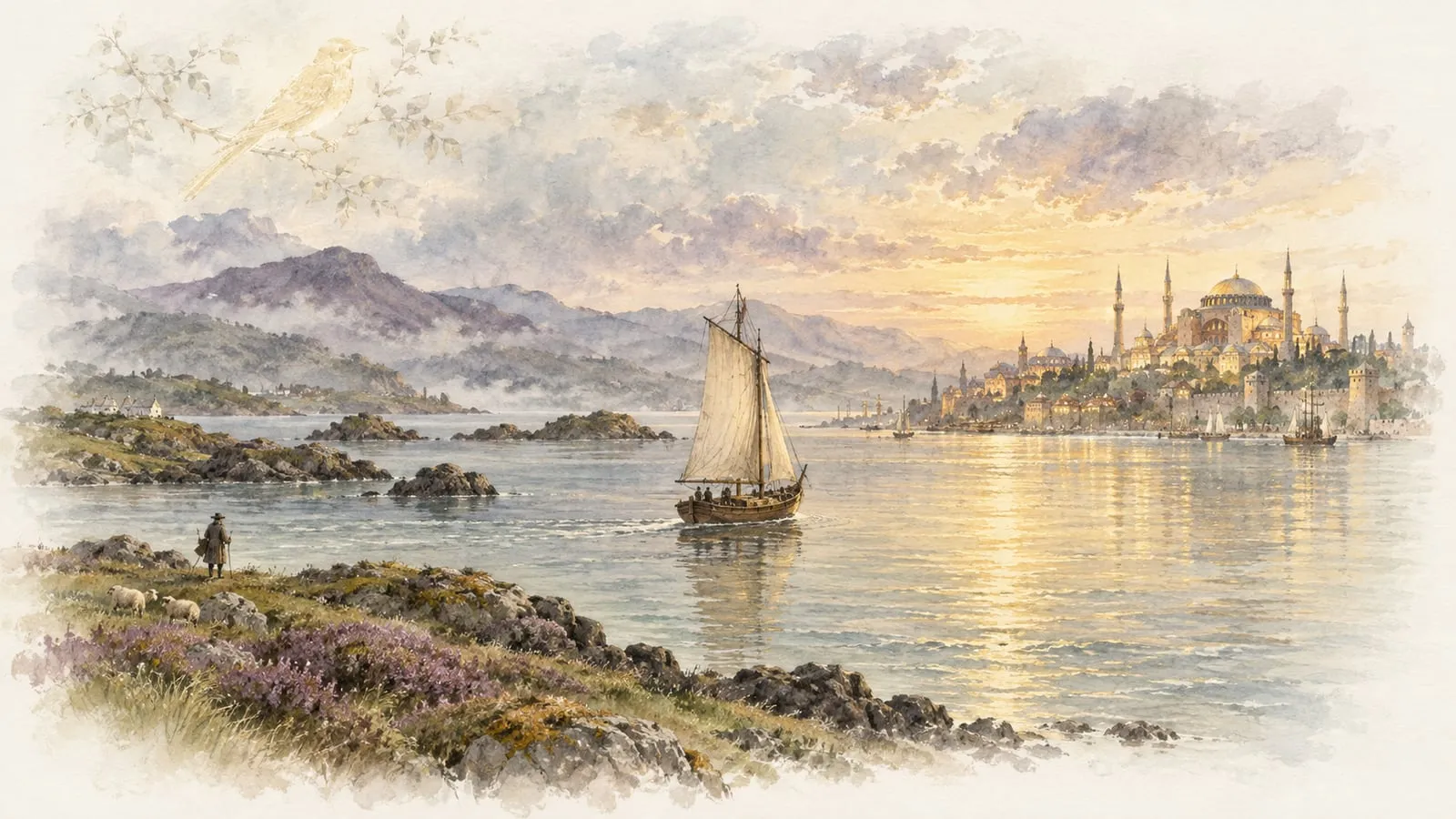
In 1926, as a senator of the Irish Free State, Yeats visited St Otteran's, a convent school in Waterford run on modern Montessori lines. That visit supplies the nun, the lessons and "the best modern way". He was sixty, and the poem was published in The Tower (Macmillan, 1928), a book much concerned with old age, alongside "Sailing to Byzantium" and "Leda and the Swan".
The "Ledaean body" is Maud Gonne, the woman Yeats loved for most of his life; he often compared her to Helen of Troy, daughter of Leda and the swan. In a note Yeats said he took "the honey of generation" from the Greek philosopher Porphyry's essay on "The Cave of the Nymphs". In the poem it is the sweetness that lures the soul into birth and makes it forget its freedom before.
Form
Eight stanzas of ottava rima: eight lines of iambic pentameter rhymed abababcc, with some half-rhymes ("upon" and "man"). The closing couplet of each stanza sums up or turns the thought, most famously in the question that ends the poem. The form is formal and roomy, suited to thought moving from a classroom to philosophy.
Yeats's own note
I have taken “the honey of generation” from Porphyry’s essay on “The Cave of the Nymphs,” but find no warrant in Porphyry for considering it the “drug” that destroys the “recollection” of prenatal freedom. He blamed a cup of oblivion given in the zodiacal sign of Cancer.