Colonus' Praise
Listen
From Oedipus at Colonus
Chorus
Text: Poetry, by W. B. Yeats (Standard Ebooks, 2024), from the collected editions of 1908 to 1928. Public domain.
In brief
SummaryA Greek chorus sings the praises of Colonus, its olives and horses.
A chorus of old men sings in praise of Colonus, a village just outside Athens. They call on us to praise its horses and its dark tangled wood, where the nightingale sings and the gods walk unseen. They praise the olive tree that grows "self-sown" and gives Athens its wisdom, guarded by the goddess Athene. They praise the crocus and narcissus, the river Cephisus and the place where the Great Mother mourned her daughter. Last, they remember that Poseidon gave this country the bridle and the oar, so that its people talk forever of horses and of the white horses of the sea.
Lines to remember
Come praise Colonus' horses and come praise
The great grey-eyed Athene stares thereon.
Of horses and horses of the sea, white horses.
Line by line
Lines 1 to 8The sacred wood
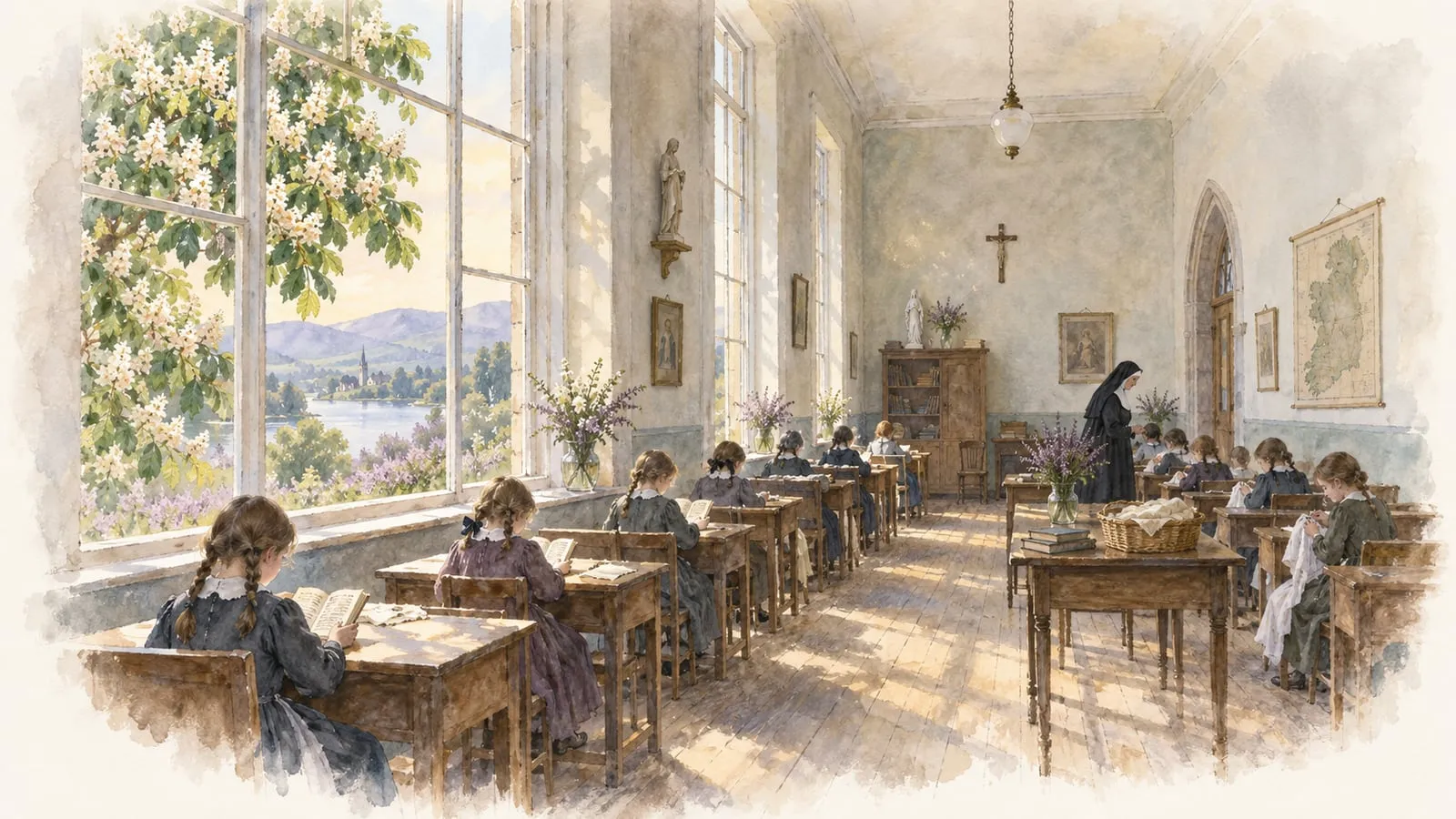
The ode opens with a call: "Come praise Colonus' horses". The wood is so thick that the nightingale "deafens daylight", if daylight ever gets in. No storm or sun reaches it, and there "Immortal ladies" dance with Dionysus, "Semele's lad", in a haze of "harmonious sound".
Lines 9 to 16The olive tree
In the gymnasts' garden grows the olive, "self-sown, self-begotten", "Miracle-bred out of the living stone". It is the source of "Athenian intellect". Neither peace nor war can wither it, because "The great grey-eyed Athene stares thereon": the tree and the city are under a goddess's gaze.
Lines 17 to 24Flowers and river
Whoever comes here finds crocus and narcissus, and the spot where "the Great Mother, mourning for her daughter", plucked a flower and sang her loss. The stanza is one long, flowing sentence, like the river it ends on: to find "abounding Cephisus" is to find "the loveliest spectacle there is".
Lines 25 to 32Bit and oar
Colonus has "a pious mind" and remembers that when all other people only walked or paddled, Poseidon gave it "bit and oar", the skills of riding and sailing. So every "lad or lass" talks of them day and night, and the last line gallops: "Of horses and horses of the sea, white horses."
Themes
Praise of place
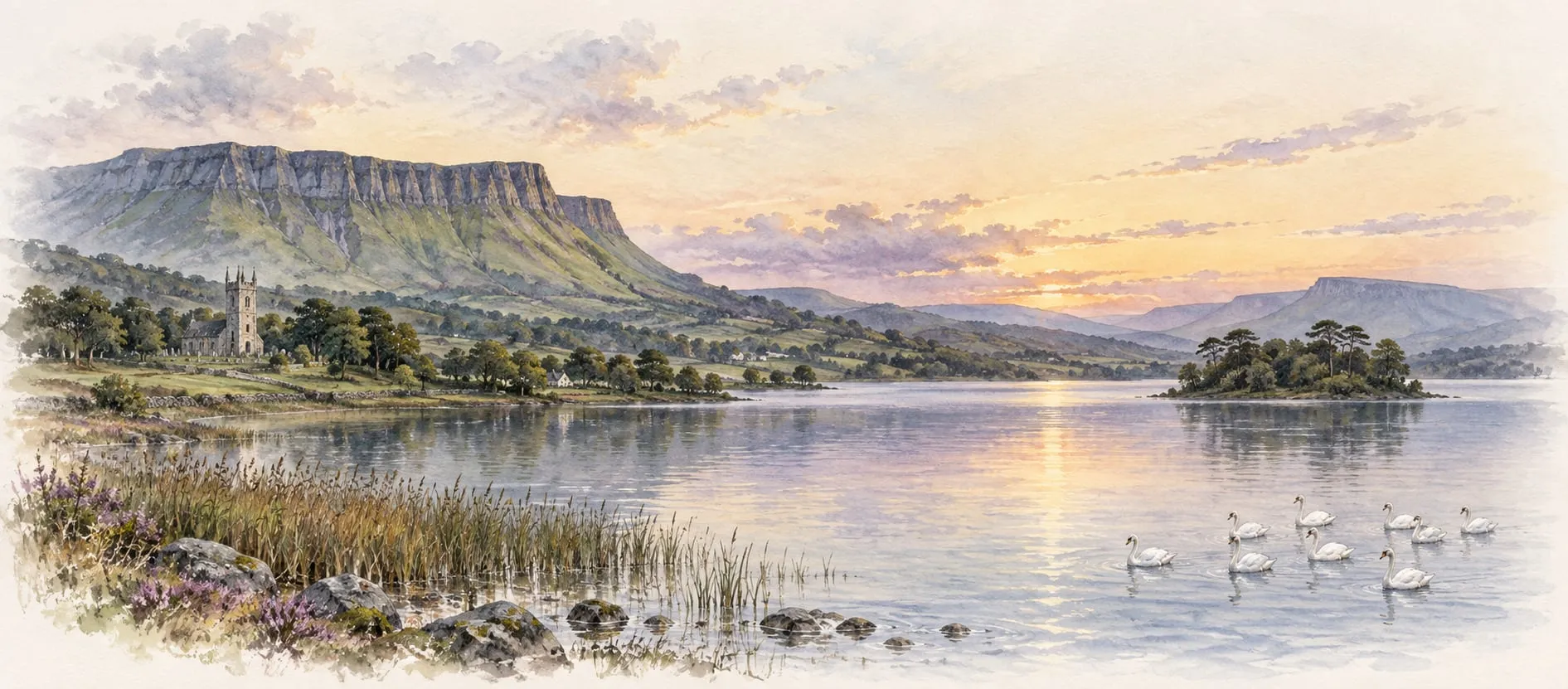
The whole poem is a hymn to one small place. Each stanza adds a new gift: the wood and its nightingale, the olive, the flowers and the river Cephisus, the horses and ships. The repeated "Come praise" and "Who comes into this country" invite us in, as if the chorus were guiding a visitor through the landscape.
Gods in the land
The landscape is full of the divine. "Immortal ladies" dance in the wood, Athene watches the olive, the Great Mother grieves by the water and Poseidon gives "bit and oar". In this country nature and myth are the same thing, and the chorus's "pious mind" is a way of remembering the gods through the land itself.
Endurance
Against change and ruin the poem sets things that last. The olive is "self-begotten", and "Nor accident of peace nor war / Shall wither that old marvel". The memory of Poseidon's gift is kept alive "Summer and winter, day and night". Praise itself becomes a way of making the place endure.
Context
The poem is Yeats's version of the famous choral ode in praise of Colonus from Sophocles' Oedipus at Colonus, in which the blind, exiled Oedipus reaches the grove at Colonus where he is to die. Colonus was Sophocles' own birthplace, near Athens. Yeats made his own version of the play for the Abbey Theatre, and the ode was collected in The Tower (Macmillan, 1928).
In The Tower it comes straight after "Among School Children", and another chorus from the same play, beginning "Endure what life God gives", closes the sequence "A Man Young and Old" later in the book. Where that passage is bleak about long life, this one is pure celebration, a rare moment of untroubled praise in a book much concerned with age and loss.
Form
Four eight-line stanzas mixing longer five-beat lines with shorter four-beat ones. Each stanza rhymes aabbcddc ("praise" and "intricacies", "there" and "where"), and several rhymes are slant. The long, looping sentences and the repetitions of the last stanza ("horses and horses") give it the feel of a sung ode.