The Sorrow of Love
Listen
Text: Poetry, by W. B. Yeats (Standard Ebooks, 2024), from the collected editions of 1908 to 1928. Public domain.
In brief
SummaryA tragic girl's arrival fills a peaceful night with human grief.
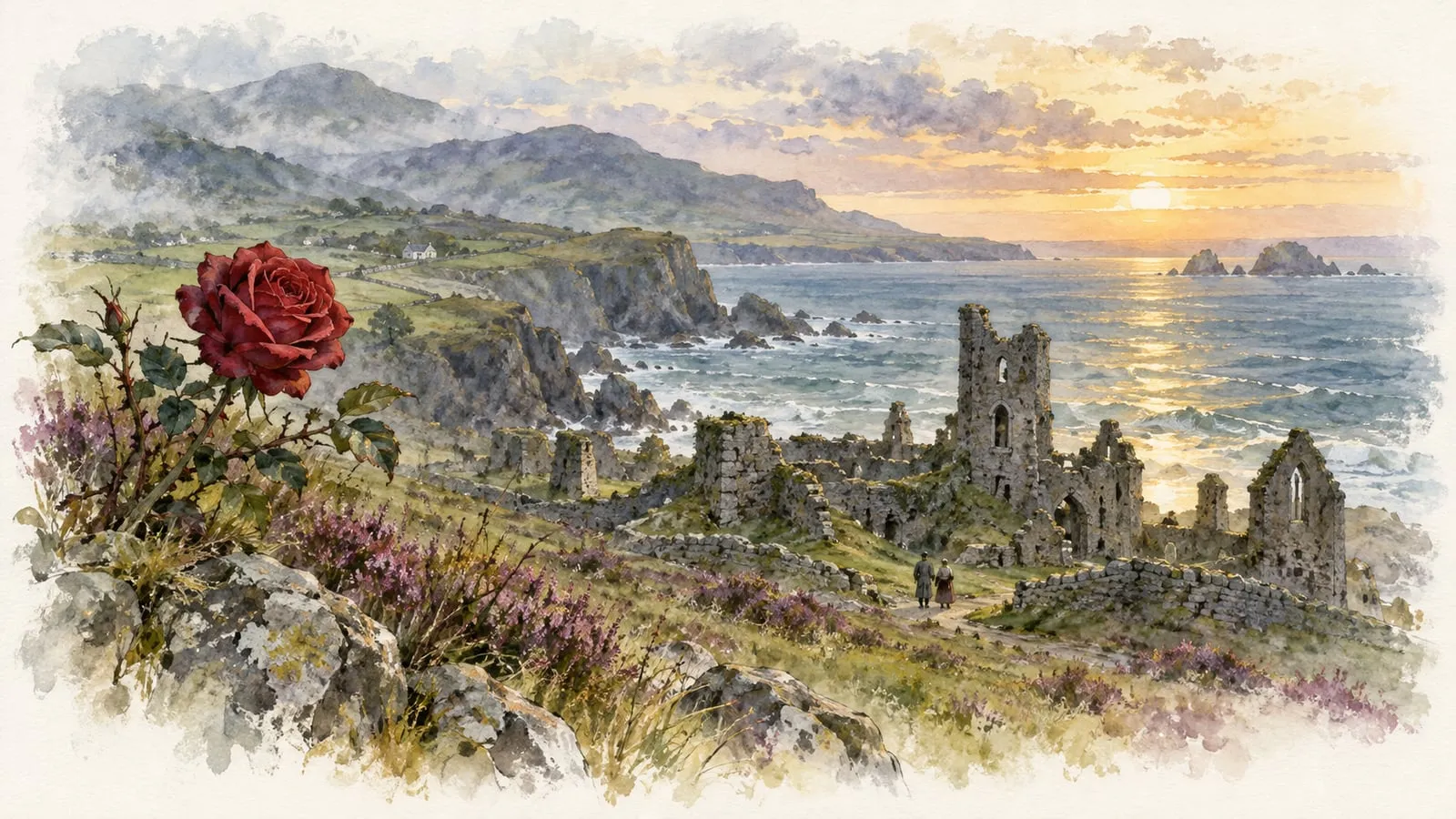
The poem begins with a calm night: a sparrow squabbling in the eaves, a bright moon, a "milky sky", the "harmony of leaves". Together they had blotted out human suffering. Then a girl appears, with "red mournful lips", who seems to carry the world's sorrow, doomed like Odysseus and proud like the murdered King Priam of Troy. As soon as she arrives, the same scene changes: the eaves are "clamorous", the moon climbs an "empty sky", the leaves lament. Nature can no longer hide the human cry; it now expresses it.
Lines to remember
A girl arose that had red mournful lips,
And seemed the greatness of the world in tears.
Could but compose man's image and his cry.
Line by line
Lines 1 to 4Peace before
Sparrow, moon, "milky sky" and "that famous harmony of leaves" make a scene of natural beauty. Together they "Had blotted out man's image and his cry": in the calm of nature, human pain was forgotten. The past perfect "Had" warns us that this peace is about to end.
Lines 5 to 8The girl arises
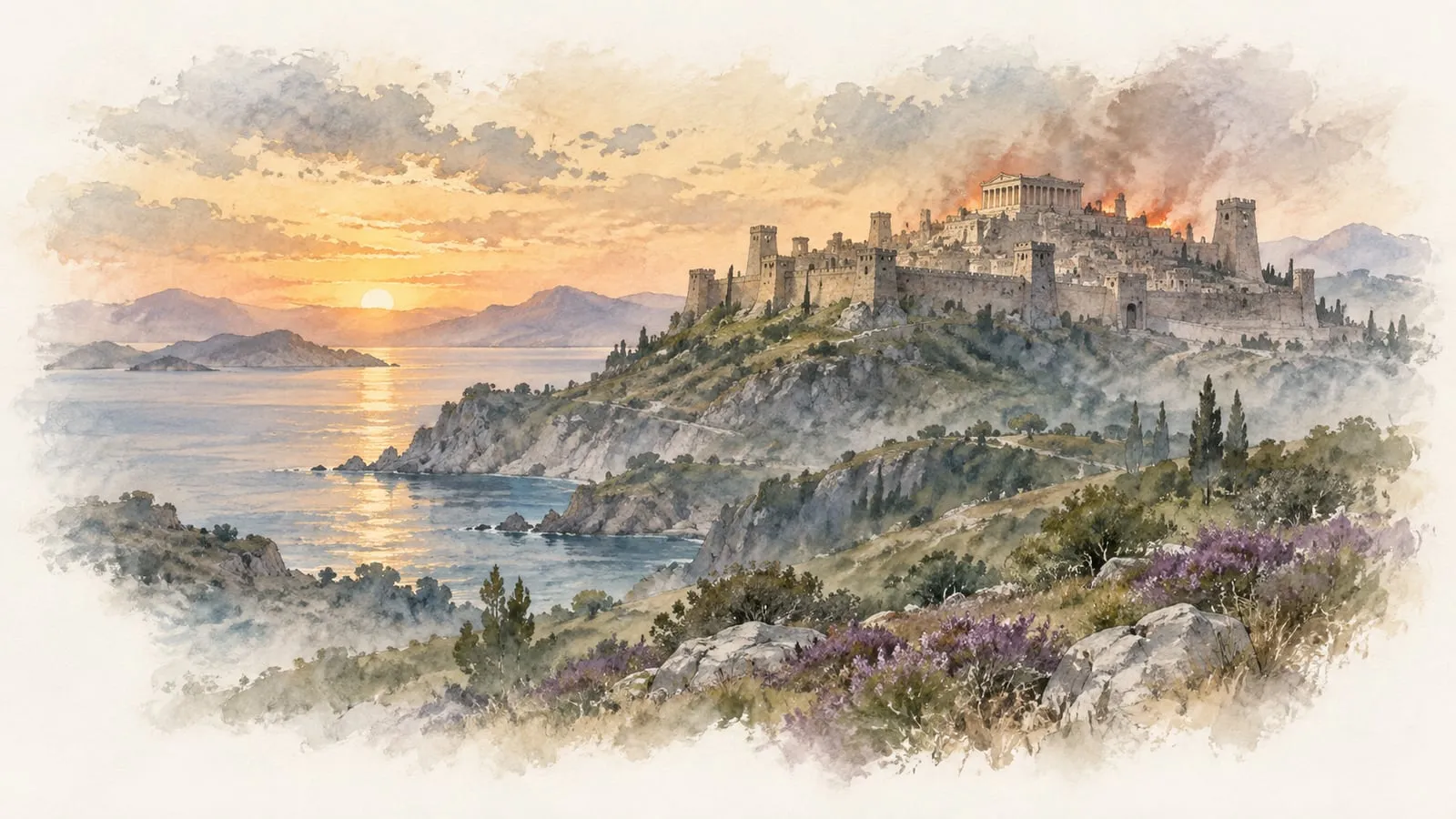
"A girl arose that had red mournful lips" and seemed "the greatness of the world in tears". Two heroes of Troy's story define her: "Doomed like Odysseus and the labouring ships" and "proud as Priam murdered with his peers". She brings the whole weight of epic tragedy into the scene.
Lines 9 to 12Nature changed
The first stanza returns, altered word by word. The eaves become "clamorous", the moon climbs "an empty sky", the leaves' harmony becomes "lamentation". Where nature once "blotted out" man's cry, now it "Could but compose" it: the world is remade in the shape of human grief.
Themes
Beauty and sorrow
The girl is beautiful, with "red mournful lips", but her beauty is bound up with grief and doom. She seems "the greatness of the world in tears". As in "The Rose of the World", great beauty is linked with the fall of Troy and brings suffering in its wake.
How we see nature
The same sparrow, moon and leaves appear in the first and last stanzas, but they look and sound different. Nothing in nature has changed; the viewer has. Once the girl arrives, the "harmony of leaves" becomes their "lamentation". The poem shows how feeling colours the world.
Context
The poem first appeared in The Countess Kathleen and Various Legends and Lyrics (1892), among the lyrics Yeats later grouped as "The Rose". It is one of his most heavily revised poems. The 1892 version began "The quarrel of the sparrows in the eaves"; the version here, with "A girl arose that had red mournful lips", is his 1925 rewrite, kept in Collected Poems (1933).
The girl is usually taken as an image of Maud Gonne, whom Yeats met in January 1889 and loved for most of his life. His comparison of her to the tragic figures of Troy recurs in "The Rose of the World" and "No Second Troy".
Form
Three quatrains of iambic pentameter rhymed ABAB. The first and third stanzas share the same rhyme words ("eaves", "sky", "leaves", "cry"), so the last stanza reads as a darkened echo of the first. The sentence begun in line 7 runs on over the stanza break, where "Arose" picks up line 5 and sets the change in motion.
HEAVILY REVISED; three distinct texts. (1) 1892 (checked against the 1893 Boston reprint scan, archive.org countesskathleen00yeat): 'The quarrel of the sparrows in the eaves ... And all the sorrows of her labouring ships, / And all burden of her myriad years. / And now the sparrows warring in the eaves ...'. (2) 1895-1924 (Gutenberg 38877 and 49608): same opening, but 'And all the trouble of her labouring ships, / And all the trouble of her myriad years.' (3) 1925 rewrite, kept in Collected Poems 1933 and in Standard Ebooks: 'The brawling of a sparrow in the eaves, / The brilliant moon and all the milky sky ... A girl arose that had red mournful lips'. Wikisource's page under the 1892 book title actually shows the 1925 text (unsourced). Decide which to host as main text; suggest 1925/1933 as main with the 1892 text as a variant.