The Rose of the World
Listen
Text: Poetry, by W. B. Yeats (Standard Ebooks, 2024), from the collected editions of 1908 to 1928. Public domain.
In brief
SummaryA woman's beauty outlasts Troy and was planned before creation.
The poem asks who could think beauty passes like a dream, when for this beauty, these "red lips", Troy burned and the sons of Usna died. Everything else is passing, the "labouring world" and the wavering souls of men, but "this lonely face" lives on among them. The last stanza tells the archangels to bow down: before they were made, this weary, kind beauty waited by God's throne, and God made the whole world as "a grassy road" for her to walk on. It is a love poem that raises the beloved to something eternal.
Lines to remember
Who dreamed that beauty passes like a dream?
Lives on this lonely face.
He made the world to be a grassy road
Line by line
Lines 1 to 5Beauty that destroys
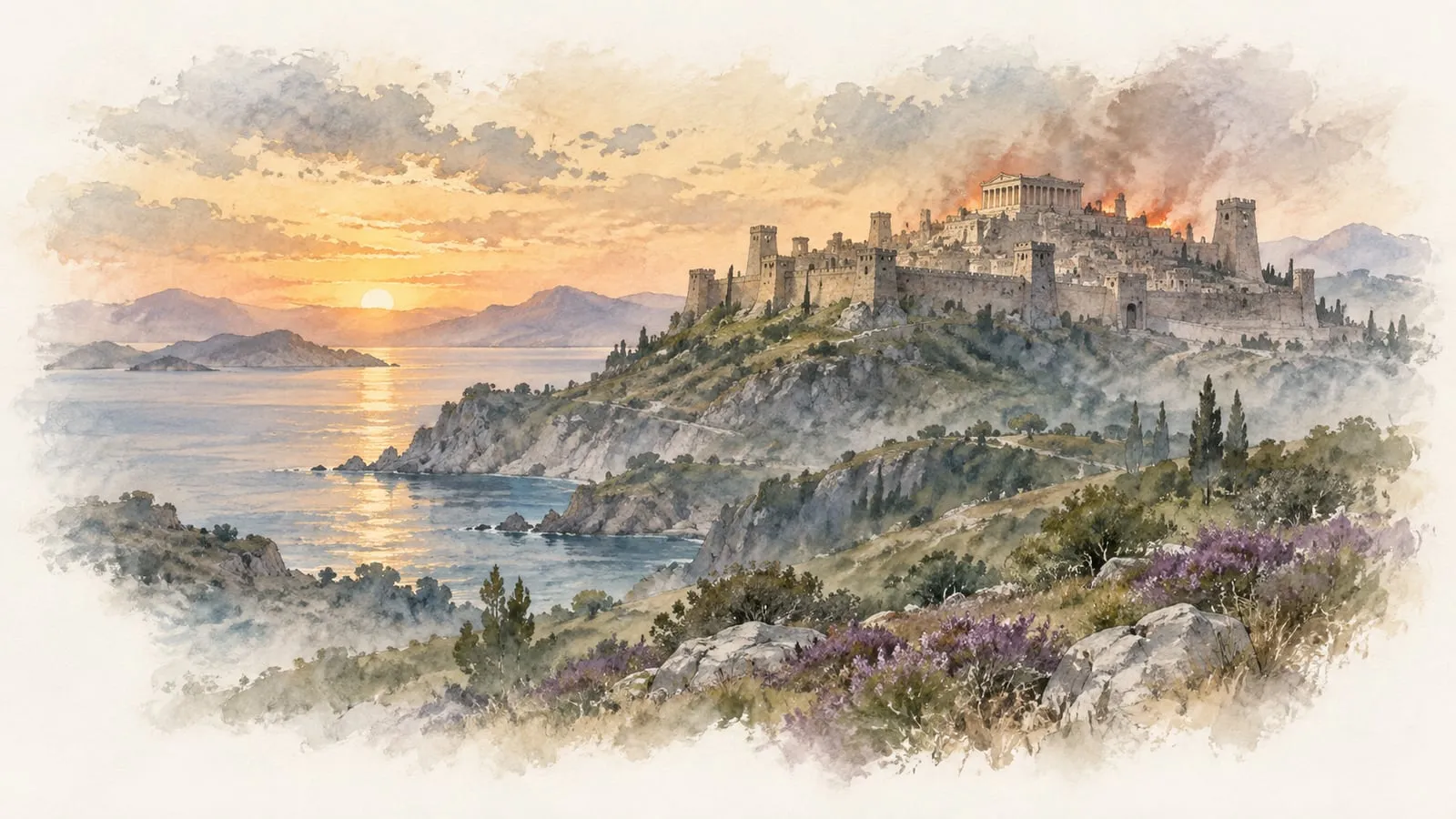
The opening question, "Who dreamed that beauty passes like a dream?", is answered with legend. For "these red lips" Troy fell "in one high funeral gleam", and "Usna's children died" for Deirdre. The lips are "mournful" because nothing new can happen to them: their story has already been told.
Lines 6 to 10The lonely face
Now the speaker and the whole "labouring world" are "passing by", like "pale waters in their wintry race". Amid all this change, under "the passing stars", one thing stays: "Lives on this lonely face." The short last line isolates the face as the sentence does.
Lines 11 to 15Before creation
"Bow down, archangels": this beauty is older than the angels. Before any heart beat, she "lingered by His seat", "Weary and kind", and God made the world "to be a grassy road / Before her wandering feet". The whole of creation becomes a path laid down for her.
Themes
Eternal beauty
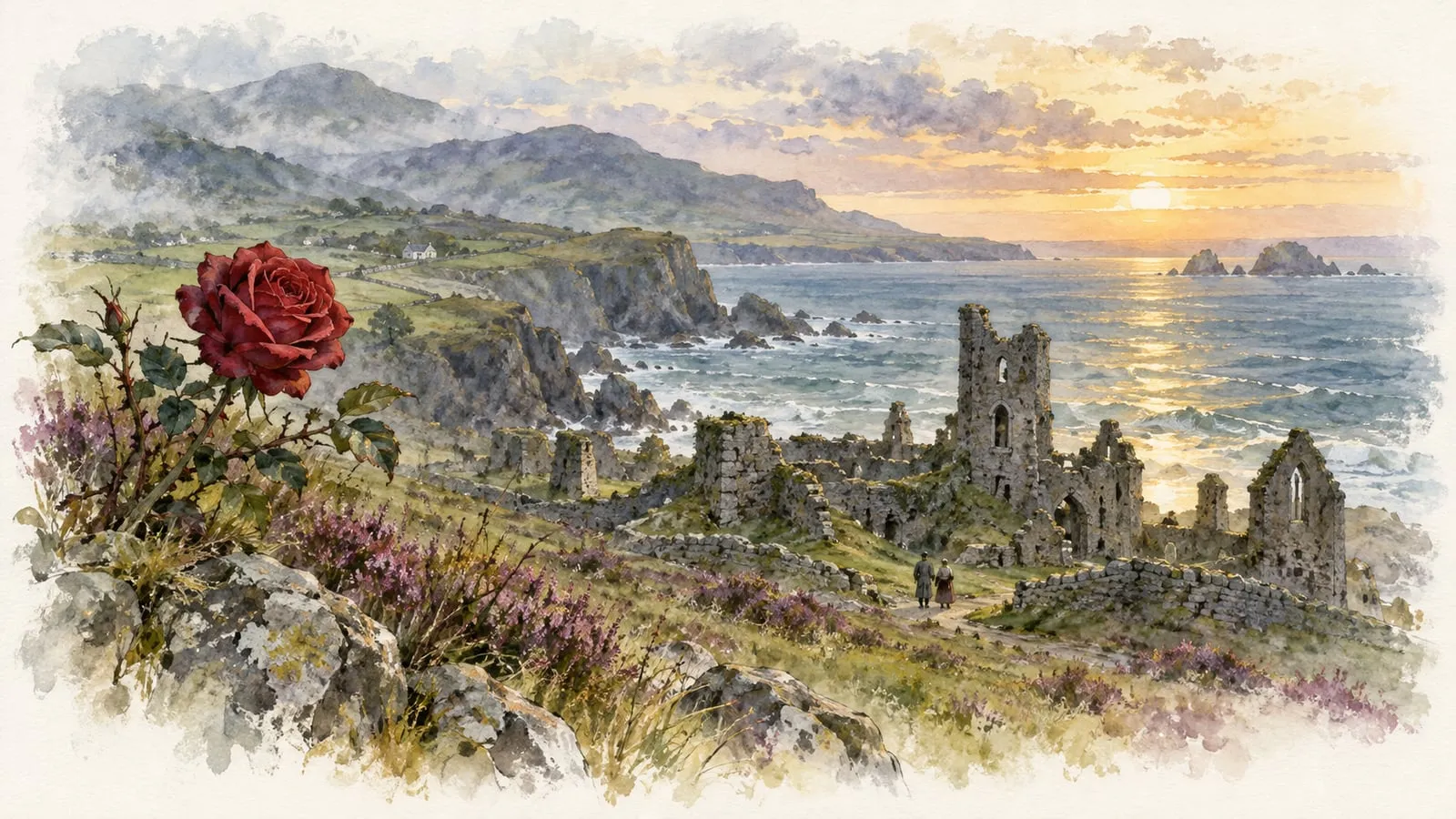
The poem argues against the commonplace that beauty fades. The same beauty lived in Helen and Deirdre and lives now in "this lonely face"; it existed before the archangels. Beauty here is not a quality of one woman but an eternal presence, like the symbolic Rose of the group's title, that passes from age to age.
Beauty and sorrow
This beauty brings ruin and grief. Troy burned and "Usna's children died"; the lips are "mournful", the face "lonely", the spirit "Weary". Even in heaven she is weary and kind rather than triumphant. The poem sees great beauty as a lonely burden and a cause of tragedy.
Passing time
The middle stanza is full of movement: the world "passing by", souls that "waver and give place", waters in "their wintry race", "passing stars". Against this flow the face simply "Lives on". The contrast between restless time and still beauty is the poem's centre.
Context
The poem first appeared in The Countess Kathleen and Various Legends and Lyrics (1892), among the lyrics Yeats later grouped as "The Rose". The Rose of its title links it to the group's central symbol of eternal, suffering beauty.
It is usually read as a poem about Maud Gonne, whom Yeats met in 1889 and loved for most of his life. Setting her beside Helen of Troy and Deirdre, the heroine of the Irish story of the sons of Usna, is a comparison he returned to often, most famously in "No Second Troy".
Form
Three five-line stanzas rhymed ABBAB. The first four lines of each are pentameter; the fifth is a short line of three beats ("And Usna's children died", "Lives on this lonely face"), which closes each stanza on a quiet, weighted phrase.