The Rose of Battle
Listen
Text: Poetry, by W. B. Yeats (Standard Ebooks, 2024), from the collected editions of 1908 to 1928. Public domain.
In brief
SummaryThe lonely and insatiable gather to sail and fight in God's battles.
The poet hails the Rose, "Rose of all the World", as ships with "thought-woven sails" wait at the shore. He sends home those who have love by a "clean-swept hearth", and gathers instead the ones love has passed by and those who have "sought more" than earth and sky can give: "The sad, the lonely, the insatiable". They will sail to "wage God's battles". The second part turns to the Rose herself: she too has come to "the wharves of sorrow", made sad by her own eternity. All will go down together under the stars, and only then will the cry of their "sad hearts" fall silent.
Lines to remember
Rose of all Roses, Rose of all the World!
The sad, the lonely, the insatiable,
Beauty grown sad with its eternity
Line by line
Lines 1 to 6Ships at the shore
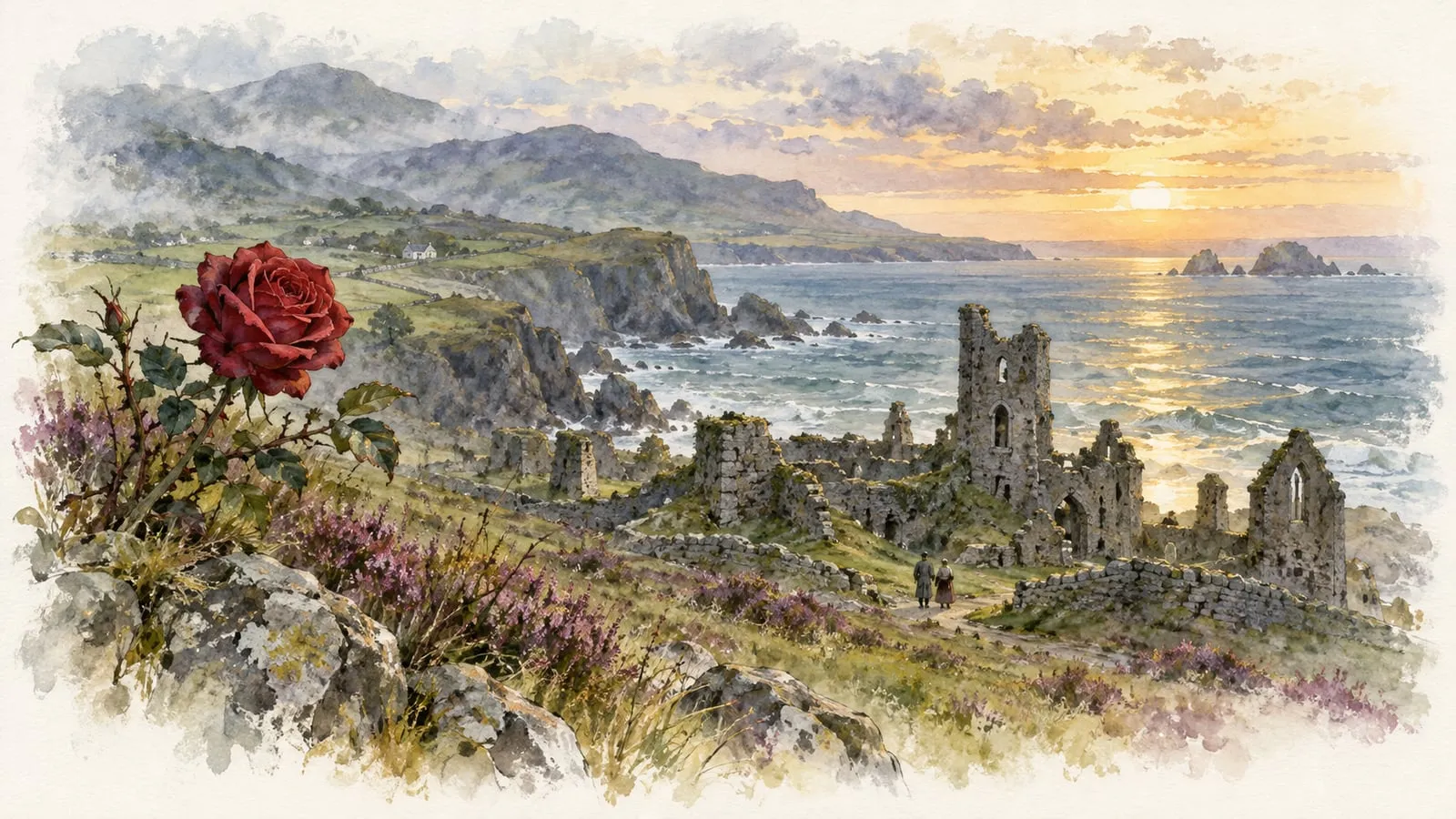
The Rose is hailed with a ringing line, "Rose of all Roses, Rose of all the World!" Sails "thought-woven" flap above "the tide of hours", God's bell rings on the water, and a crowd with "spray-dabbled hair" gathers, some "hushed from fear", some "loud with hope".
Lines 7 to 11Go home, the loved
He tells some to turn away "from battles never done". For the man who "hears love sing and never cease" beside a woman's "clean-swept hearth", there is no refuge in danger and no peace in war. A settled love belongs at home.
Lines 12 to 20Gather, the seekers
But he gathers those whom love never gave "A woven silence", and those "Who have sought more than is in rain or dew", sun, moon or sea. The long list of what fails to satisfy them builds to the call: "wage God's battles in the long grey ships".
Lines 21 to 24The insatiable
"The sad, the lonely, the insatiable": the line names the crew. "Old Night" will tell them her mysteries. God's bell has claimed them through "the little cry / Of their sad hearts, that may not live nor die", a longing that can neither be fulfilled nor end.
Lines 25 to 30The Rose's sorrow
The opening cry returns, but now the Rose is one of the company. She too has come to "the wharves of sorrow" and heard the bell, "the sweet far thing". "Beauty grown sad with its eternity" made her one of us, akin to the "dim grey sea".
Lines 31 to 36Going down together
The ships loose their sails and wait, since God has given them "an equal fate". When at last they are "defeated in His wars" and sink "under the same white stars", the "little cry" of the sad hearts will be heard no more. Peace comes only with defeat.
Themes
Spiritual longing
The heroes of the poem are "the insatiable", who have "sought more than is in rain or dew / Or in the sun and moon". Their hunger is spiritual, a desire for something beyond the natural world. The repeated "little cry" of hearts that "may not live nor die" gives that longing a haunting sound.
Beauty and sorrow
The Rose, symbol of eternal beauty, is not a distant goddess here. "Beauty grown sad with its eternity" makes her share human grief, and she comes down to "the wharves of sorrow" with the rest. Beauty and suffering belong together, as throughout the poems Yeats grouped under the Rose.
Defeat as peace
The battles are "never done", and the poem does not promise victory. The ships will be "defeated in His wars" and go "down under the same white stars". Only then will the sad hearts stop crying. Rest is found not in winning but in sharing an "equal fate".
Context
The poem first appeared in The Countess Kathleen and Various Legends and Lyrics (1892), in the group of lyrics Yeats later called "The Rose", alongside "The Rose of the World" and "The Rose of Peace". Its visionary, symbolic manner reflects his interest in mysticism and occult study in these years, where the Rose served as a symbol of eternal, spiritual beauty.
Form
Two verse paragraphs of 24 and 12 lines in rhyming couplets of iambic pentameter ("World" and "unfurled", "air" and "care"). Long sentences run across many couplets, giving the poem a swelling, rhetorical sweep. The opening line returns at line 25, and the refrain about the "little cry" of sad hearts closes both parts.