The Lake Isle of Innisfree
Listen
Text: Poetry, by W. B. Yeats (Standard Ebooks, 2024), from the collected editions of 1908 to 1928. Public domain.
In brief
SummaryA city-dweller dreams of a simple, peaceful life on a lake island.
The speaker announces that he will leave now for Innisfree, a small island, and live there alone in a cabin he builds himself, with nine bean rows and a hive for bees. The second stanza imagines the peace he will find there, following a whole day from morning mist to midnight glimmer and evening wings. Only in the last stanza do we learn where he really is: standing on a roadway, on "pavements grey", hearing the lake water in his mind. The poem is a daydream of escape, and its long, rocking lines make the lapping of the water almost audible.
Lines to remember
I will arise and go now, and go to Innisfree,
And live alone in the bee-loud glade.
I hear it in the deep heart's core.
Line by line
Lines 1 to 4The plan
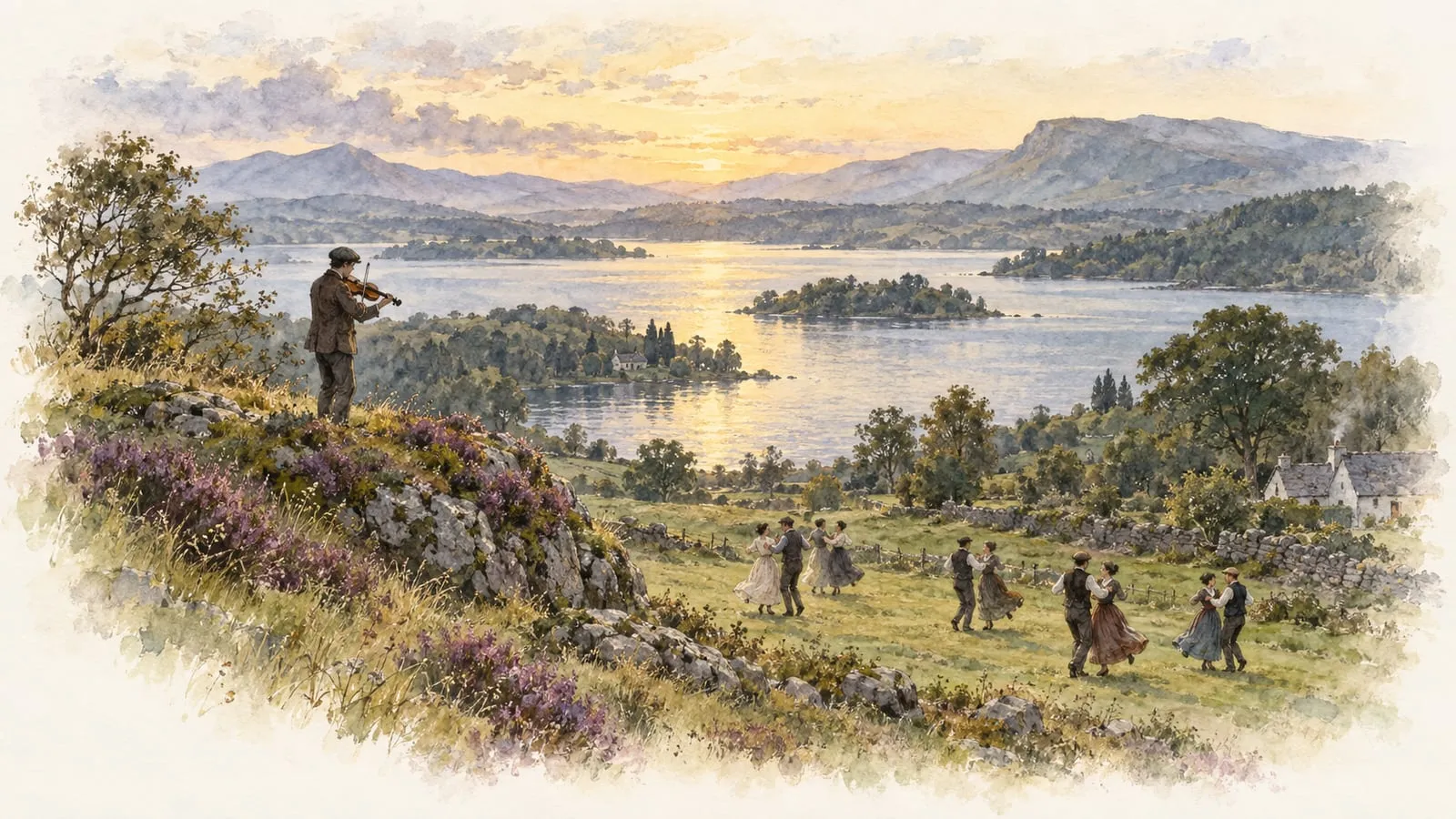
"I will arise and go now" echoes the Prodigal Son's words in the Bible, so the daydream sounds like a solemn vow. He plans island life in exact, practical detail: a cabin "of clay and wattles made", "Nine bean rows", a hive. The compound "bee-loud glade" lets you hear the place before you see it.
Lines 5 to 8The peace he imagines
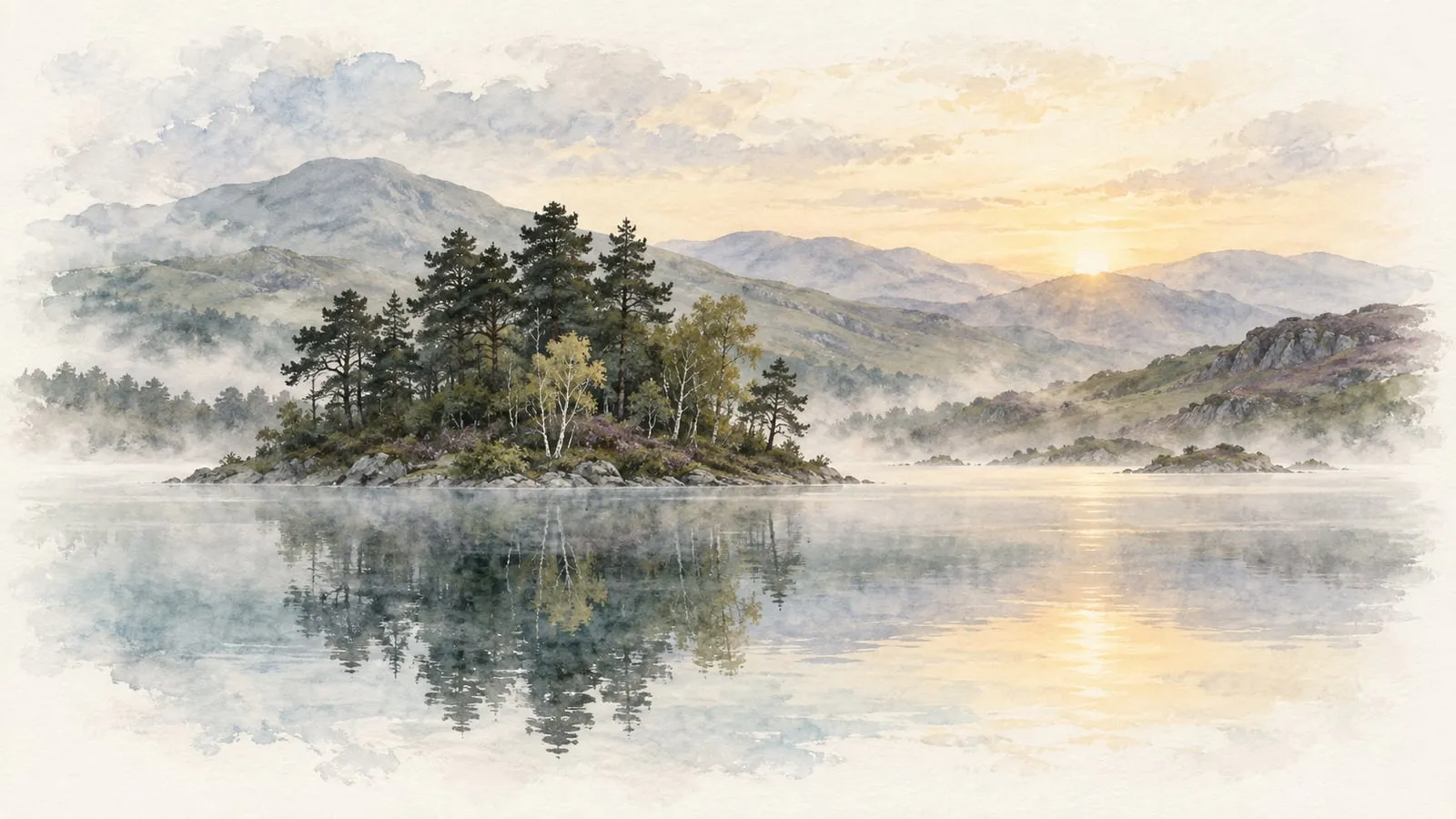
Peace is pictured like mist or dew, something that "comes dropping slow". The stanza moves through a whole day: the "veils of the morning", the cricket, a midnight "all a glimmer", noon's "purple glow" and an evening "full of the linnet's wings". Soft, repeated sounds ("dropping", "Dropping") slow the verse to the pace of the place.
Lines 9 to 12Back on the pavement
The opening vow returns, and now we learn why: night and day he hears "lake water lapping with low sounds by the shore", the run of l sounds imitating the water. Line 11 reveals that he is standing on a roadway, on "pavements grey". The last line moves Innisfree inside him, to "the deep heart's core".
Themes
Escape
The poem is built on a wish to leave. The first line says "go" twice, and the vow returns in line 9. Yet he never goes: everything on the island is in the future tense ("will", "shall"), and the only present-tense place is the roadway. Because the escape is imagined, it can be complete and untroubled in a way no real journey could be.
City and nature
Everything on the island is natural or made by hand: clay, wattles, bean rows, bees, crickets, linnets. The city appears only in line 11, in two plain images, the "roadway" and the "pavements grey". The contrast is left to do its own work: sound, colour and slowness on one side, greyness on the other. The city is never described, only felt as the place where he stands.
Inner peace
Peace here is not an event but a slow process: it "comes dropping slow", like dew settling. By the final line the island has become an inner place, heard constantly beneath the noise of the street and held in "the deep heart's core". The longing itself, the poem suggests, is a kind of refuge that he carries with him.
Context
Yeats wrote the poem in London in 1888, when a sudden memory of Sligo came back to him in Fleet Street. In his memoirs he traced it to a small fountain in a shop window, whose tinkle of water reminded him of lake water. The poem was first printed in the National Observer on 13 December 1890.
Innisfree is a small wooded island in Lough Gill, the lake east of Sligo town, where Yeats spent much of his childhood with his mother's family. As a boy he had dreamed of living there alone, as the American writer Thoreau lived by Walden Pond. The poem was collected in The Countess Kathleen and Various Legends and Lyrics (1892), in the group of lyrics later called "The Rose", and became the best known of his early poems.
Form
Three quatrains rhyming ABAB. In each stanza the first three lines are long, with six beats and a pause in the middle, like a slow rocking movement; the fourth is short, with four beats. So every stanza settles at its close, and the last line of the poem lands quietly and firmly: "I hear it in the deep heart's core."
Studying this poem
What to focus on
- How sound (alliteration, assonance and the long rocking lines) creates the poem's sense of peace and of lapping water.
- The contrast between the richly imagined island and the grey city, revealed only in line 11.
- How the future tense and the repeated "I will arise and go now" show a longing that is never acted on.
- Whether Innisfree is a real place or an ideal, inner one carried in "the deep heart's core".
- The poem as an example of Yeats's early, musical and Romantic style, compared with his later, harder poems.
Key quotations
I will arise and go now, and go to Innisfree,
The urgent repetition of "go" and the biblical echo turn a daydream into a solemn vow, though the poem never shows him leaving the city.
bee-loud glade
A compact compound image that makes sound part of the landscape: the hum of the bees defines the island's richness and calm.
for peace comes dropping slow
Peace is pictured falling gradually, like dew or mist. It cannot be seized quickly; it has to be waited for, and the slow rhythm enacts that.
I hear lake water lapping with low sounds by the shore;
The run of l sounds imitates the gentle lapping of water: a clear example of sound echoing sense, useful for any question on Yeats's music.
While I stand on the roadway, or on the pavements grey
The only glimpse of his real surroundings. The drab city makes the island vivid by contrast, and the inverted "pavements grey" leaves the stress on greyness.
I hear it in the deep heart's core.
The island is finally located inside him. The heavy stresses of the short last line give the poem a settled, deeply felt close.