The Stolen Child
Listen
Text: Poetry, by W. B. Yeats (Standard Ebooks, 2024), from the collected editions of 1908 to 1928. Public domain.
In brief
SummaryFairies lure a human child away from home to the Sligo wilds.
Fairies speak to a human child, tempting him away from home. In each of the first three stanzas they describe a place in the Sligo countryside where they play: a leafy island in the lake where they hide stolen berries and cherries, the moonlit sands of the Rosses where they dance all night, and the hill pools above Glen-Car where they whisper to sleeping trout. Each stanza ends with the same call, "Come away, O human child!", and the same reason: the world is "more full of weeping than you can understand". In the last stanza the child goes. The fairies list what he will never hear again, the calves, the kettle, the mice round the oatmeal-chest, and the refrain changes so that he leaves "From a world more full of weeping than he can understand." Fairyland is lovely and a little cruel, and the homely things left behind carry the poem's sadness.
Lines to remember
Come away, O human child!
For the world's more full of weeping than you can understand.
Line by line
Lines 1 to 8The island hideout
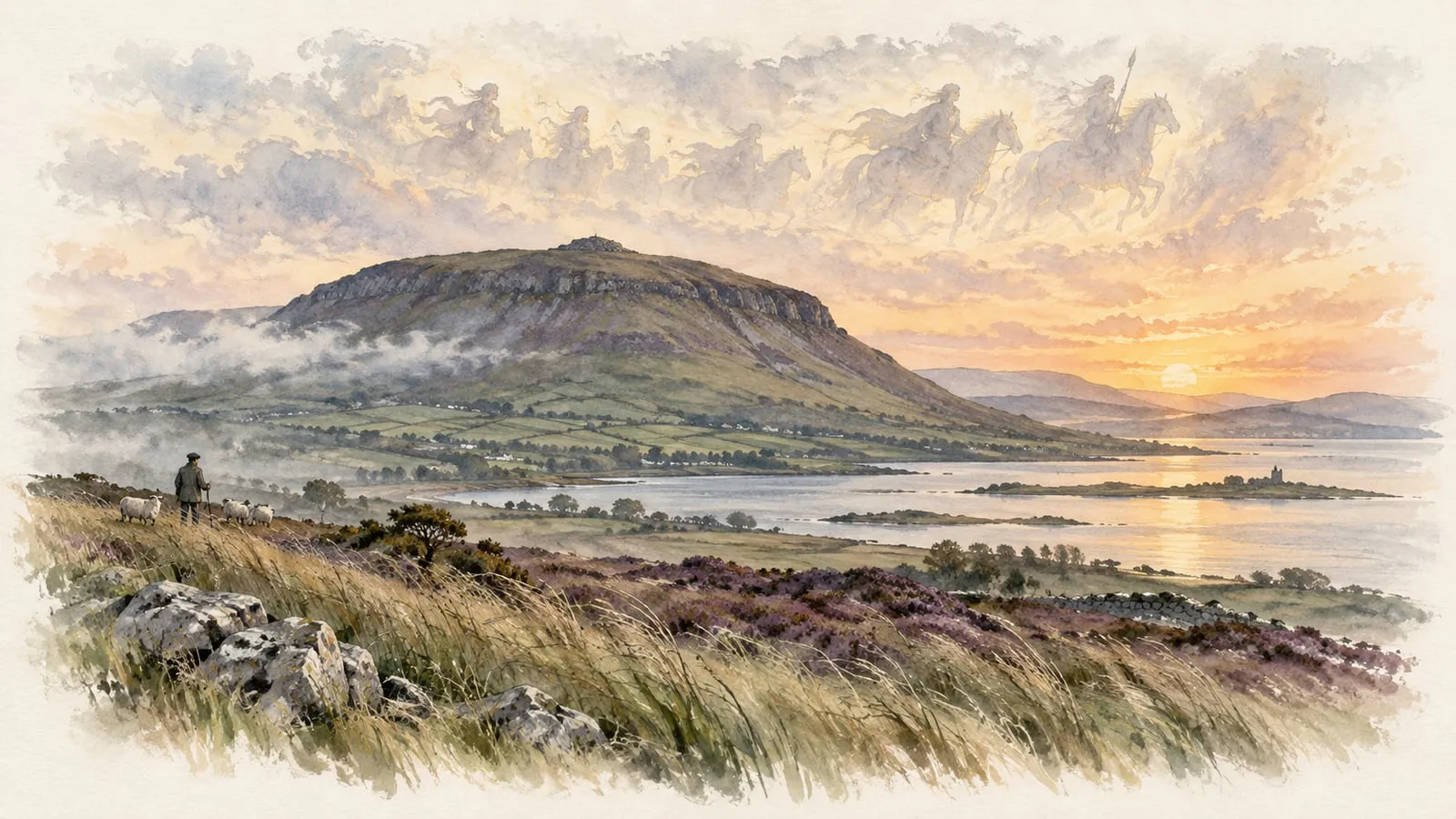
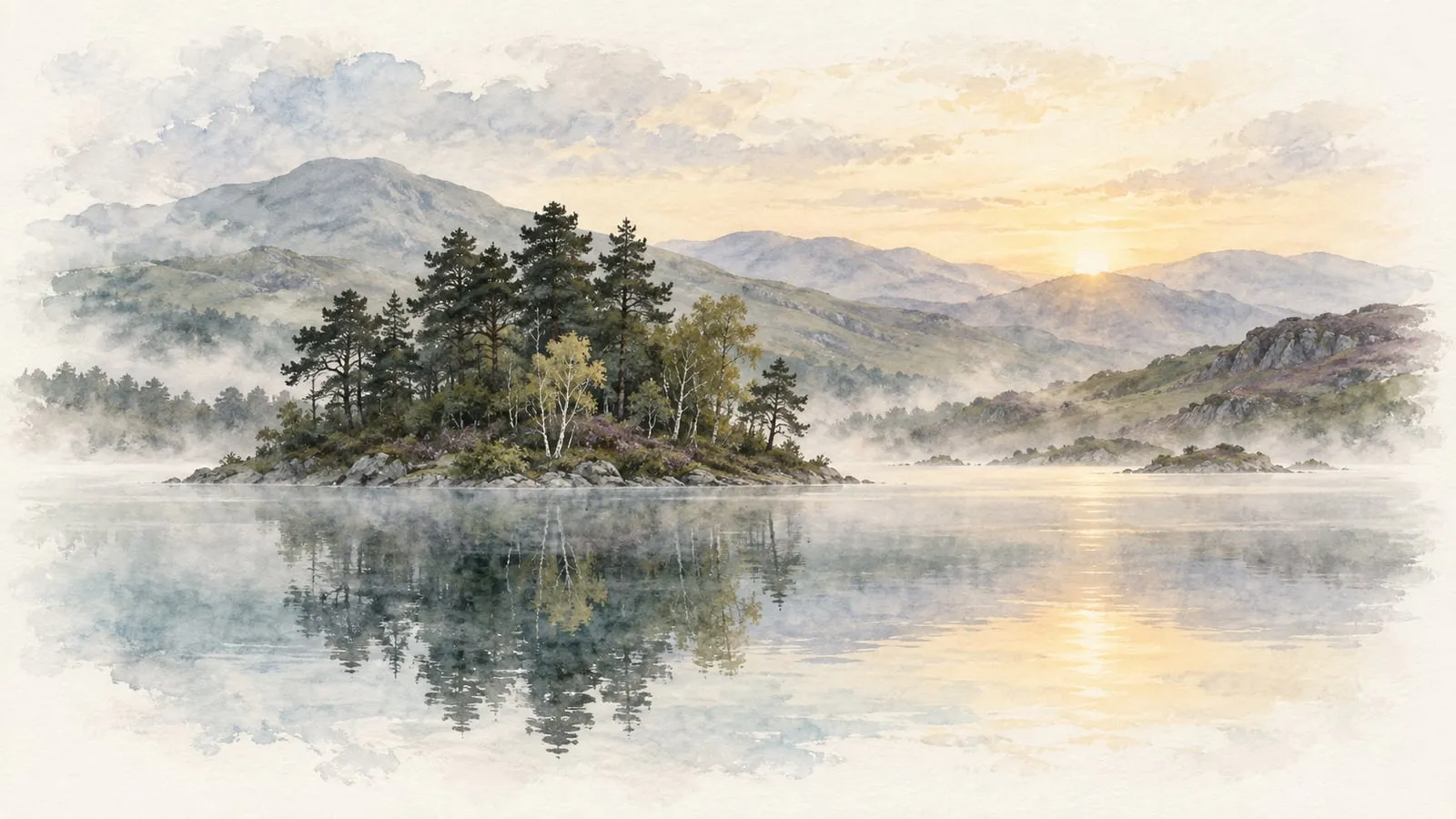
The fairies begin with a real landscape: Sleuth Wood dipping into the lake, and a leafy island where herons wake "The drowsy water rats". Their secret store of "faery vats", full of berries and "reddest stolen cherries", hints early that these charming speakers are thieves.
Lines 9 to 12The first call
The refrain holds out a hand: "Come away, O human child!" Three short lines trot along, then the last one stretches to nearly twice their length, as if to take in how much weeping the world holds. The fairies offer escape from sorrow, not just play.
Lines 13 to 23Dancing on the Rosses
Now the fairies dance by "furthest Rosses" under the moon, "Weaving olden dances" all night and chasing "the frothy bubbles" of the surf. Their carefree night is set against the human world, "full of troubles" and "anxious in its sleep", the one moment the stanza turns to us.
Lines 24 to 27The call again
The refrain returns word for word. After the moonlit dancing, the promise of "the waters and the wild" sounds even more tempting, and the repeated lines begin to work like a spell.
Lines 28 to 37Mischief at Glen-Car
High above Glen-Car, in pools so small they "scarce could bathe a star", the fairies lean out from the ferns and whisper to sleeping trout, giving them "unquiet dreams". It is a delicate picture with an edge to it: the fairies trouble whatever sleeps.
Lines 38 to 41The third call
The refrain comes a third time. By now the reader knows it by heart, and its easy swing makes going away seem the most natural thing in the world.
Lines 42 to 49What he leaves behind
The child is going, "The solemn-eyed". The fairies list what he will lose: calves lowing on the hillside, the kettle on the hob that sings "peace into his breast", brown mice bobbing round the oatmeal-chest. These plain farmhouse sounds are the warmest images in the poem.
Lines 50 to 53The refrain changes
The invitation becomes a fact: "For he comes, the human child". The last line shifts too. He now comes "From a world" of weeping that "he" cannot understand, and the reader, left behind in that world, feels the loss.
Themes
Fairyland and its cost
The fairies are beautiful and persuasive: they dance, they hand the child a world of "the waters and the wild". But they are also thieves, with their "stolen cherries", and they give sleeping trout "unquiet dreams". Their promise of a world without weeping comes at the price of everything human, and the poem never quite says whether the child is rescued or lost.
Home and childhood
The last stanza turns the poem round. The calves on "the warm hillside", the kettle that sings "peace into his breast", the mice round the oatmeal-chest: these small, cosy things are what the child gives up. Set against the fairies' wild romance, they show that the ordinary world, for all its weeping, holds real comfort.
The Sligo landscape
Each stanza is fixed to a real place: Sleuth Wood and its lake, the sands of the Rosses, the streams above Glen-Car. The fairy world is not somewhere far off but laid over a countryside Yeats knew well. Herons, water rats, trout and ferns make the magic feel close and physical.
Context
The poem first appeared in book form in The Wanderings of Oisin and Other Poems (London, January 1889), Yeats's first collection of lyrics. He later grouped these early lyrics as "Crossways", the opening section of his collected poems. It is one of the best known of his early poems, full of the Sligo places he knew from childhood visits to his mother's family.
Every place in it can be found on a map. Sleuth Wood is Slish Wood, on the south shore of Lough Gill; Rosses Point is the seaside village at the mouth of Sligo harbour, where Yeats and his brother Jack spent summers with their cousins; the water "gushes" at Glencar, on the Sligo and Leitrim border. The story draws on the old Irish belief that fairies steal human children away.
Form
Four stanzas of 12, 15, 14 and 12 lines. Each opens with short lines of about three beats, rhymed in pairs or alternately ("highland", "island"; "lake", "wake"), and closes with a four-line refrain whose last line is far longer than the rest. The refrain's swing works like a chant, so its small change at the end lands with extra force.