The Man who dreamed of Faeryland
Listen
Text: Poetry, by W. B. Yeats (Standard Ebooks, 2024), from the collected editions of 1908 to 1928. Public domain.
In brief
SummaryGlimpses of faeryland spoil every earthly comfort for one man, even death.
Each of the four stanzas catches the same man at a moment of settled earthly life, and each time a small creature sings to him of faeryland and unsettles him. At Drumahair he has found love, until a heap of fish sings of an island where "Time may never mar" the lovers' vows. By the sands of Lisadell he has turned prudent, until a lug-worm sings of a joyful race beyond the sea. At the well of Scanavin he nurses anger at his mockers, until a knot-grass sings of a lonely folk at peace. Finally he lies in his grave under Lugnagall, but even there the worms about his bones sing of God's blessing on the island, and he "has found no comfort in the grave". Love, money, anger and death all lose their hold on him. The dream of the other world is lovely, and it ruins him.
Lines to remember
The singing shook him out of his new ease.
Until He burn up Nature with a kiss:
The man has found no comfort in the grave.
Line by line
Lines 1 to 4Love at Drumahair
He stands in a crowd at Drumahair, his heart "all upon a silken dress": he is in love and has found "some tenderness". The fourth line looks ahead to his burial, "Before earth made of him her sleepy care", so from the start we know this is a whole life told in four scenes.
Lines 5 to 12The singing fish
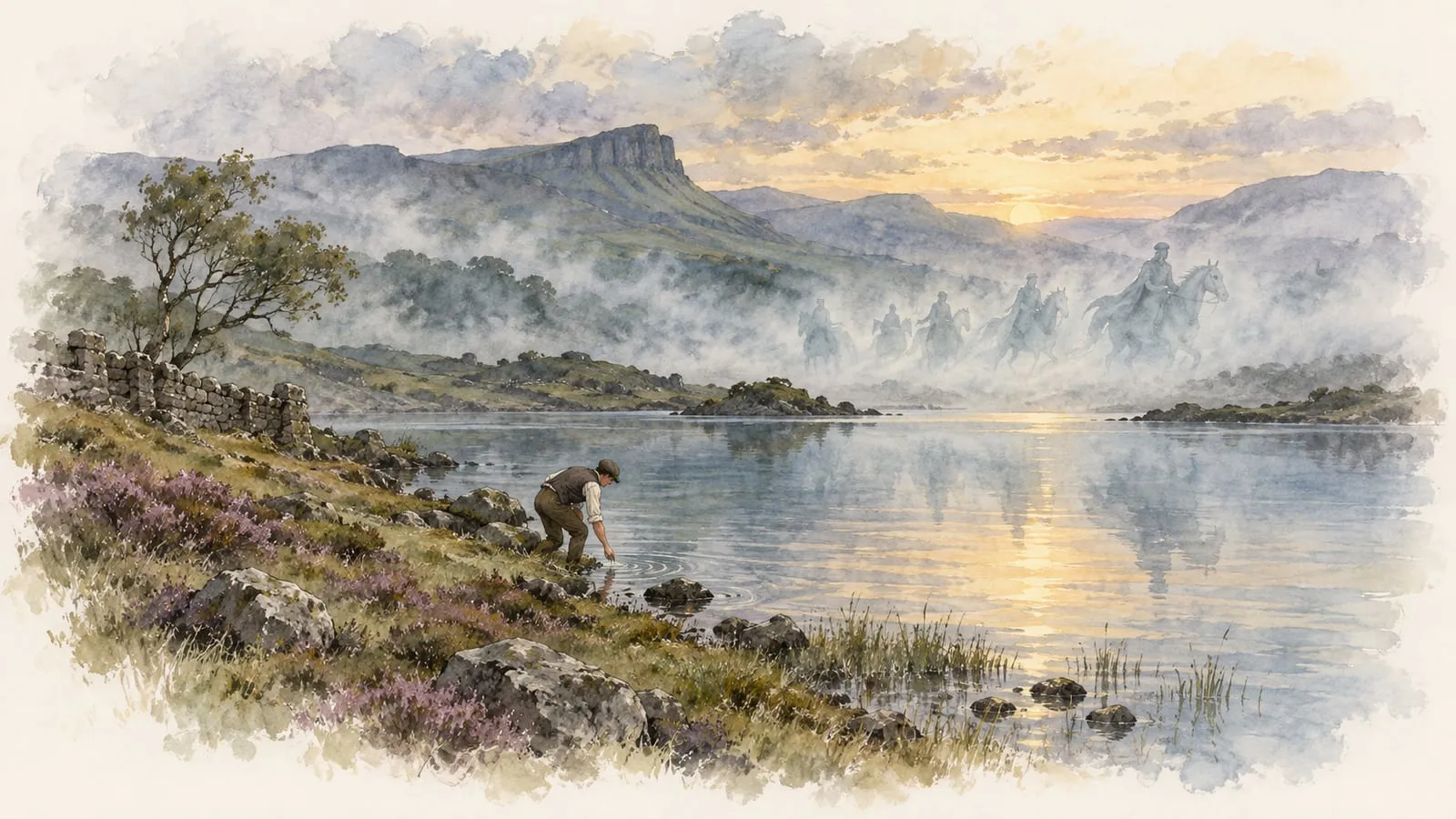
A man pours fish into a pile and the fish seem to lift "their little silver heads" and sing of a "dim, green, well-beloved isle" where love never fades, "Under the woven roofs of quicken boughs". The last line snaps back to the man: "The singing shook him out of his new ease."
Lines 13 to 16Prudence at Lisadell
Now older, he walks the sands of Lisadell thinking of "money cares and fears". He has "known at last some prudent years". Again the stanza glances forward to the grave heaped for him "under the hill". Each stanza opens in the same shape, like the verses of a ballad.
Lines 17 to 24The lug-worm's song
The singer this time is humbler still, a lug-worm with a "gray and muddy mouth". It sings of "a gay, exulting, gentle race" somewhere far off, where "A Danaan fruitage makes a shower of moons". The gap between muddy singer and magical song is part of the sadness: after it "he was no more wise".
Lines 25 to 28Anger at Scanavin
Beside the well of Scanavin he broods on those who mocked him, and on a revenge so fierce it would have become "a country tale". The glance at death returns, more bluntly: "deep earth has drunk his body in".
Lines 29 to 36The knot-grass
A small knot-grass by the pool, an "all-unneeded voice", tells how "Old Silence" bids a lonely folk rejoice and crown themselves with leaves. Peace wraps them "like a fleece" as day fades. The tale does not comfort him; it simply drives "his fine angry mood away", leaving nothing in its place.
Lines 37 to 40In the grave
Now he is dead, buried "under the hill of Lugnagall". He "might have known at last unhaunted sleep" beneath the cold, misty slope, the "vapour-turbaned steep". The word "might" warns that even death will not be quiet.
Lines 41 to 48The worms' song
The worms twisting about his bones sing that God blessed the faery isle "with honey in His tones", so that no one there will suffer storm or loss "Until He burn up Nature with a kiss". The final line is flat and bleak: "The man has found no comfort in the grave."
Themes
The other world
Faeryland is never seen directly, only reported in songs: an isle where love lasts, a joyful race, a peaceful lonely folk, a place God has blessed. Its images are soft and bright ("star-laden seas", "a shower of moons", a "leaf-crowned dancer"). Against it every ordinary satisfaction looks thin, and that is the trouble: each glimpse unfits him for the life he has.
Restlessness
The man tries four ways to settle: love, prudence, anger and death. Each stanza names the settlement ("new ease", "prudent years", "fine angry mood", "unhaunted sleep") and then undoes it in the last line. The pattern is relentless and a little comic, but the last line, "no comfort in the grave", makes the restlessness eternal.
Small voices
The messengers are deliberately lowly: a pile of fish, a lug-worm with a muddy mouth, a knot-grass, the worms around his bones. The smallest things in nature carry the largest vision. The contrast belongs to the folk-tale manner of the poem, where the supernatural breaks in through ordinary country sights.
Context
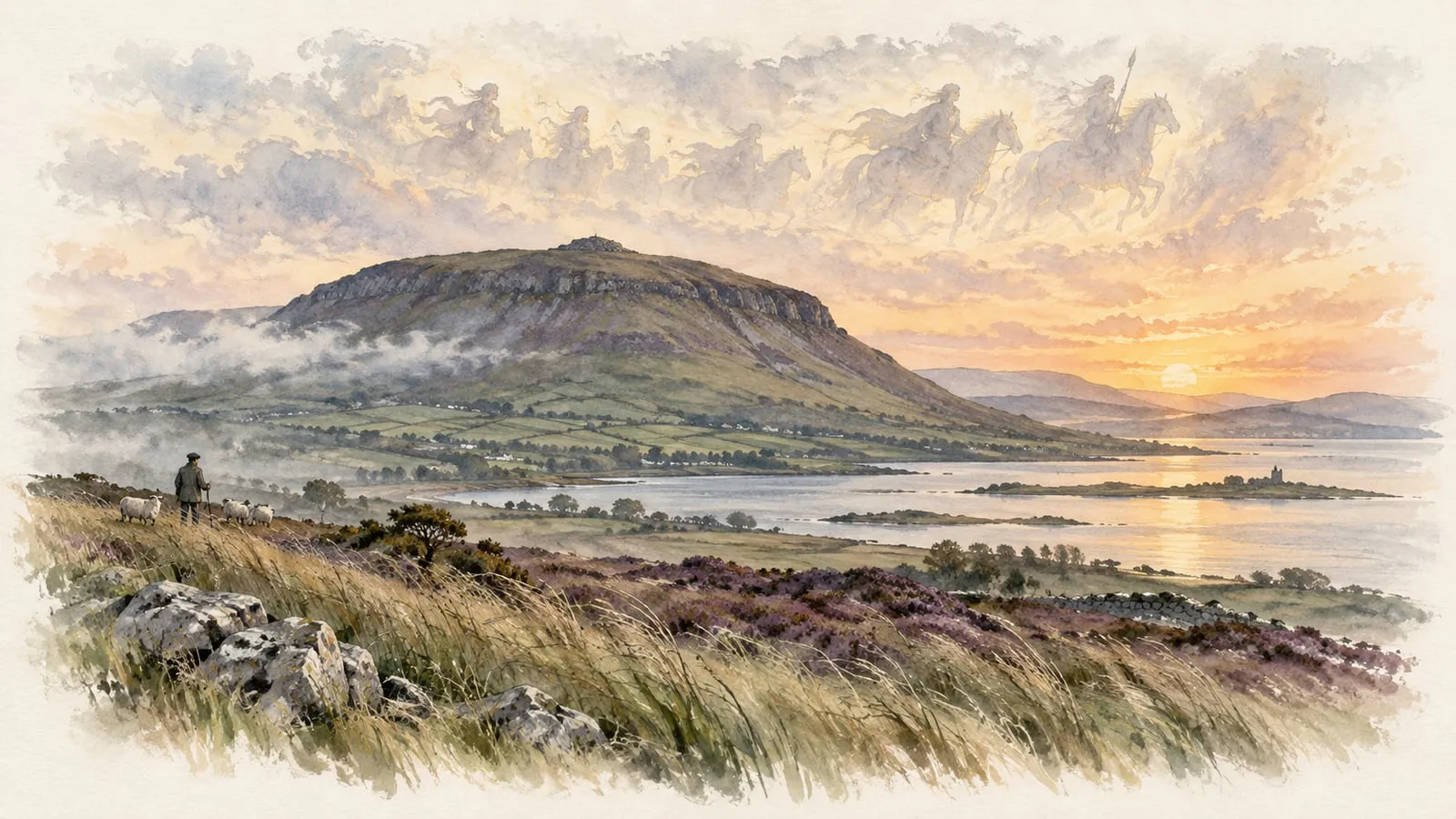
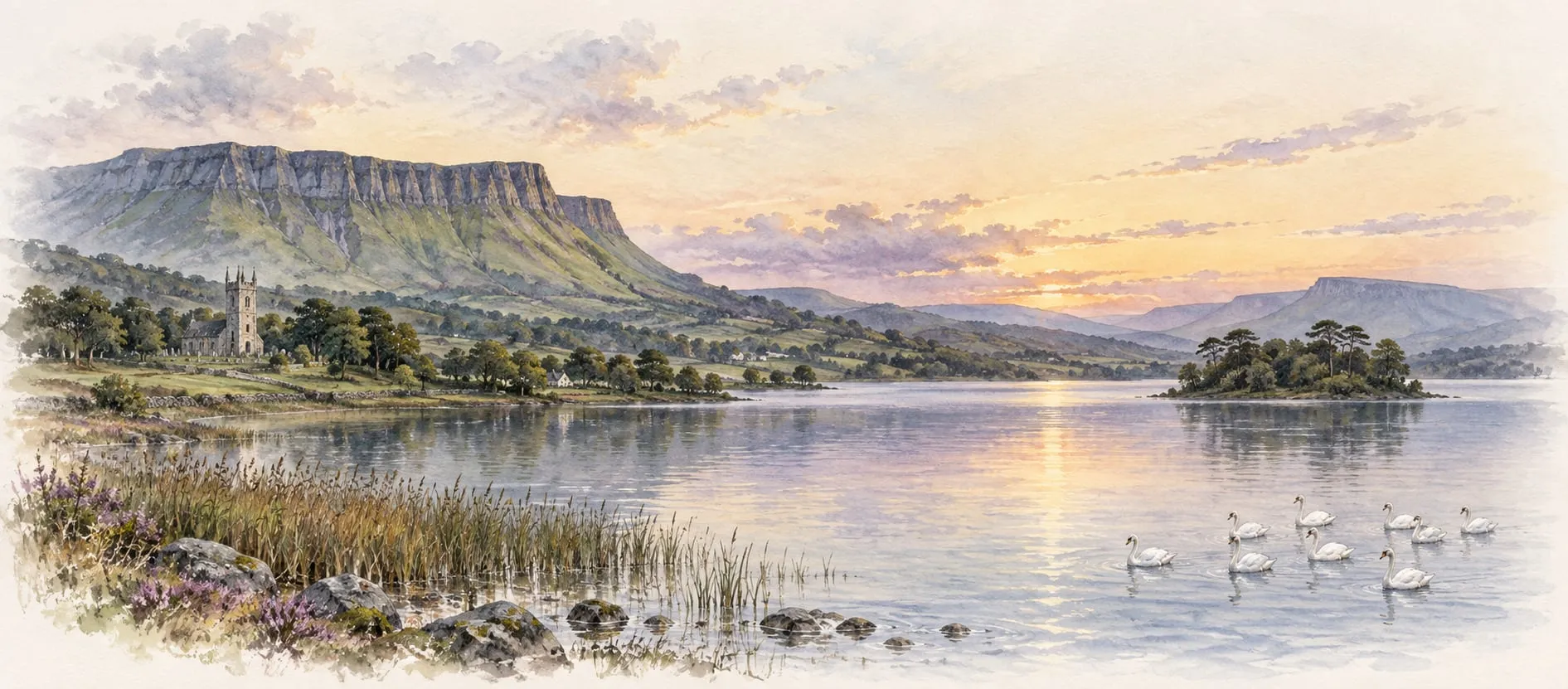
The poem first appeared in book form in The Countess Kathleen and Various Legends and Lyrics (1892), among the lyrics Yeats later grouped as "The Rose". Its settings come from the Sligo and Leitrim country he knew from childhood: Dromahair, a village near Lough Gill; the shore at Lissadell; the well of Scanavin; and Lugnagall, a hillside townland in the Glencar valley.
It draws on the Irish belief that a person touched by the faeries can never again be content with ordinary life. The "Danaan" race of line 22 are the Tuatha De Danann, the old gods of Ireland, who in folk memory became the people of the hills.
Form
Four twelve-line stanzas in iambic pentameter. Each is built from three quatrains rhymed ABBA ("Drumahair", "dress", "tenderness", "care"). The stanzas follow one pattern: a place, a stage of life, a glimpse of death, a small singer, then a final line that breaks the spell. The repetition gives the poem the feel of a folk tale told four times over.