The Hosting of the Sidhe
Earlier titled "The Hosting of the Shide"
Listen
Text: Poetry, by W. B. Yeats (Standard Ebooks, 2024), from the collected editions of 1908 to 1928. Public domain.
In brief
SummaryThe faery host rides out, calling mortals to abandon their dreams.
The Sidhe, the faery people of Irish legend, are riding across the Sligo country from Knocknarea. At their head are Caolte, tossing his burning hair, and Niamh, calling "Away, come away". Midway the poem switches voice: the riders speak for themselves, with pale cheeks, unbound hair and heaving breasts, and warn that anyone who gazes on them will lose both "the deed of his hand" and "the hope of his heart". The last lines repeat the opening, so the host seems to sweep past and keep going. It is a poem of wild, dangerous glamour.
Lines to remember
And Niamh calling Away, come away:
Empty your heart of its mortal dream.
We come between him and the hope of his heart.
Line by line
Lines 1 to 5The host rides
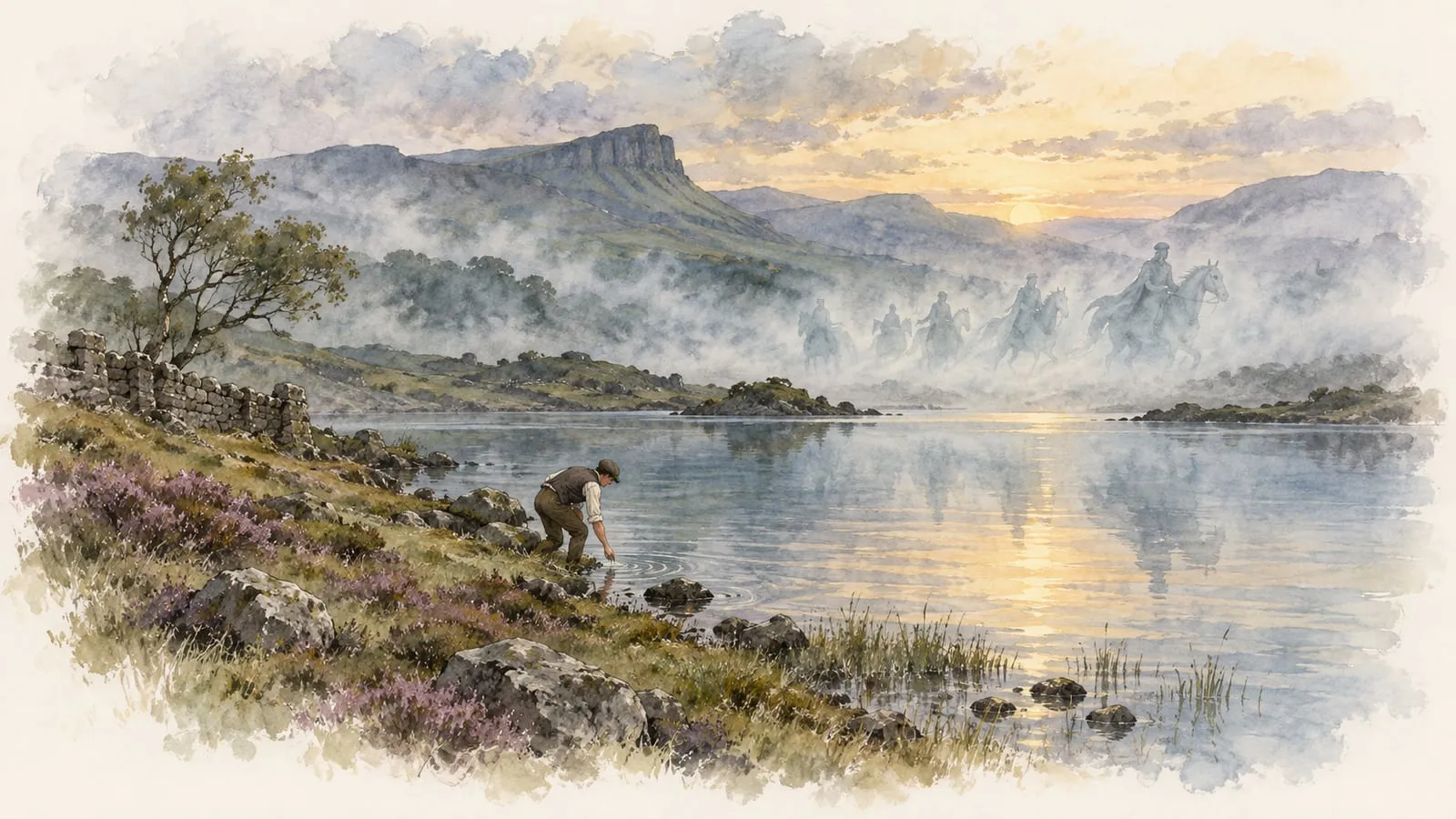
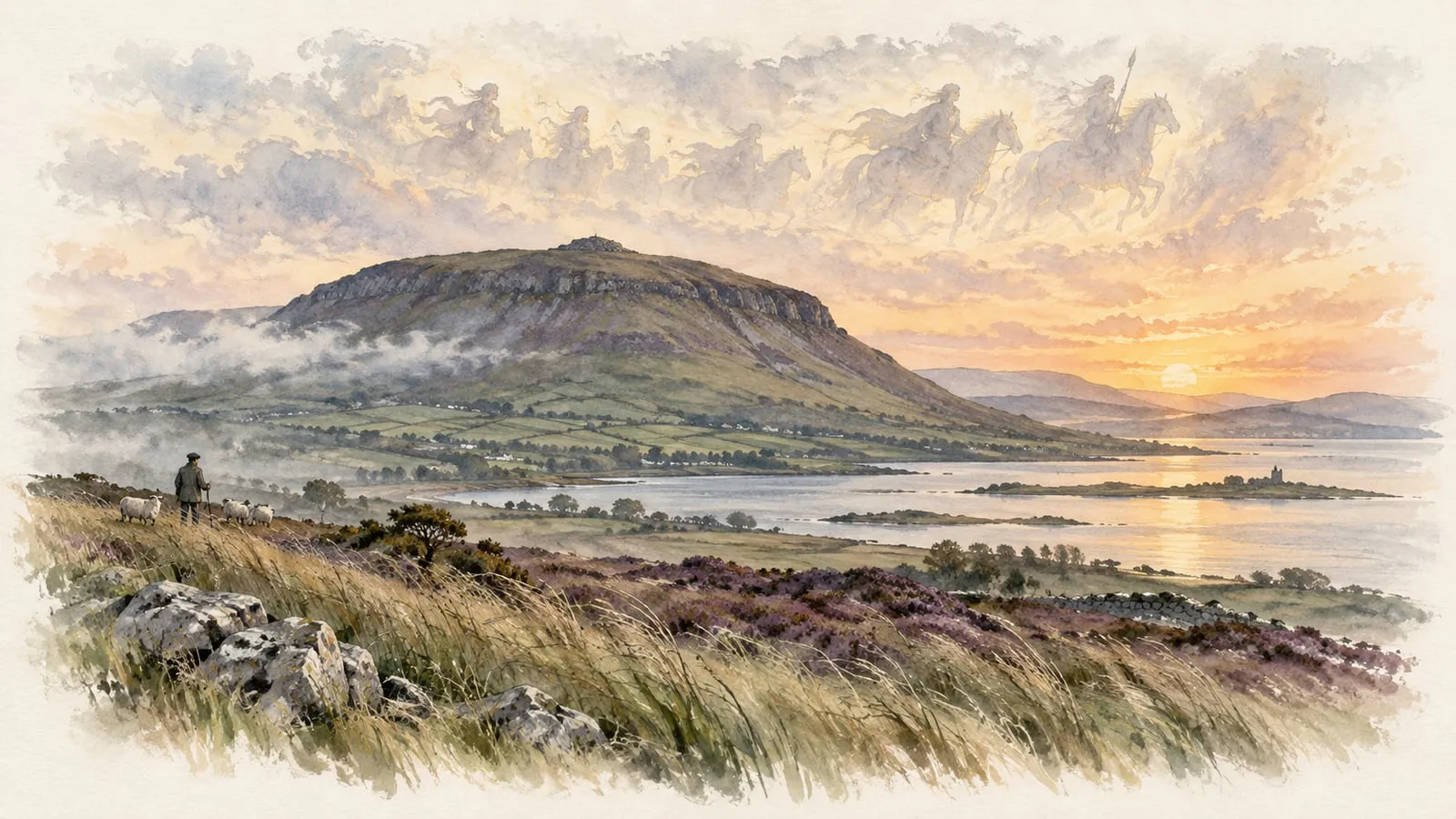
The host rides from Knocknarea and over the grave of Clooth-na-Bare. Caolte tosses "his burning hair" and Niamh calls "Away, come away", urging the listener to "Empty your heart of its mortal dream". Human life itself is the dream here; the faery world claims to be more real.
Lines 6 to 12The riders speak
Now "Our" takes over: the Sidhe describe themselves in a rush of short clauses, winds awakening, leaves whirling, cheeks pale, eyes "agleam". Their threat is quiet and total. Whoever looks at them loses his purpose: "We come between him and the hope of his heart."
Lines 13 to 16Sweeping on
The host rushes "'twixt night and day", in the twilight hour. A single challenge, "where is there hope or deed as fair?", sets their beauty above all human effort, and then the opening lines return as the riders pass on.
Themes
Faery enchantment
The Sidhe are beautiful and perilous. Their call, "Away, come away", is an invitation to leave ordinary life for good. Anyone who gazes on them is changed: they come "between him and the deed of his hand". Much of the poem's excitement comes from never deciding whether this is liberation or loss.
Wind and movement
Everything in the poem moves: the host rides and rushes, "The winds awaken", leaves "whirl round", arms wave and hair is unbound. In Irish folklore the faeries were thought to travel in whirlwinds, and the poem's rhythm, with its quick, skipping beats, feels like a gust passing through.
Context
The poem opens The Wind Among the Reeds (1899), the book in which Yeats's early style reached its most elaborate. Knocknarea is the hill west of Sligo topped by the great cairn traditionally called Queen Maeve's grave, and it recurs in his early poems of the Sidhe.
Caolte was one of the Fianna, the war band of Finn mac Cumhaill, famed for his speed. Niamh is the faery woman who carried Oisin away to the Land of Youth, the story Yeats had told in The Wanderings of Oisin (1889).
Form
Sixteen lines with four strong beats and quick, skipping syllables between them. The rhymes fold inwards in groups of four, ABBA ("Knocknarea", "Clooth-na-Bare", "hair", "away"). The run of lines beginning "Our" and "We come" gives the middle a chanting drive, and lines 15 and 16 repeat lines 3 and 4.
Wikisource has a duplicate page with the misspelling 'The Hosting of the Shide'; use the 'Sidhe' page.