The Unappeasable Host
Earlier titled "A Cradle Song"
Text: Poetry, by W. B. Yeats (Standard Ebooks, 2024), from the collected editions of 1908 to 1928. Public domain.
In brief
SummaryA mother fears the faery host that calls her child away.
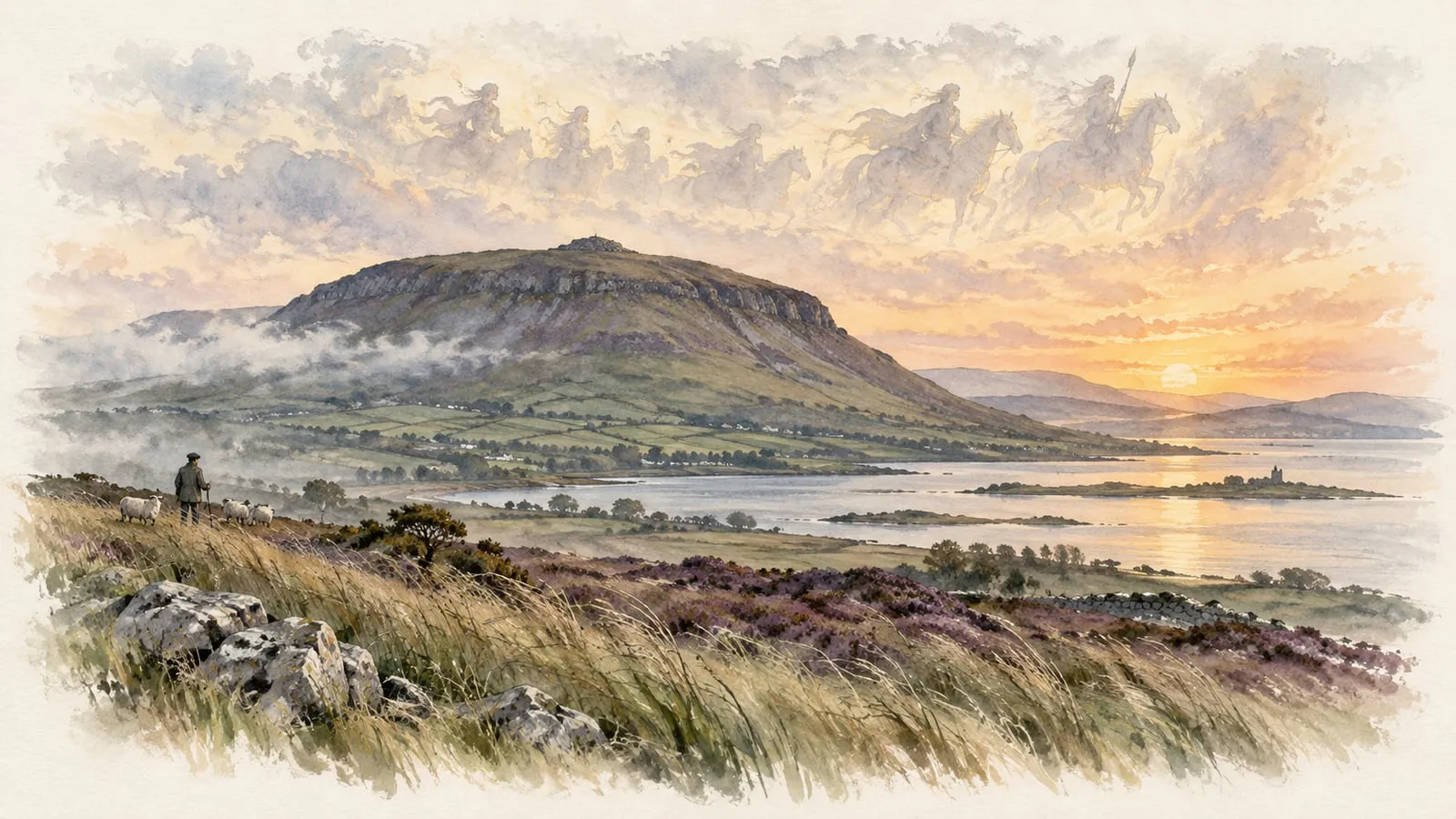
The poem sets two cradles side by side. The Danaan children, the faery children, laugh in "cradles of wrought gold", knowing they will ride the North when the great bird flies. The speaker, a mother, kisses her wailing child and hears "the narrow graves" calling them both. Then comes a litany of "Desolate winds" crying over the sea, hovering in the West, beating at the doors of Heaven and Hell. The last lines admit something dangerous: to her shaken heart, the unappeasable faery host is lovelier than the candles at Mary's feet.
Lines to remember
The Danaan children laugh, in cradles of wrought gold,
Is comelier than candles at Mother Mary's feet.
Line by line
Lines 1 to 4The faery children
"The Danaan children" laugh in golden cradles and clap their hands, for they will "ride the North when the ger-eagle flies". Their future is wild and splendid, but the bird's "heavy whitening wings" and "a heart fallen cold" suggest something inhuman in it.
Lines 5 to 6The mortal child
The contrast is stark. The speaker kisses "my wailing child" and presses it close, but hears "the narrow graves calling my child and me". Mortal children cry, and mortal lives end in the grave.
Lines 7 to 10Desolate winds
Three lines open with "Desolate winds", building a chant. The winds cry over "the wandering sea", hover "in the flaming West" and beat on the doors of Heaven and Hell, blowing "many a whimpering ghost". The host's restless power reaches everywhere.
Lines 11 to 12The confession
She speaks to her own "heart the winds have shaken" and admits the truth: "the unappeasable host" is "comelier than candles at Mother Mary's feet". The faery world is more beautiful to her than Christian devotion, and that beauty is a danger to her and her child.
Themes
Faery and mortal
The golden cradles of the "Danaan children" stand against the mortal child and "the narrow graves". The faeries are deathless and wild; humans cry and die. The poem does not make the faery world kind. It is "unappeasable", never satisfied, and its beauty draws people away from home and faith.
Temptation
The final confession carries the poem's force. The speaker knows the Christian comfort of "candles at Mother Mary's feet", yet the host is "comelier". Her heart has been "shaken" by the winds. The poem catches a moment of spiritual danger, when the pull of the other world is stronger than home or church.
Context
The poem appeared in The Wind Among the Reeds (1899) under the title "A Cradle Song", and took its present title from 1906. It is a different poem from "A Cradle Song" in The Rose. The "Danaan children" are the children of the Tuatha De Danann, the old gods of Ireland, who in folk memory became the faeries, the Sidhe who fill this book.
Form
Twelve long lines of six beats, rhymed in folded quatrains, ABBA ("gold", "eyes", "flies", "cold"). The repeated "Desolate winds" at the start of lines 7 to 9 gives the middle the sound of a keening chant, while the long lines let each image unroll slowly, like wind across the sea.
Title only: 'A Cradle Song' in 1899 (Gutenberg 32233); 'The Unappeasable Host' from 1906. Not the same poem as 'A Cradle Song' in The Rose.