Into the Twilight
Listen
Text: Poetry, by W. B. Yeats (Standard Ebooks, 2024), from the collected editions of 1908 to 1928. Public domain.
In brief
SummaryA weary heart is urged to find comfort in Ireland's twilight and hills.
The poet speaks to his own "Out-worn heart", tired in a tired age, and calls it away from the quarrels of "wrong and right" into the grey twilight and the morning dew. Ireland, "Your mother Eire", is always young, even when hope falls, love decays and slander burns. The heart is invited to the hills, where sun, moon, woods and rivers work together as a "mystical brotherhood" and God winds his lonely horn. The last lines turn the opening's comfort into a quiet verdict: twilight and dew are kinder and dearer than love and hope.
Lines to remember
Out-worn heart, in a time out-worn,
And love is less kind than the grey twilight
Line by line
Lines 1 to 4Weary heart, come away
Both the heart and the age are "out-worn", and the speaker urges the heart to come "clear of the nets of wrong and right", as if moral argument were a trap. "Laugh, heart" and "Sigh, heart" make the address intimate, and the grey twilight and morning dew become its new home.
Lines 5 to 8Mother Eire
Ireland appears as a mother who stays young, her dew "ever shining" and her twilight grey. The speaker allows that hope may fall, love decay and his heart burn "in fires of a slanderous tongue", but the old country is untouched by these private wounds.
Lines 9 to 12The hills
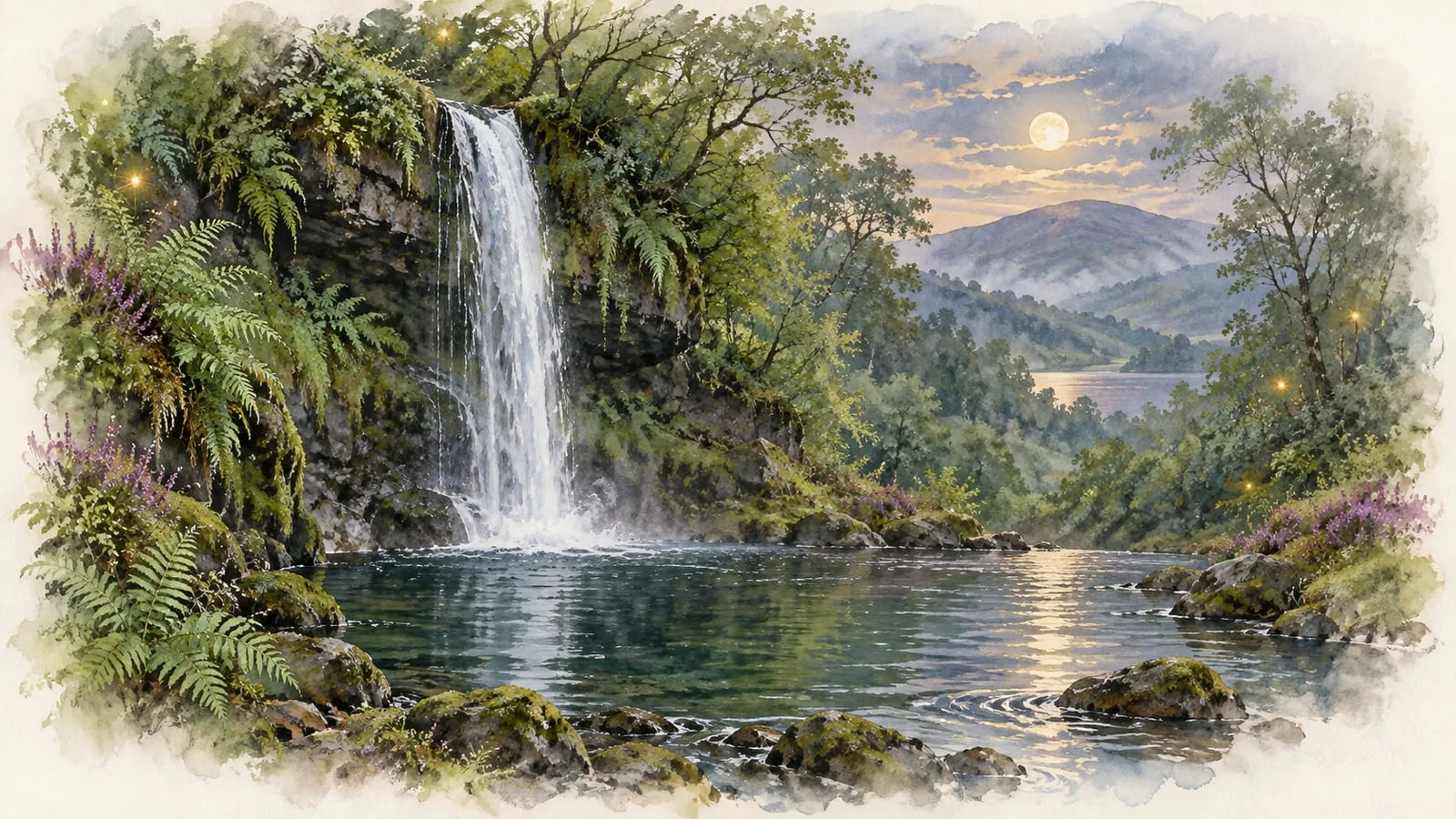
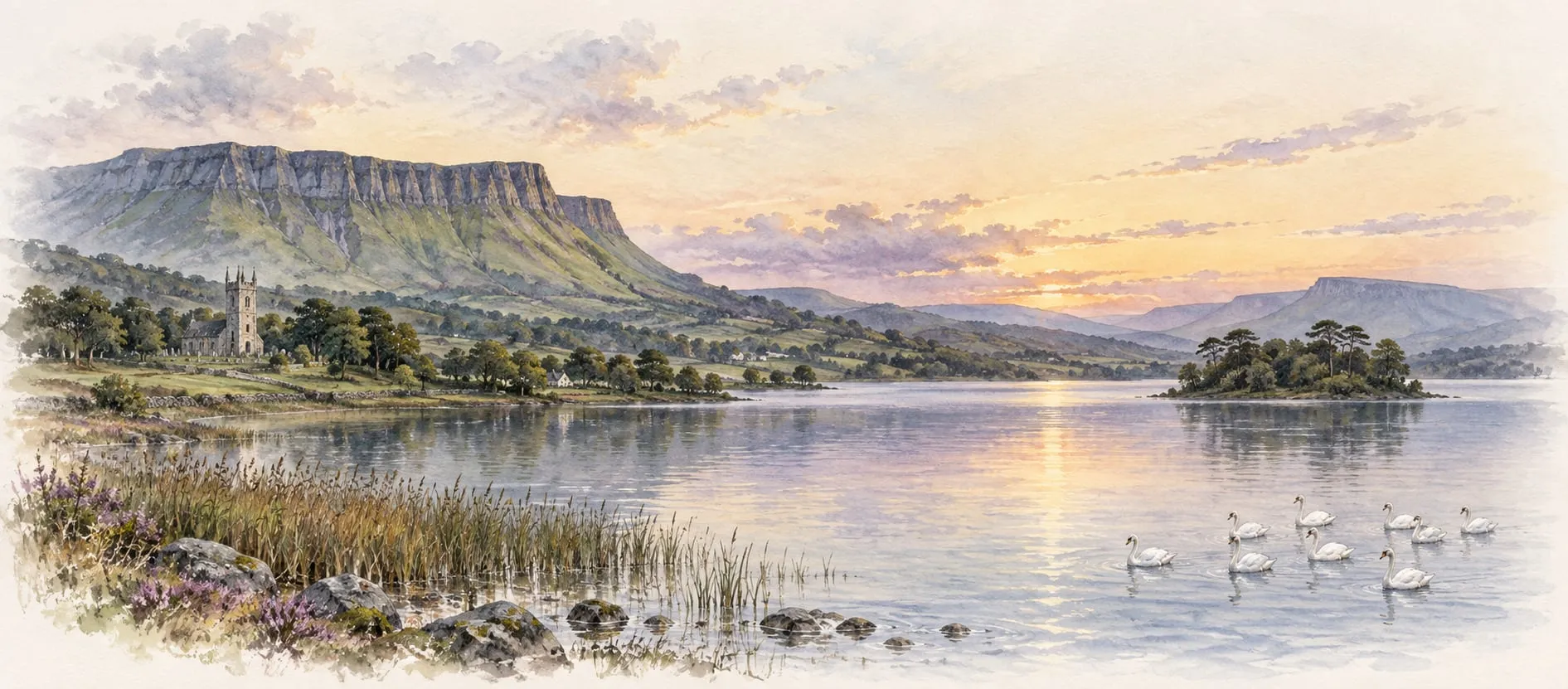
The heart is called "where hill is heaped upon hill". There sun, moon, hollow, wood, river and stream form "the mystical brotherhood", bound together by a long chain of "and"s. Nature is a living company with its own will, working without human quarrels.
Lines 13 to 16God's horn
God stands "winding His lonely horn", like a huntsman on the hills, while time and the world rush past. The last two lines bring back "grey twilight" and "dew of the morn" from the first stanza, now as measures: love is less kind and hope less dear than these.
Themes
Weariness and comfort
The poem begins in exhaustion: "Out-worn heart, in a time out-worn". It offers no argument or cure, only a place to go. The twilight and the dew are gentle, unchanging things, and by the end they outrank human feelings: "love is less kind than the grey twilight". Comfort comes from stepping out of time's hurry into the slow, steady life of the natural world.
Ireland
Ireland appears as "Your mother Eire", a figure who is "always young" whatever happens to her children. This is the Ireland of the early Yeats: ancient, rural and misty rather than political. The slander, lost hope and decaying love of lines 7 and 8 belong to the individual, while the country stays fresh, and the heart is told to rest in that permanence.
Nature as mystery
In the third stanza the landscape becomes a "mystical brotherhood" of sun, moon, hollow, wood, river and stream, all working "out their will". God is there too, "winding His lonely horn". The natural world is not scenery but a spiritual company, older and wiser than "the nets of wrong and right" that trap people.
Context
The poem was collected in The Wind Among the Reeds (Elkin Mathews, London, 1899), Yeats's book of love poems and mystical lyrics from the 1890s. Its grey twilight links it with his earlier prose book of Irish folk belief, The Celtic Twilight (1893), whose title became a name for the whole movement of dreamy, legend-haunted Irish writing in that decade.
The poem turns away from the arguments of the day, the "nets of wrong and right", towards landscape and myth. In these years Yeats tied his spiritual interests closely to Ireland, and here the country itself, young and unchanging, becomes the heart's refuge.
Form
Four quatrains rhyming abba, in four-beat lines with a loose, swinging rhythm. The rhymes of the first stanza ("out-worn" and "morn", "right" and "twilight") return in the last ("horn" and "morn", "flight" and "twilight"), so the poem ends where it began. Repeated words, "heart", "again" and "and", give it the sound of an incantation.