Who goes with Fergus?
Listen
Text: Poetry, by W. B. Yeats (Standard Ebooks, 2024), from the collected editions of 1908 to 1928. Public domain.
In brief
SummaryAn invitation to forget love's sorrows and ride with Fergus.
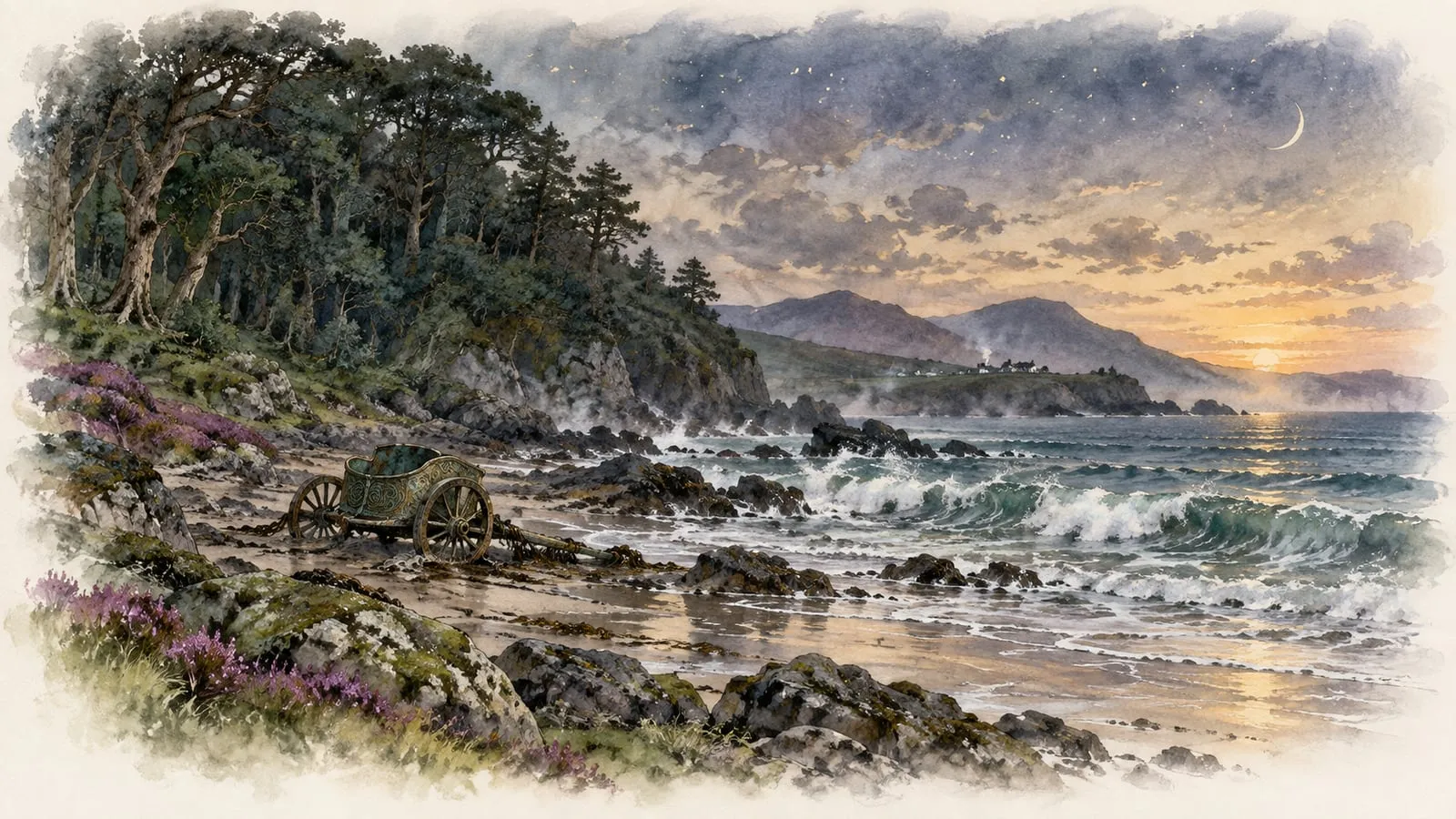
A voice calls on the young to join Fergus, the old Irish king, in his chariot: to drive into the deep woods and dance on the shore. The young man and the young woman are told to lift their eyes and stop brooding on "hopes and fears" and on "Love's bitter mystery". The reason comes in the second half of the poem: Fergus rules not just chariots but the shadows of the wood, the sea and the "dishevelled wandering stars". It is a short song of release, drawing the listener out of private grief into a wide, wild world.
Lines to remember
Who will go drive with Fergus now,
Upon Love's bitter mystery;
And all dishevelled wandering stars.
Line by line
Lines 1 to 6The invitation
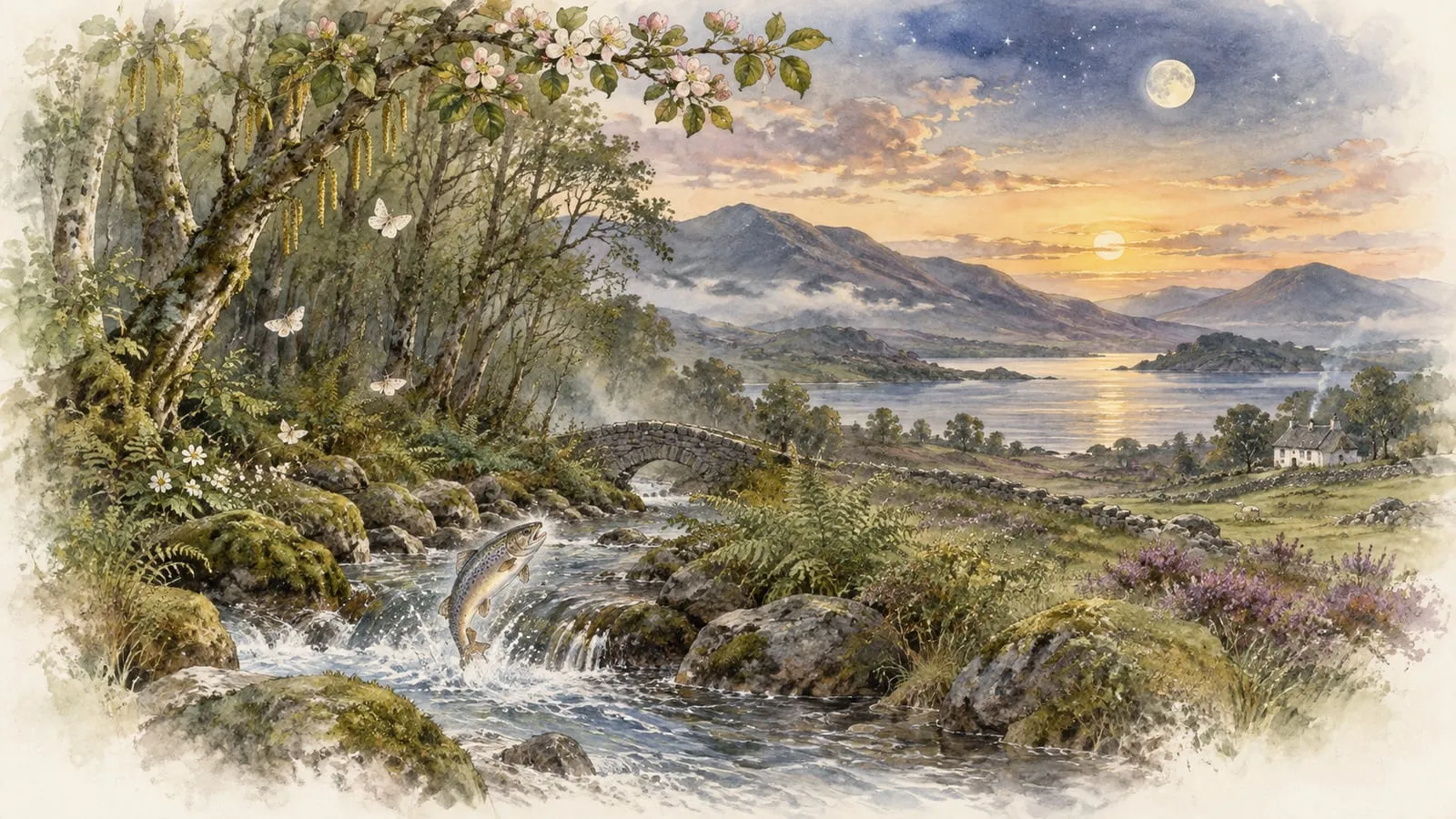
The poem opens with a question that works as a summons: who will "go drive with Fergus now"? The verbs promise movement, piercing "the deep wood's woven shade" and dancing "upon the level shore". Then it turns to the young man and the maid, telling them to lift their heads and "brood on hopes and fears no more".
Lines 7 to 12What Fergus rules
"Brood" carries over from the first stanza, linking the two halves. The young are to stop dwelling on "Love's bitter mystery", because Fergus rules "the brazen cars" and much more: the shadows of the wood, "the white breast of the dim sea" and the stars. The string of lines opening with "And" makes his kingdom grow until it fills the sky.
Themes
Escape from sorrow
The poem offers a cure for heartache: movement and open air. Brooding is named twice, in lines 6 and 7, and firmly set aside. In place of "Love's bitter mystery" the young are offered woods, shore, sea and sky. The poem does not say love's pain is unreal, only that there is a larger world to turn to.
Myth and mystery
Fergus belongs to the old heroic tales of Ulster, and here he rules wild nature as much as men. Almost everything in his kingdom is dim or shadowy, from "the shadows of the wood" to the "dim sea" and the "dishevelled wandering stars". To follow him is to go into the mysterious, where human worries shrink.
Context
The poem began as a song in Yeats's play The Countess Kathleen (1892) and appeared the same year among the lyrics of The Countess Kathleen and Various Legends and Lyrics, later grouped as "The Rose". Fergus is a king of Ulster from the old Irish tales; in "Fergus and the Druid", in the same group, Yeats shows him giving up his crown in search of the Druid's dreaming wisdom.
The song later found a famous reader. In James Joyce's Ulysses (1922), Stephen Dedalus remembers singing it to his dying mother, and its lines about love's bitter mystery keep returning to his mind in the opening chapter, as he broods on her death.
Form
Two six-line stanzas in iambic tetrameter, each rhyming ABCABC ("now", "shade", "shore" answered by "brow", "maid", "more"). The rhymes arrive three lines apart, so each stanza feels held open until its second half. The steady beat and the repeated "And" at the start of lines give it the feel of a song.