Ephemera
Listen
Text: Poetry, by W. B. Yeats (Standard Ebooks, 2024), from the collected editions of 1908 to 1928. Public domain.
In brief
SummaryTwo lovers walk by an autumn lake as their love fades.
Two lovers whose love is waning walk by a lake in autumn. He notices that her eyes, once never tired of his, are now bowed in sorrow. She asks that they stand by the lake together once more, in the gentle hour when "the poor tired child, Passion, falls asleep", and says how far away their first kiss seems. Yellow leaves fall around them, an old lame rabbit limps down the path, and she gathers dead leaves into her bosom and hair. His answer is not despair. "Ah, do not mourn," he says: other loves await them, and their souls are "love, and a continual farewell." Love here is something that endlessly ends and begins again.
Lines to remember
When the poor tired child, Passion, falls asleep:
Passion has often worn our wandering hearts.
Are love, and a continual farewell.
Line by line
Lines 1 to 3His sorrow
He speaks first: her eyes, "that once were never weary of mine", are now "bowed in sorrow under their trembling lids". The third line, short and flat, gives the reason plainly: "Because our love is waning."
Lines 4 to 10Her request
She agrees their love is waning but asks to stand "By the lone border of the lake once more", in the hour when "the poor tired child, Passion, falls asleep". Passion becomes a worn-out infant. The stars seem far, their first kiss further, and she cries "how old my heart!"
Lines 11 to 13A slow reply
They pace "along the faded leaves", hand in hand, and he answers slowly: "Passion has often worn our wandering hearts." The heavy w sounds in "worn" and "wandering" make the line sound as tired as the lovers.
Lines 14 to 21Falling leaves
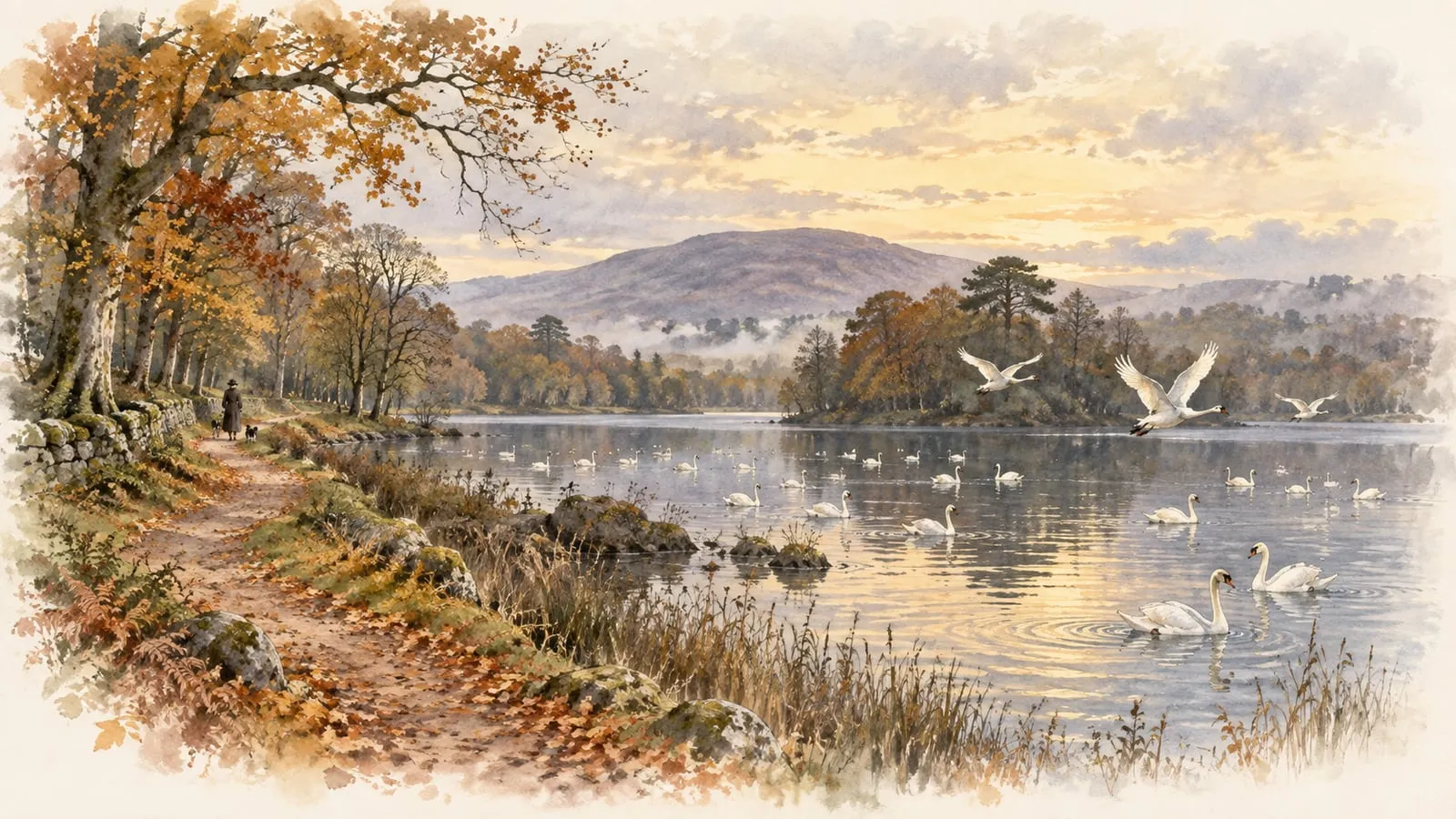
The woods close round them and yellow leaves fall "like faint meteors in the gloom". An old, lame rabbit limps past: "Autumn was over him". At the lake she has gathered dead leaves into "bosom and hair", dressing herself in the dying season. Then he speaks: "Ah, do not mourn".
Lines 22 to 25A continual farewell
He tells her not to grieve that they are tired, "for other loves await us". They should go on hating and loving without complaint, since "Before us lies eternity". The final line sums up the poem: their souls "Are love, and a continual farewell."
Themes
Fading love
The poem begins where most love poems end, with love "waning". Nothing dramatic has happened; the lovers are simply tired, and "Passion has often worn our wandering hearts". Yeats treats this gently. The sorrow is real, but neither lover blames the other, and the ending suggests that love's endings are part of love itself.
Autumn and ageing
Every detail of the setting reflects the lovers' state: "faded leaves", yellow leaves falling "like faint meteors", an old rabbit over whom "Autumn" hangs. She says "how old my heart!" though nothing suggests they are old in years. When she thrusts dead leaves into her hair, she seems to accept the season as her own.
Eternity
The title means short-lived things, creatures that last only a day. Yet the last lines look beyond this life: "Before us lies eternity", and "other loves await us". Each love may be brief, but the soul goes on loving, again and again, as "a continual farewell".
Context
The poem was first collected in The Wanderings of Oisin and Other Poems (London, January 1889), Yeats's first book of lyrics, and later placed among the early poems he called "Crossways". It shares its autumn setting and its theme of waning love with "The Falling of the Leaves", which comes just before it in the group.
The Greek title ("ephemera" means things lasting a day, and is also used for mayflies) sets up the poem's question of whether love is brief or lasting. The lakeside autumn walk anticipates later Yeats poems of love and loss set by water, such as "The Wild Swans at Coole".
Form
Blank verse, unrhymed lines of five beats, arranged as a small drama with speeches and a narrative line, "And then she:", like a stage direction. A few lines break off short, such as "Because our love is waning" and "In bosom and hair", so pauses fall where feeling runs out. The loose, conversational verse suits the lovers' tired talk.