The Falling of the Leaves
Listen
Text: Poetry, by W. B. Yeats (Standard Ebooks, 2024), from the collected editions of 1908 to 1928. Public domain.
In brief
SummaryTwo lovers, feeling their love fade with the autumn, choose to part.
Autumn has come to the leaves, the barley and the rowan tree, turning everything yellow. The second stanza sees the same season in two lovers: "The hour of the waning of love" has come, and their souls are weary. Rather than wait for passion to die completely, the speaker proposes that they part now, gently, "With a kiss and a tear". The fading year and the fading love mirror each other.
Lines to remember
Autumn is over the long leaves that love us,
The hour of the waning of love has beset us,
Line by line
Lines 1 to 4Autumn arrives
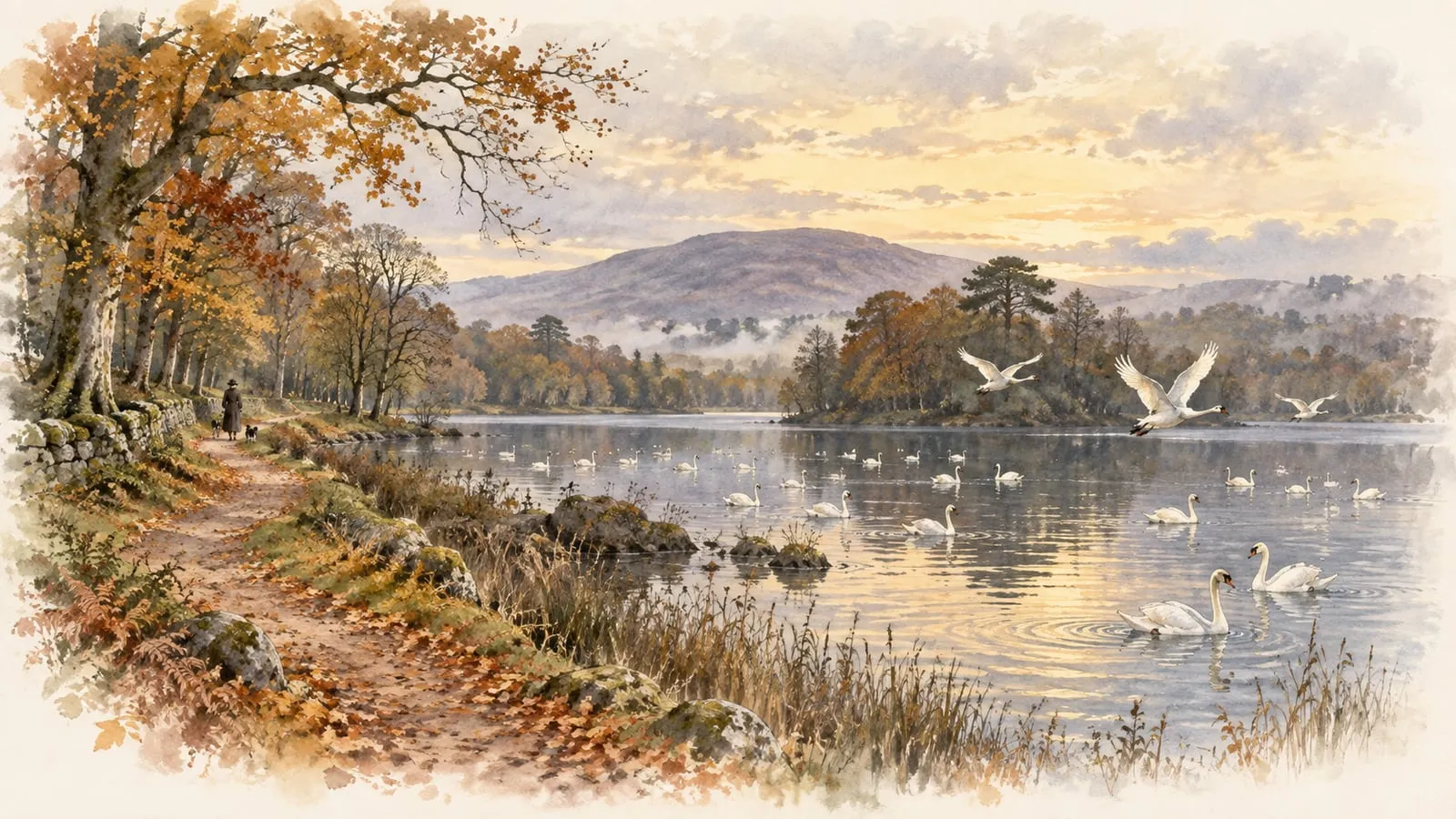
Autumn hangs "over the long leaves that love us" and over the mice in the barley. Colour is everything here: "Yellow" opens line 3 and returns in line 4, fixing the rowan and the "wet wild-strawberry leaves" in the same fading light.
Lines 5 to 8Love wanes
The season moves inside the lovers: "The hour of the waning of love has beset us". Their souls are "weary and worn", and the speaker asks that they part before passion forgets them. The last line settles on a single tender gesture: "a kiss and a tear on thy drooping brow".
Themes
Love and time
The poem treats love as something seasonal. Just as autumn comes "over" the leaves, "The hour of the waning of love has beset us". The lovers do not blame each other; their love is simply ending, as the year ends, and the speaker would rather part while it still holds "a kiss and a tear".
Nature as mirror
The first stanza is all leaves, mice and barley, and the second is all lovers, yet each explains the other. The yellowing rowan and the "drooping brow" belong to the same picture. The comparison is left for the reader to make, which gives the poem its quiet sadness.
Context
The poem was first collected in The Wanderings of Oisin and Other Poems (London, January 1889), Yeats's first book of lyrics, and later placed among the early poems he called "Crossways". It shares its autumn mood and its theme of love's waning with "Ephemera", which sits near it in the group.
Form
Two quatrains rhyming abab, with double rhymes on "love us" and "above us", "beset us" and "forget us". The lines run in a lilting, triple rhythm of four beats, as in "Autumn is over the long leaves that love us", which gives the sad subject the soft, falling movement of a song.