The Wild Swans at Coole
Listen
Text: Poetry, by W. B. Yeats (Standard Ebooks, 2024), from the collected editions of 1908 to 1928. Public domain.
In brief
SummaryAn ageing poet counts the swans at Coole and feels time passing.
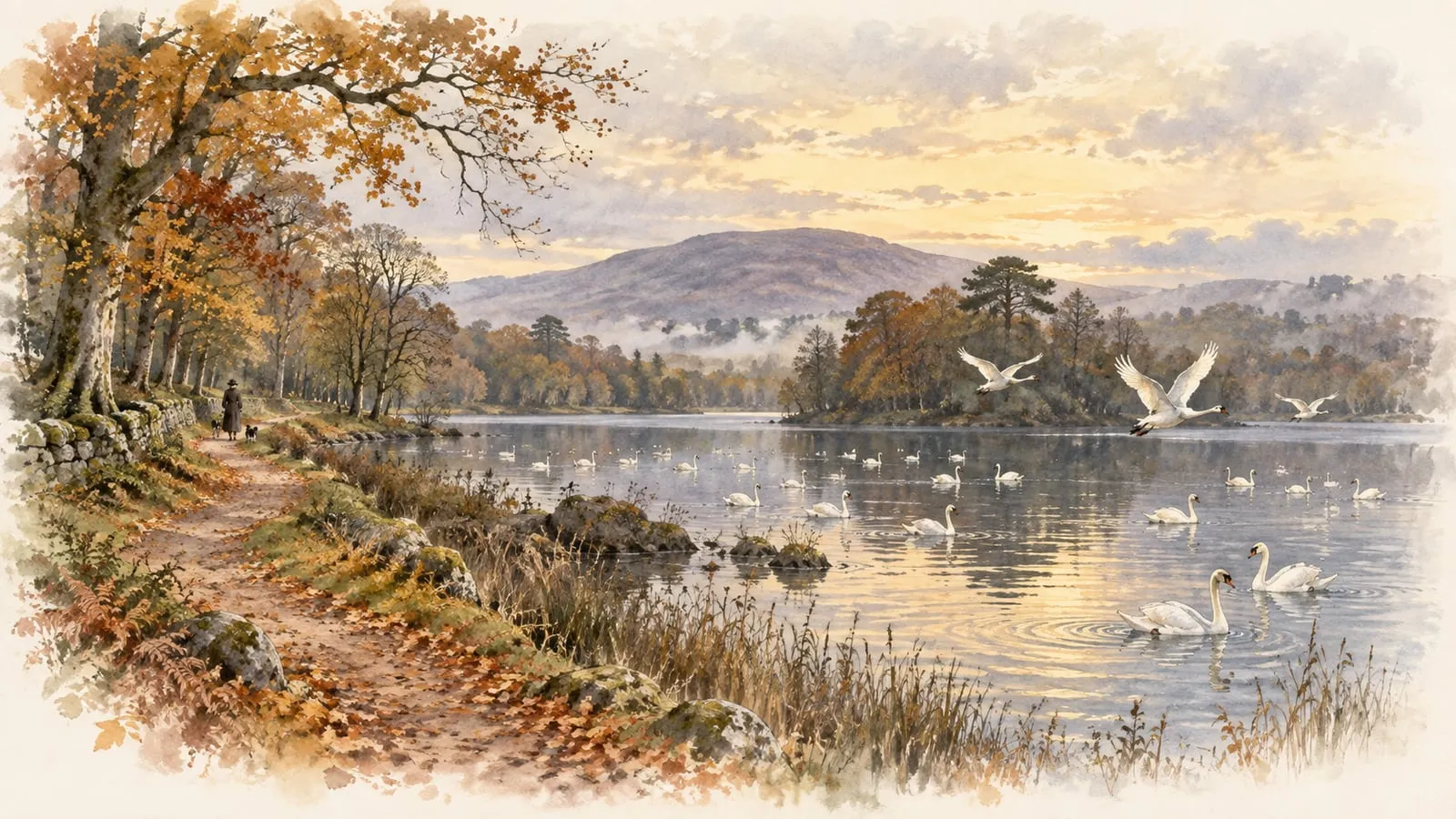
On an October evening at Coole the poet watches the swans on the still lake: "nine and fifty" of them. He first counted them nineteen autumns ago, when they rose before he had finished and scattered "in great broken rings". The memory makes his heart "sore". Everything has changed for him since then, while the swans, paired "lover by lover", seem untouched by time: "Their hearts have not grown old". The poem ends on an open question. One day he will wake to find them gone, delighting someone else's eyes on some other lake or pool.
Lines to remember
Are nine and fifty swans.
Their hearts have not grown old;
To find they have flown away?
Line by line
Lines 1 to 6An autumn evening
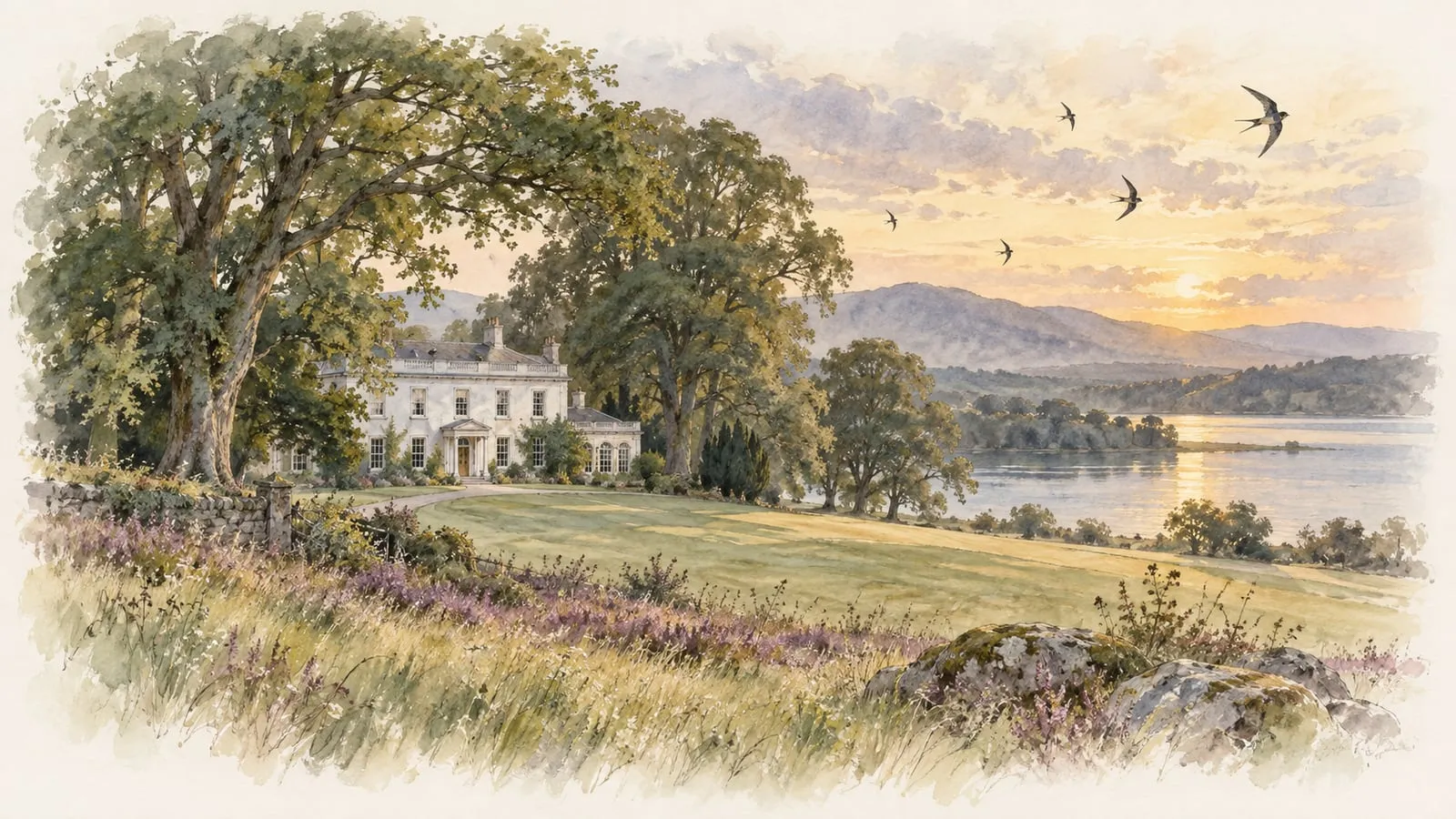
The scene is quiet and still: autumn trees, dry woodland paths, October twilight and water that "Mirrors a still sky". The lake is "brimming", full to the edge, and on it are "nine and fifty swans". The odd number matters: swans live in pairs, so one of them is alone.
Lines 7 to 12Nineteen autumns
He has been counting these swans for nineteen years. He remembers how, the first time, they rose before he had "well finished", scattering "wheeling in great broken rings" on "clamorous wings". The loud, sudden movement breaks the stillness of the opening, and the broken rings hint at broken patterns in his own life.
Lines 13 to 18A sore heart
Now his "heart is sore". When he first heard "The bell-beat of their wings above my head" he "Trod with a lighter tread": he was younger and his heart was lighter. "All's changed" is plain and heavy, and "bell-beat" makes the wingbeats ring like a tolling bell.
Lines 19 to 24Unwearied still
The swans seem to stand outside time. They are "Unwearied still", paired "lover by lover", at home in "Companionable streams", and "Their hearts have not grown old", and "Passion or conquest" still wait on them wherever they wander. Every quality he gives them is one he feels he has lost.
Lines 25 to 30Where will they go
The last stanza returns to the still water and calls the swans "Mysterious, beautiful". He wonders where they will build and whose eyes they will delight when he wakes "some day" to find them gone. The ending is left open: their flight can stand for the loss of love, of inspiration, or of life itself.
Themes
Time and ageing
The poem is set in autumn, at twilight, both images of late life, and it measures time exactly: "The nineteenth Autumn". Once he "Trod with a lighter tread"; now his "heart is sore". The swans are the fixed point against which he measures his own ageing, and the contrast is spelt out in "Their hearts have not grown old".
Change and permanence
"All's changed" for the speaker, yet the swans seem unchanged after nineteen years, "Unwearied still". The individual birds cannot be the same ones, but as an image they seem permanent, renewed like nature itself. The final stanza unsettles even that: one day he will "find they have flown away", and nothing will stay.
Love and loneliness
The swans move "lover by lover" through "Companionable streams", and "Passion or conquest" still attend them. The speaker is alone among them, like the one unpaired bird implied by "nine and fifty". The poem never names his loneliness directly, but it shapes every image of pairing, companionship and passion he sees on the water.
Context
Coole Park, near Gort in County Galway, was the estate of Lady Gregory, Yeats's friend and patron, and the workshop of the Irish Literary Revival. Yeats spent most summers there from 1897. The lake at Coole is a turlough, a lake whose water rises and falls with the seasons, and its wild swans are still protected there. The count in the poem belongs to 1916, and "nineteenth Autumn" takes him back to his first years at Coole.
Yeats was fifty-one in the autumn of 1916 and still unmarried; that summer Maud Gonne had once again refused to marry him. The poem's loneliness belongs to that moment. A year later he married George Hyde-Lees, and the poem gave its title to the collection the Cuala Press published in November 1917, enlarged by Macmillan in 1919.
Form
Five six-line stanzas rhyming ABCBDD. The lines vary in length, mostly alternating between about four and three beats, with a longer fifth line. Each stanza closes on a rhyming couplet ("rings" and "wings", "head" and "tread", "will" and "still"), giving a sense of calm closure that suits the poem's quiet, reflective voice.
Studying this poem
What to focus on
- The contrast between the ageing speaker and the apparently unchanging swans.
- How the setting (autumn, twilight, dry paths, still water) creates a mood of quiet melancholy and reflection.
- The use of sound and movement, especially in stanza 2 and in "bell-beat", to bring the swans to life.
- The personal, confessional voice and what it reveals about loneliness, loss and the passing of time.
- How the unanswered final question leaves the poem open, and what the swans might symbolise.
Key quotations
The trees are in their autumn beauty,
The season mirrors the speaker's stage of life: still beautiful, but past its prime. Autumn and twilight frame the whole poem as a meditation on growing older.
Are nine and fifty swans.
The exact, odd number suggests one swan without a mate, quietly reflecting the solitary speaker among creatures that live in pairs.
And scatter wheeling in great broken rings
Energetic verbs and the image of broken circles shatter the stillness of stanza 1. The broken rings may suggest the breaking of unity in his own life.
And now my heart is sore.
Plain, single-syllable words state his grief directly. The personal voice turns a nature poem into a confession of loss and loneliness.
Their hearts have not grown old;
The centre of the poem's contrast: the swans seem immune to time and still capable of passion, while the speaker feels his own heart ageing.
To find they have flown away?
The closing question leaves the poem unresolved. The swans' departure can stand for the loss of inspiration, of love, or of life itself.