Coole Park and Ballylee, 1931
Earlier titled "Coole and Ballylee, 1931"
About the text
Yeats first published this poem in 1932. It is out of copyright in Ireland and the EU, but in the United States it stays in copyright until the start of 2028, and this site is served partly from American servers. So for now we give the notes without the full text; it will appear here in 2028.
It begins: Under my window-ledge the waters race
In brief
SummaryA river links Yeats's tower to Coole as a great house nears its end.
The poem follows the river from under Yeats's window at Thoor Ballylee, underground and up again in the Coole estate, where it spreads into a lake and vanishes: an image of the soul. In the wintry woods by the lake Yeats hears a swan rise in sudden thunder, another emblem of the soul, pure and passing. He turns to the house, where Lady Gregory, old and ill, moves with a stick from chair to chair among books, marble heads and pictures gathered by generations. Such houses once gave meaning to families and marriages; now people drift like nomads. The last stanza mourns a whole tradition. Yeats and his friends were "the last romantics", who wrote of sanctity and loveliness, but all is changed, and the swan drifts on a darkening flood.
Lines to remember
What's water but the generated soul?
We were the last romantics
Line by line
Lines 1 to 8The river
The water races under his window at Ballylee, with otters below and moor-hens on top, runs bright for a mile, then drops into a dark underground stretch the poet Raftery called a cellar. It rises in the Coole demesne, spreads into a lake and sinks into a hole. The stanza ends by asking what water is but the soul born into the world.
Lines 9 to 16The mounting swan
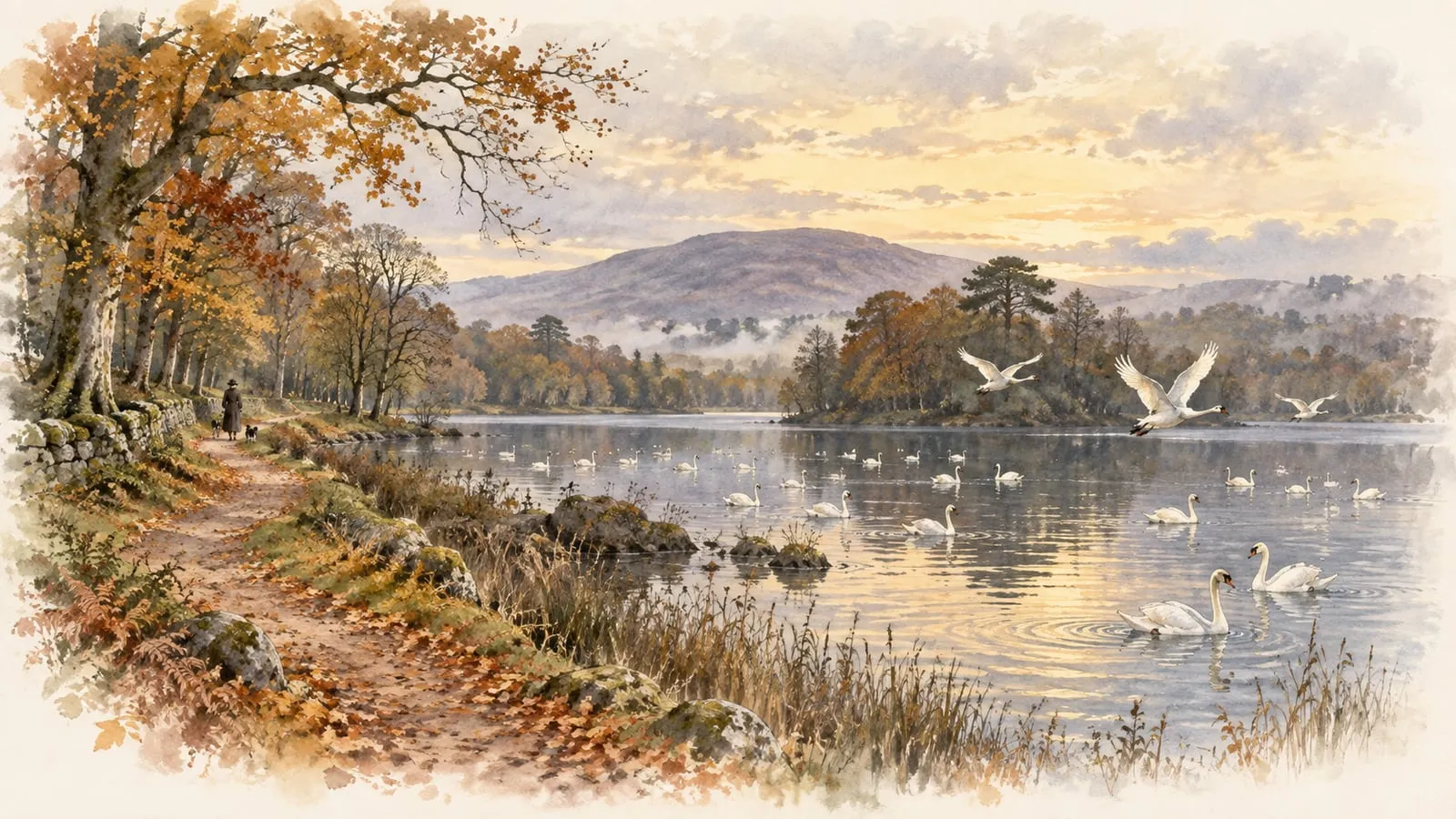
By the lake the wood is all dry sticks under a wintry sun. Nature has put on the boot of a tragic actor, and its ranting mirrors his mood. At the sudden thunder of a swan taking off he turns and looks where branches break the glittering, flooded lake.
Lines 17 to 24Another emblem
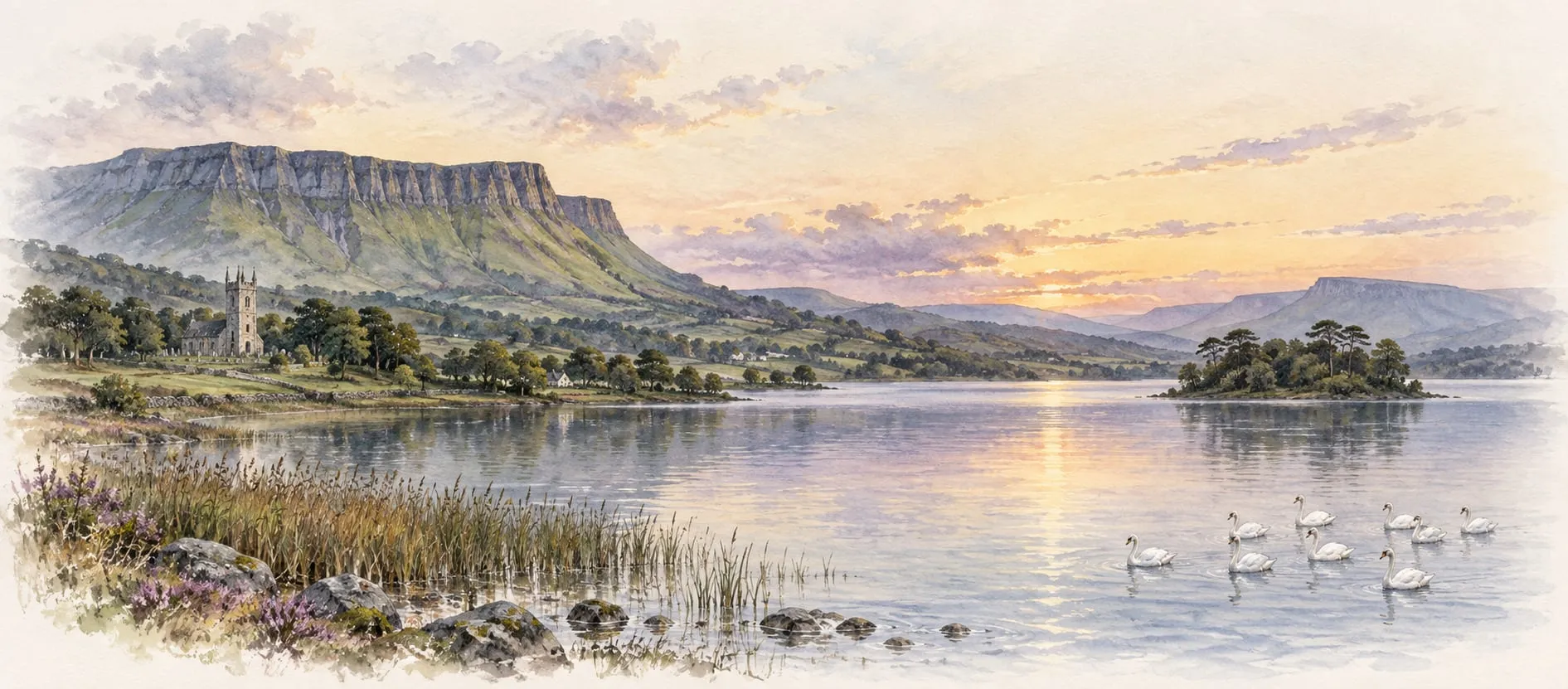
The swan is another emblem. Its stormy white seems a concentration of the sky, and like the soul it sails into sight and is gone by morning, no one knows why. It is so lovely it puts right what knowledge or ignorance put wrong, and so proudly pure a child might think a spot of ink could murder it.
Lines 25 to 32The house
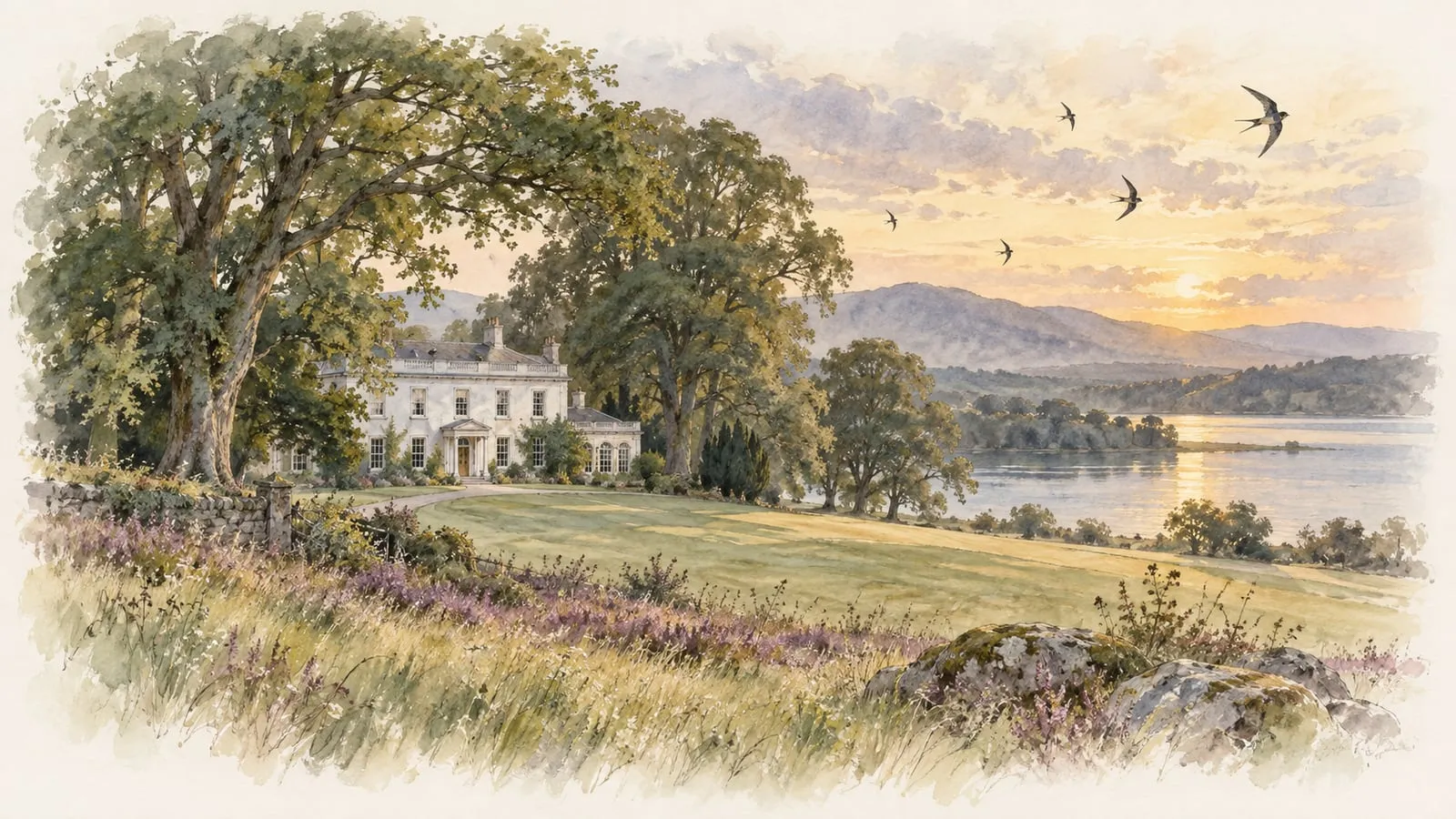
Indoors, a stick sounds on the floor: Lady Gregory, now old and ill, toils from chair to chair. Around her are books bound by famous hands, old marble heads and pictures, and great rooms where travellers and children found joy. She is the last inheritor of a line in which no one lacked name and fame or lurched from folly to folly.
Lines 33 to 40Rootless modern life
Once, the spot where the founders of a family lived and died seemed dearer than life, and ancestral trees and gardens glorified marriages, alliances and families. Now, driven by fashion or fantasy, people shift about like a wandering tribesman with his tent, and all that great glory is spent.
Lines 41 to 48The last romantics
Yeats and his circle chose traditional sanctity and loveliness as their theme, the lore of the people and whatever could bless the mind or lift a rhyme. But all is changed. The high horse of poetry that Homer rode stands riderless, and the swan drifts on a darkening flood.
Themes
The end of an era
The poem mourns the passing of the Anglo-Irish great house and of the literary movement it sheltered. Lady Gregory is "a last inheritor"; the old rootedness of families has given way to restless modern drifting; and the poets who chose sanctity and loveliness were "the last romantics". The final image of a riderless horse and a darkening flood marks an ending.
The soul
Two emblems of the soul frame the landscape. The river is born, runs bright, goes underground and vanishes, like a soul passing through life. The swan appears suddenly, is lovely beyond reason and is gone by morning. Both suggest the soul's mysterious coming and going, and both are fragile: the swan could be stained by a spot of ink.
Nature as mirror
Yeats admits that he reads his own feelings into the landscape: nature has put on tragic costume and "all the rant's a mirror of my mood". Dry sticks, wintry sun and a flooded lake reflect grief at Lady Gregory's decline. The poem moves between outer scene and inner state, with each place standing for a state of mind.
Tradition
Houses like Coole held "Beloved books", marble heads and pictures, and gave families and marriages their meaning. Yeats values continuity: the same spot loved across generations. Poetry too, he says, drew on tradition and on "The book of the people", the folklore he and Lady Gregory collected. Modern life, shifting with fashion, breaks that chain.
Context
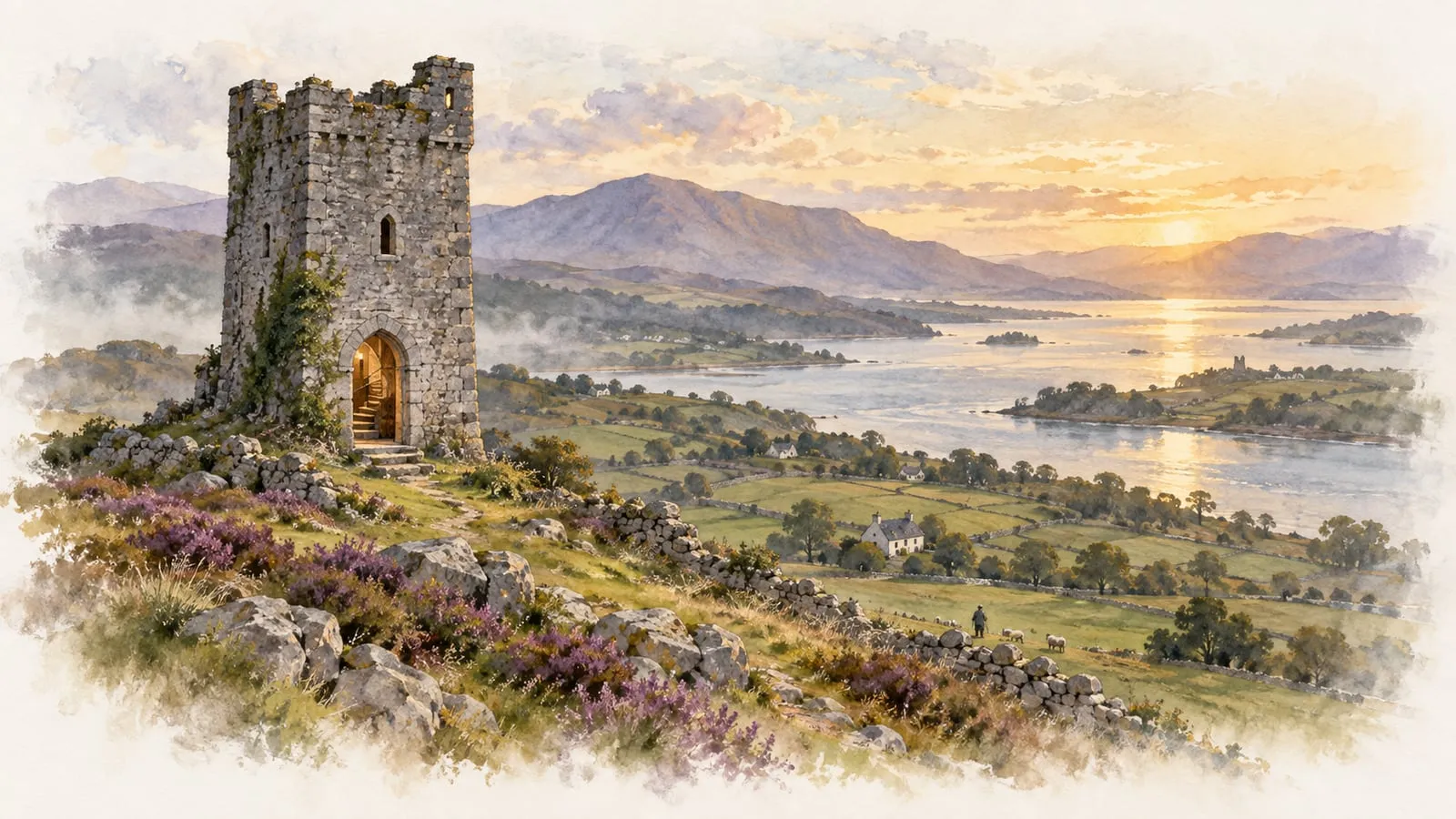
The poem was collected in The Winding Stair and Other Poems (Macmillan, 1933); an earlier title was "Coole and Ballylee, 1931". It joins two places: Thoor Ballylee, the old tower house Yeats bought in 1917 and used as a summer home until 1929, and Coole Park, Lady Gregory's house a few miles away. The river that runs past the tower goes underground and feeds the lake at Coole.
Lady Gregory was dying when the poem was written; she died in May 1932, and her house was demolished in 1941. Raftery, named in the first stanza, was the blind Irish-language poet Antoine Raftery, who praised a beauty of Ballylee; Yeats wrote of him in "The Tower". The swans recall "The Wild Swans at Coole", written on the same lake in 1916.
Form
Six stanzas of ottava rima, eight iambic pentameter lines rhyming ABABABCC, with a number of half rhymes ("top" and "up", "theme" and "name"). The form carries a long, flowing argument, like the river of stanza 1, and each closing couplet lands a point, from the question about the soul to the final darkening flood.