The Crazed Moon
About the text
Yeats first published this poem in 1933. It is out of copyright in Ireland and the EU, but in the United States it stays in copyright until the start of 2029, and this site is served partly from American servers. So for now we give the notes without the full text; it will appear here in 2029.
It begins: Crazed through much child-bearing
In brief
SummaryAn exhausted moon staggers across the sky, and her children grope.
The moon is pictured as a mother driven mad by bearing too many children, staggering across the sky. We, her children, are struck by her wandering, despairing glances and grope in vain for something born of her pain. The middle stanza looks back to her youth, when in virginal pride she first stepped onto the mountain and the whole countryside danced to her glance. The last stanza returns to the present: our hands are pale and bony, spread wide to snatch and tear at whatever comes near.
Lines to remember
Crazed through much child-bearing
Line by line
Lines 1 to 6The staggering moon
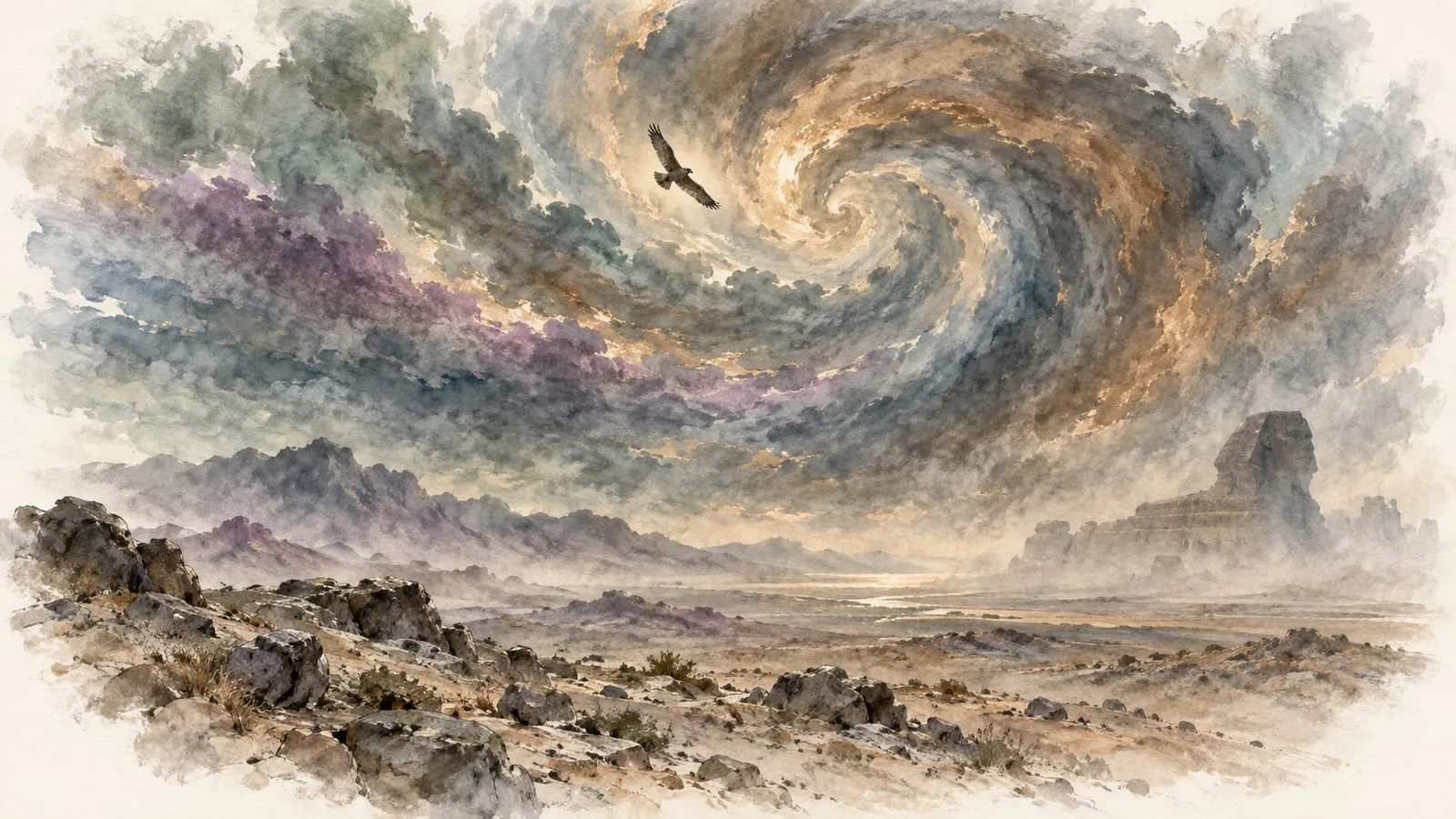
The opening is startling: the moon has been driven mad by bearing children, and is worn out and reeling. We are dazed by her glance, and grope after offspring of her suffering. The moon here is less a light in the sky than an ageing, overburdened mother.
Lines 7 to 12Her virginal pride
The poem looks back to the moon's youth. When she first rose over the mountain, full of pride, everything obeyed her and a stir of energy ran through the land. The exclamations remember a heroic age when young men led the dance.
Lines 13 to 18Catching at the moon
Now we are mere "Fly-catchers of the moon", our hands bleached and our fingers like thin needles of bone. Driven by a spiteful dream, they are spread wide to seize and tear whatever they can reach. Grace has become grasping.
Themes
History and decline
In Yeats's system, set out in A Vision, the phases of the moon stand for human types and for the stages of a civilisation. The poem can be read that way: a young, proud age that set the country dancing has become a late, exhausted one whose children are dazed, pale and destructive.
Violence
The ending is chilling. The "slender needles of bone" are spread not to make or to hold but to "rend". The poem suggests that when a culture has lost its first vigour, what is left is a restless, tearing appetite, a theme Yeats returned to in poems written after the violence of the 1910s and 1920s.
Context
The poem was collected in The Winding Stair and Other Poems (Macmillan, 1933). The moon had been Yeats's great symbol since "The Phases of the Moon" and the work that became A Vision (1925), where its twenty-eight phases chart both human personality and the rise and fall of civilisations. Here that learned scheme becomes a dark, almost folk-tale image of a mother gone mad.
Form
Three six-line stanzas rhymed ABABCC, with lines of three or four beats. Some rhymes are exact ("sky" and "eye"), others near ("moon" and "bone"). Each stanza closes on a short couplet that lands like a verdict, the last one on the harsh verb "rend".