Coole Park, 1929
About the text
Yeats first published this poem in 1931. It is out of copyright in Ireland and the EU, but in the United States it stays in copyright until the start of 2027, and this site is served partly from American servers. So for now we give the notes without the full text; it will appear here in 2027.
It begins: I meditate upon a swallow's flight
In brief
SummaryYeats honours Lady Gregory and the great minds who gathered at Coole.
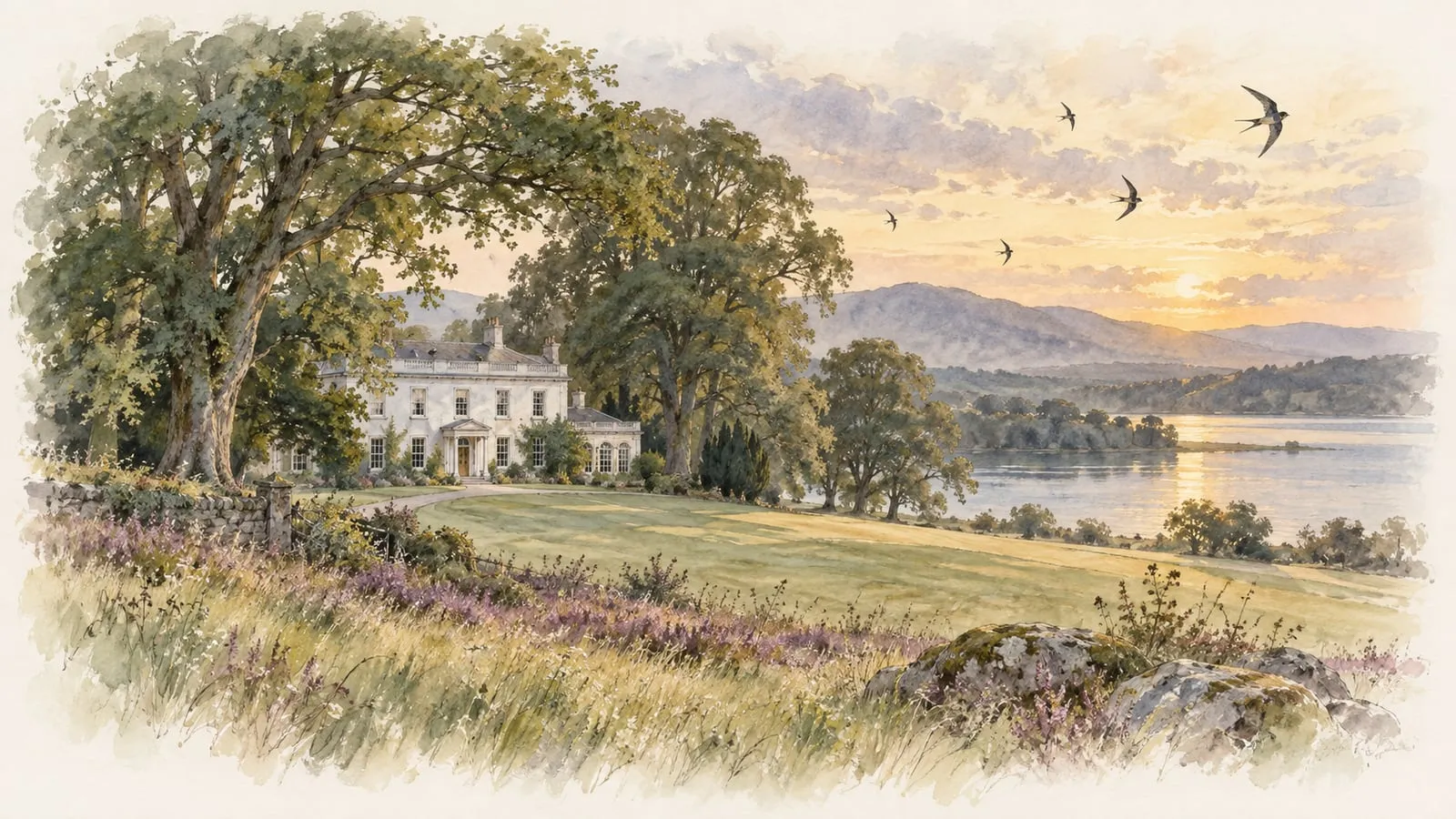
Yeats meditates on Lady Gregory, now an aged woman, and her house at Coole in the fading evening light. The house, he says, gave rise to great works, made against the grain of nature for future scholars and poets. He names some of those who found pride and humility there: Douglas Hyde, a swaggering but timid man usually taken to be Yeats himself, John Synge, John Shawe-Taylor and Hugh Lane. They came and went like swallows, but her strong character held them to their purpose, so that their work traced sure, graceful lines through time. The last stanza looks ahead to when the house is a ruin under nettles, and asks future visitors to stand there and give a moment's memory to her.
Lines to remember
They came like swallows and like swallows went,
A moment's memory to that laurelled head.
Line by line
Lines 1 to 8A swallow's flight
Yeats meditates on a swallow's flight, on an aged woman and her house, and on trees lost in dusk beneath a glowing western cloud. The house fostered great works made "in nature's spite" for scholars and poets to come: many thoughts knitted into one, a dance-like glory born within those walls.
Lines 9 to 16The company at Coole
He names the company: Douglas Hyde, before he beat the noble blade of his poetry into prose; a man who swaggered in a manly pose to hide a timid heart, usually read as Yeats himself; the slow, meditative Synge; and the impetuous Shawe-Taylor and Hugh Lane. All found pride grounded in humility, and fine company.
Lines 17 to 24Swallows in formation
They came and went like swallows, but a woman's powerful character kept each to its first purpose. Like half a dozen birds whirling in formation round a compass-point, they found certainty in the air, and their work traced lines of intellectual sweetness that cut through time or circle against it.
Lines 25 to 32When all is gone
The last stanza speaks to a future traveller, scholar or poet. When the rooms are gone and nettles wave over a shapeless mound, stand here, he says, eyes on the ground, back turned on the bright sun and the sensual shade, and give a moment's memory to Lady Gregory's laurelled head.
Themes
Tribute to Lady Gregory
The poem is built around "a woman's powerful character". She is the fixed point round which the swallows turn, the one who kept gifted, restless men to their work. The poem ends by crowning her with laurel, the sign of a poet's honour, as if the achievements of the men she gathered were hers too.
Art and community
Coole appears as a workshop where great works were constructed and "Thoughts long knitted into a single thought". The men named were very different, slow and impetuous, bold and timid, yet the house drew them into one design, like birds in formation. Art here is a shared labour, made possible by a place and a patron.
Time and ruin
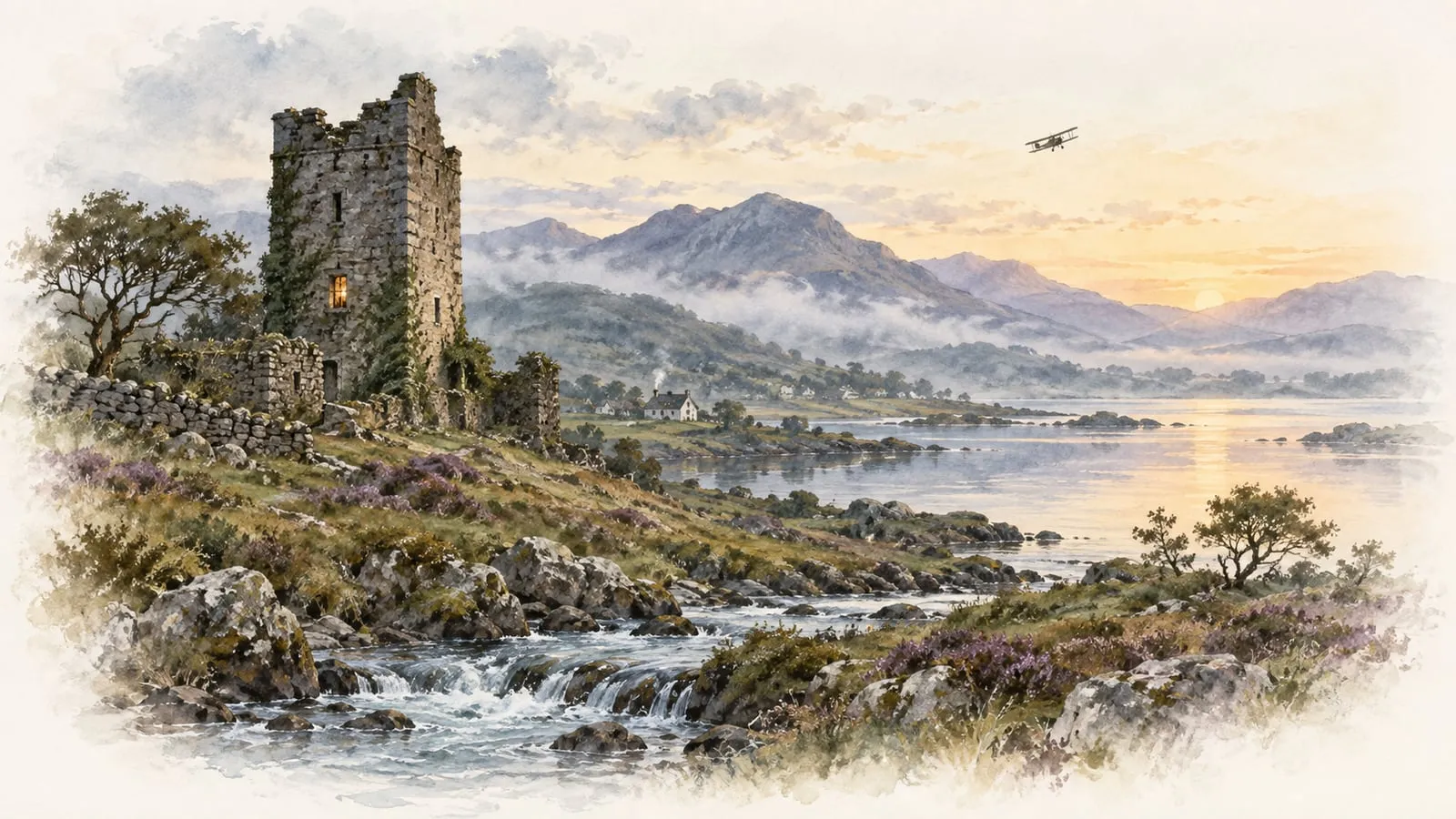
Swallows come and go, and so will the house. The last stanza imagines Coole reduced to nettles and saplings among broken stone, yet the work begun there cuts "through time". Yeats asks for a moment of remembrance at the ruin, so the poem itself becomes the memorial that the house will not be.
Context
The poem was first printed in Lady Gregory's book Coole (Cuala Press, 1931) and collected in The Winding Stair and Other Poems (Macmillan, 1933). Lady Gregory was then in her late seventies and in failing health; she died in 1932. Yeats had spent most summers at Coole since 1897, and for him the house was the workshop of the Irish Literary Revival.
The men named were all linked with Coole: Douglas Hyde, scholar and founder of the Gaelic League, later the first President of Ireland; the playwright John Synge; John Shawe-Taylor, Lady Gregory's nephew, who brought landlords and tenants together at the Land Conference of 1902; and Hugh Lane, another nephew, the art collector who drowned in 1915. The last stanza proved true: Coole House was demolished in 1941.
Form
Four stanzas of ottava rima: eight iambic pentameter lines rhyming ABABABCC, the stately form Yeats favoured for public, reflective poems. Some rhymes are half rhymes ("thought" and "begot"). The closing couplets gather each stanza's thought, and the last one places the tribute where the form lands hardest, on her laurelled head.