In Memory of Major Robert Gregory
Listen
1
2
3
4
5
6
7
8
9
10
11
12
Text: Poetry, by W. B. Yeats (Standard Ebooks, 2024), from the collected editions of 1908 to 1928. Public domain.
In brief
SummaryYeats mourns Lady Gregory's son among the dead friends of his life.
Newly settled in his old tower, the poet imagines the friends he would bring to supper by the turf fire, and realises that all who come to mind are dead. He remembers three in turn: the scholar Lionel Johnson, the playwright John Synge, and his uncle George Pollexfen, a horseman turned stargazer. He has grown used to their absence, but not to the death of Robert Gregory, "my dear friend's dear son". The poem then praises Gregory as horseman, painter, craftsman and scholar, a Renaissance figure like Sir Philip Sidney, whose life burned out in one quick flare. The refrain "Soldier, scholar, horseman, he" gathers his gifts together. At the end the poet admits he had meant to describe every friend, but the thought of this one death took all his heart for speech.
Lines to remember
Our Sidney and our perfect man,
Soldier, scholar, horseman, he,
What made us dream that he could comb grey hair?
Line by line
Lines 1 to 8Guests who cannot come
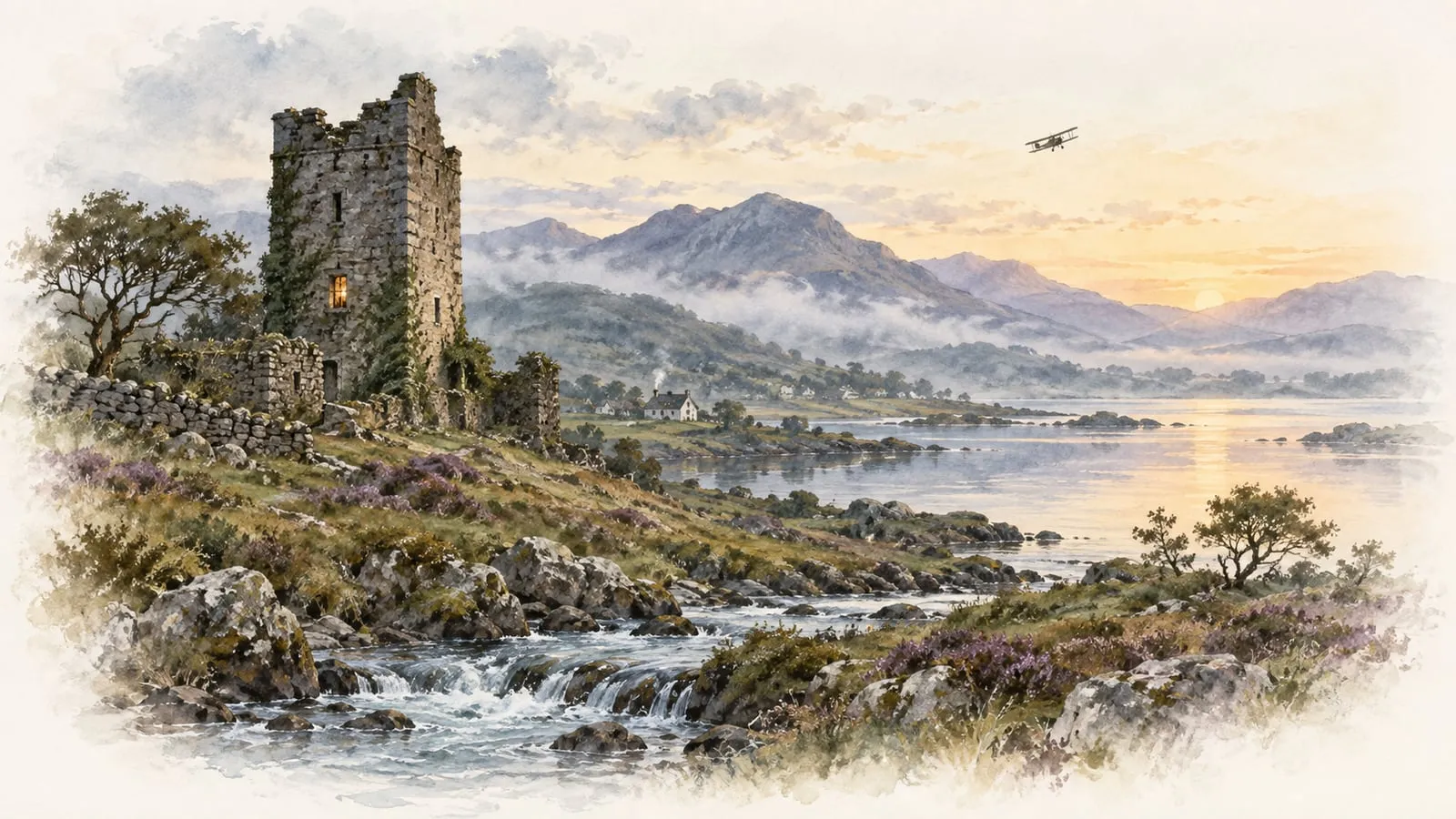
The poem opens in a new home: "our house", the "ancient tower" with its "narrow winding stair". He would name friends to sup with them by a turf fire, but they "cannot sup with us". The stanza's last word, "dead", comes as a quiet shock.
Lines 9 to 16No more quarrels
Living friends meet awkwardly: new and old may seem "cold" to each other, and quarrels flare. None of that can happen tonight, because "all that come into my mind are dead". The dead are, sadly, easy company.
Lines 17 to 24Lionel Johnson
Johnson "loved his learning better than mankind" and, "much falling", brooded on holiness. His Greek and Latin seemed like a horn call bringing nearer "A measureless consummation that he dreamed". The portrait is affectionate but frank about his falls.
Lines 25 to 32John Synge
Synge was the "enquiring man" who, "dying", chose "the living world for text". Travelling, he came at nightfall to "a most desolate stony place" and a people "Passionate and simple like his heart", the islanders who fed his plays.
Lines 33 to 40George Pollexfen
Pollexfen was a famous horseman in youth, "well known to Mayo men", who grew "sluggish and contemplative". He studied the stars, and could have shown how men and horses live as "the outrageous stars incline / By opposition, square and trine".
Lines 41 to 48The death he cannot accept
These three were "A portion of my mind and life", now like faces in "some old picture-book". He is "accustomed to their lack of breath", but not to the death of "my dear friend's dear son", "Our Sidney and our perfect man".
Lines 49 to 56What he loved
The landscape round the tower is seen through Gregory's eyes: storm-broken trees, road and bridge, the ford where cattle drink and the water-hen changes her ground. "He might have been your heartiest welcomer", the poet says, apparently addressing his wife.
Lines 57 to 64The horseman
Gregory rode with the Galway foxhounds and "few kept his pace". The poem names real ground (Castle Taylor, Roxborough, Esserkelly, Mooneen) and recalls a leap so dangerous that "half the astonished meet" shut their eyes. "And yet his mind outran the horses' feet."
Lines 65 to 72The painter
His friends dreamed "a great painter had been born" to the hard landscape of "cold Clare rock and Galway rock and thorn". The refrain appears for the first time, "Soldier, scholar, horseman, he", and the stanza claims he had the intensity to become "a world's delight".
Lines 73 to 80The craftsman
He could have advised on every detail of the house, understanding "All work in metal or in wood, / In moulded plaster or in carven stone". Everything he did was "done perfectly", as though it were his only trade.
Lines 81 to 88The single flare
Some people burn "damp fagots"; others consume "The entire combustible world in one small room" in a single blaze, leaving a blackened chimney. Gregory was "all life's epitome", and the line "What made us dream that he could comb grey hair?" admits he was never meant to grow old.
Lines 89 to 96Heart too full
With the wind shaking the shutter, he had planned to call up every friend "With some appropriate commentary on each". But "a thought / Of that late death took all my heart for speech": grief for Gregory silences the poem.
Themes
Grief and friendship
The poem is a gathering of the dead. Johnson, Synge and Pollexfen are mourned with calm affection, since he is "accustomed to their lack of breath". Gregory's death is different: it is recent, untimely and unacceptable, and in the last stanza it overwhelms the orderly plan of the poem.
The complete man
Gregory is praised as "Soldier, scholar, horseman", painter and craftsman, "Our Sidney and our perfect man". The comparison with Sir Philip Sidney, the Elizabethan poet and soldier who died young, makes him an ideal of the many-sided life. Everything he did was "done perfectly".
Intensity and brevity
The image of the fire in stanza 11 explains Gregory's early death as the price of intensity: he burned "The entire combustible world in one small room" instead of smouldering like "damp fagots". The question "What made us dream that he could comb grey hair?" turns loss into a kind of fate.
Home and landscape
The poem is rooted in place: the tower, the turf fire, the ford, the water-hen, the Galway hunting country and "cold Clare rock". The house is a home newly made, and the poet furnishes it with memories as much as with metal, wood and stone.
Context
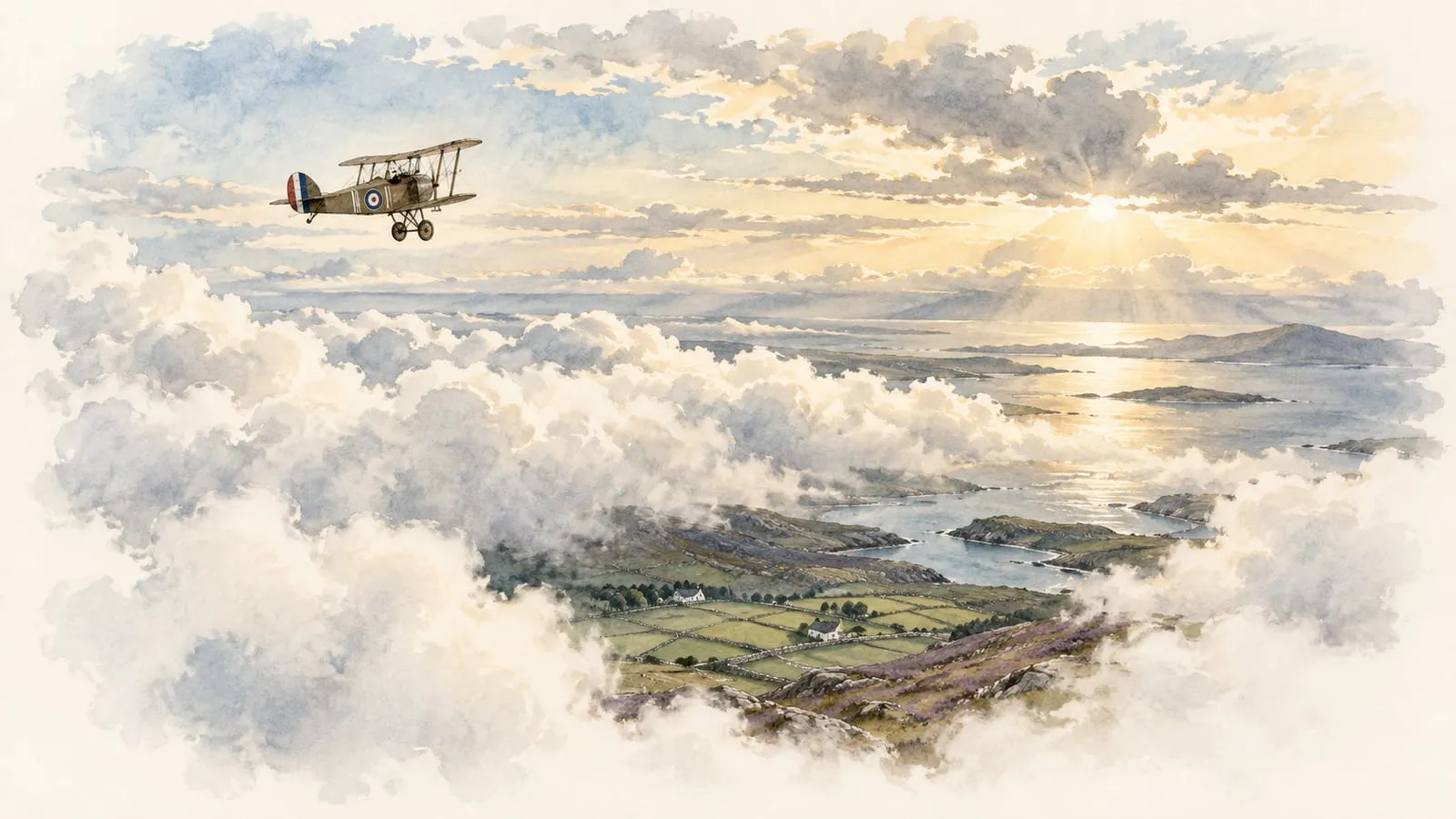
Robert Gregory, Lady Gregory's only son, was a painter, stage designer and sportsman who joined the Royal Flying Corps and was killed in action over Italy on 23 January 1918. Yeats, who had known him for more than twenty years through his friendship with Lady Gregory at Coole, wrote this elegy in the months after his death, as well as "An Irish Airman Foresees His Death".
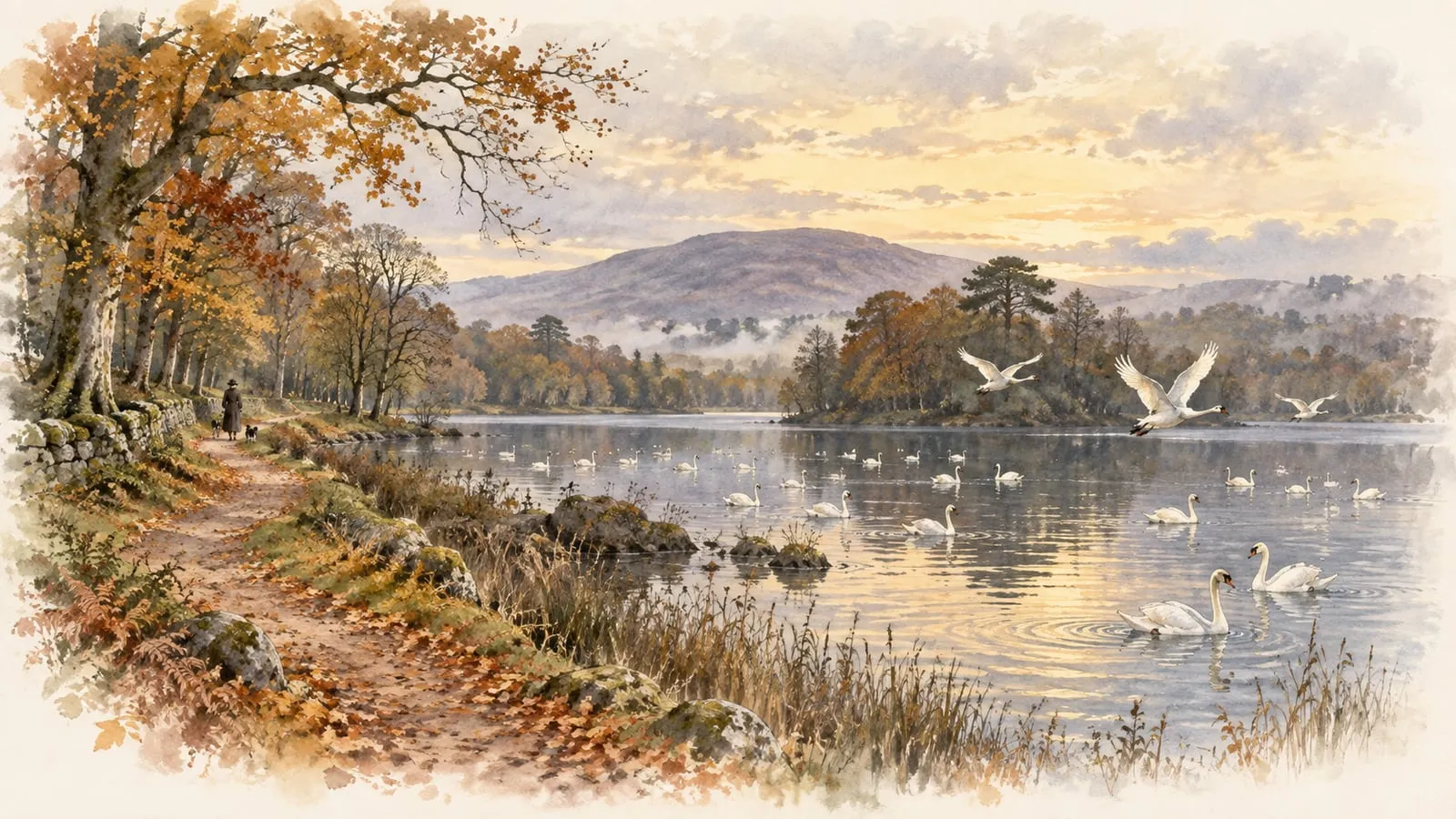
The "ancient tower" is Thoor Ballylee, the Norman tower near Coole that Yeats bought in 1917 and was restoring with his new wife, George, whom he married that year. The poem was collected in the enlarged edition of The Wild Swans at Coole (Macmillan, 1919).
The three older friends had died before the war: the poet Lionel Johnson in 1902, the playwright J. M. Synge in 1909 and Yeats's uncle George Pollexfen of Sligo in 1910. Synge's "desolate stony place" is usually taken to be the Aran Islands, which fed his plays.
Form
Twelve eight-line stanzas rhymed AABBCDDC ("house" and "us", "tower" and "hour", "bed" and "dead"), mixing long five-beat lines with shorter four-beat ones. The stanza is borrowed from Abraham Cowley's seventeenth-century elegy for his friend William Hervey. Its steady, measured movement suits a formal elegy, while the refrain "Soldier, scholar, horseman, he" in stanzas 9 to 11 gives it the ring of a public tribute.