The Collar-bone of a Hare
Listen
Text: Poetry, by W. B. Yeats (Standard Ebooks, 2024), from the collected editions of 1908 to 1928. Public domain.
In brief
SummaryA dreamer longs for an island of dancing and free love.
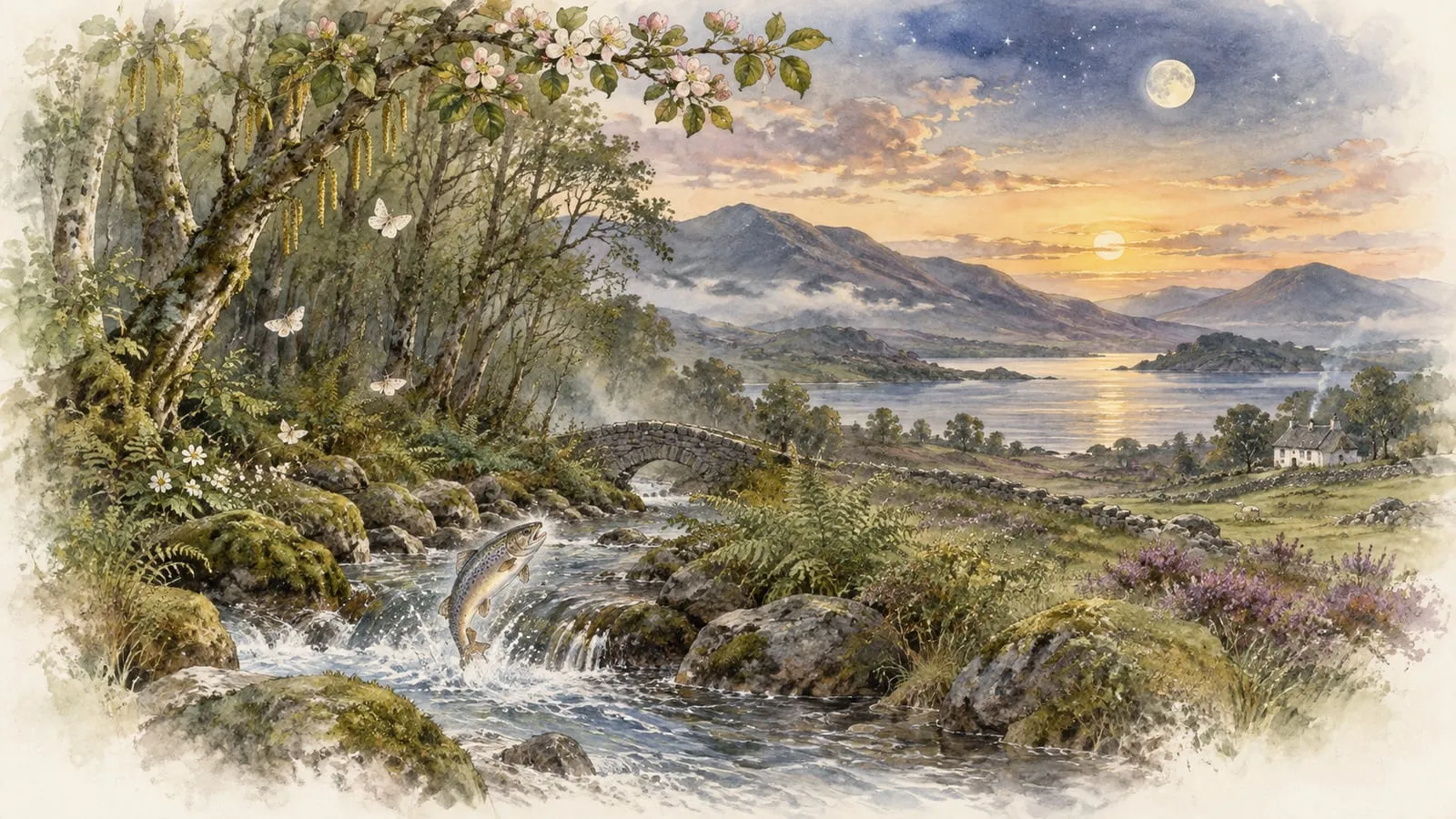
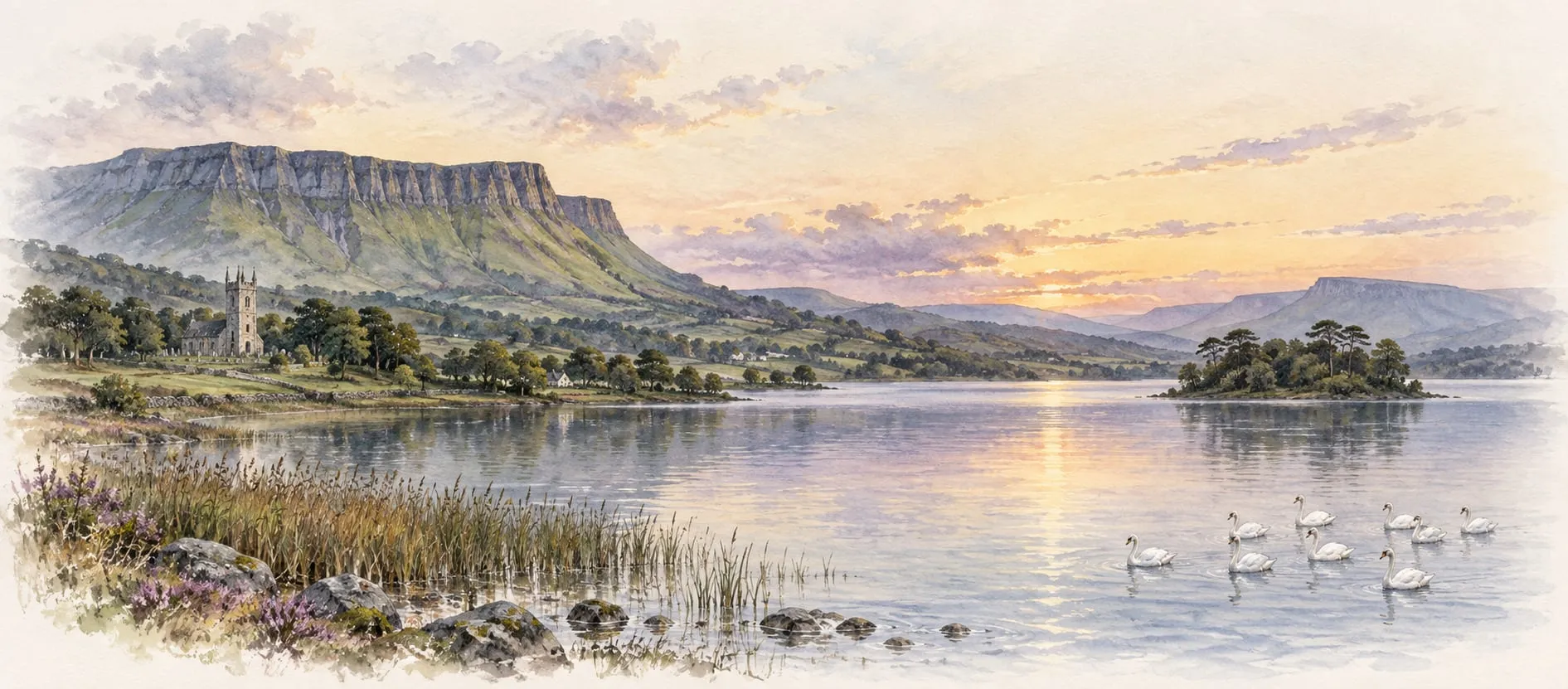
The speaker wishes he could sail across the water to a place where many kings and kings' daughters have gone before: a land of fine trees, lawns, piping and dancing, where the best thing is to change your loves while dancing and "pay but a kiss for a kiss". There, by the water's edge, he would find the collar-bone of a hare, worn thin by the waves, bore a hole in it, and look through it at "the old bitter world where they marry in churches", laughing at it from across the untroubled water.
Lines to remember
And pay but a kiss for a kiss.
At the old bitter world where they marry in churches,
Through the white thin bone of a hare.
Line by line
Lines 1 to 8The dancing island
"Would I could" makes the whole stanza a wish. The land beyond the water is full of kings, daughters, pipes and dancing, a place like the happy otherworld of Irish legend. Love there is light and equal: "pay but a kiss for a kiss".
Lines 9 to 16Through the bone
He imagines a hare's collar-bone, "Worn thin by the lapping of water", pierced "with a gimlet" to make a spyhole. Through it he would "stare" at the bitter world of church weddings and laugh. The small, strange object turns mockery into a kind of magic.
Themes
Escape to the otherworld
The island across the water, where "many a king has gone", recalls the lands of youth and pleasure in Irish legend. It is a dream of release: music, dancing and love without burden. The whole vision is framed as a wish, so the speaker never actually arrives.
Mockery of convention
The "old bitter world where they marry in churches" is the world of duty, vows and permanence. From the far side of "the untroubled water", seen through a tiny bone, it looks small and absurd. The repeated "marry in churches" sharpens the laughter.
Context
The poem was collected in The Wild Swans at Coole (Cuala Press, 1917). Its magic island echoes the Celtic otherworlds of Yeats's early poems, such as "The Wanderings of Oisin", but the tone is new: sharper, more playful and more mocking of the everyday world he wants to escape.
Form
Two eight-line stanzas of loose, swinging lines, mostly three or four beats. "Water" returns again and again as a rhyme word, like waves on a shore, and the second stanza begins and ends with "hare", framing the image of the bone.