An Irish Airman foresees his Death
Listen
Text: Poetry, by W. B. Yeats (Standard Ebooks, 2024), from the collected editions of 1908 to 1928. Public domain.
In brief
SummaryA pilot calmly explains why he chose to fight and die.
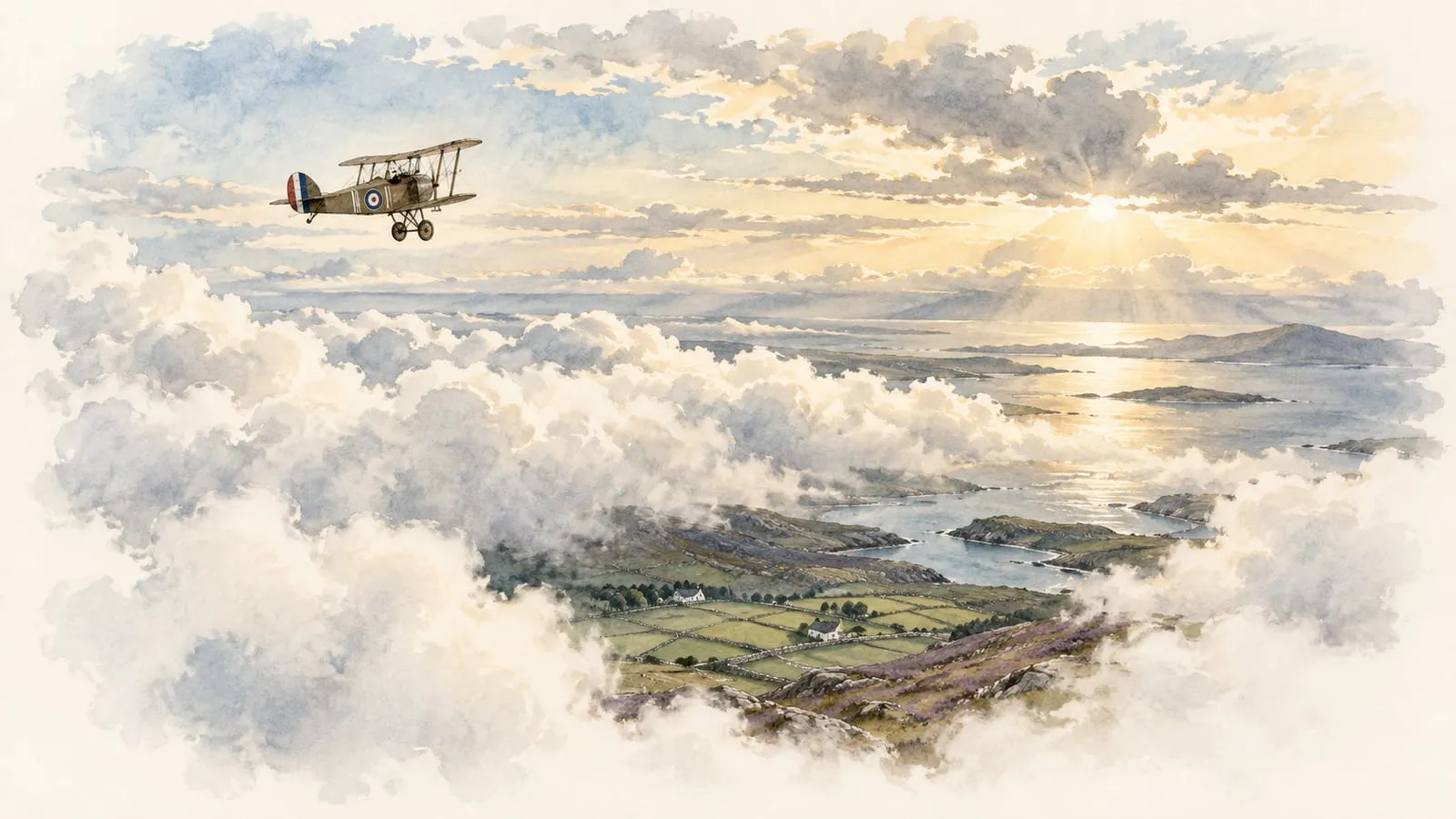
The speaker is an Irish airman in the First World War who knows he will die "Somewhere among the clouds above". He feels no hatred for the enemy and no love for those he defends. His country is Kiltartan Cross, and no outcome of the war will make its poor people better or worse off. Nothing forced him to fight: not law, duty, politicians or cheering crowds. He went for "A lonely impulse of delight". Weighing up his whole life, he finds the years before and after a "waste of breath" beside this one intense moment of life and death. The voice stays calm and balanced throughout.
Lines to remember
A lonely impulse of delight
Those that I fight I do not hate,
In balance with this life, this death.
Line by line
Lines 1 to 4Meeting his fate
He knows his death will come in the air, "among the clouds". Lines 3 and 4 mirror each other exactly: he does not hate "Those that I fight", nor love "Those that I guard". The balanced sentences show his detachment from both sides of the war.
Lines 5 to 8Kiltartan Cross
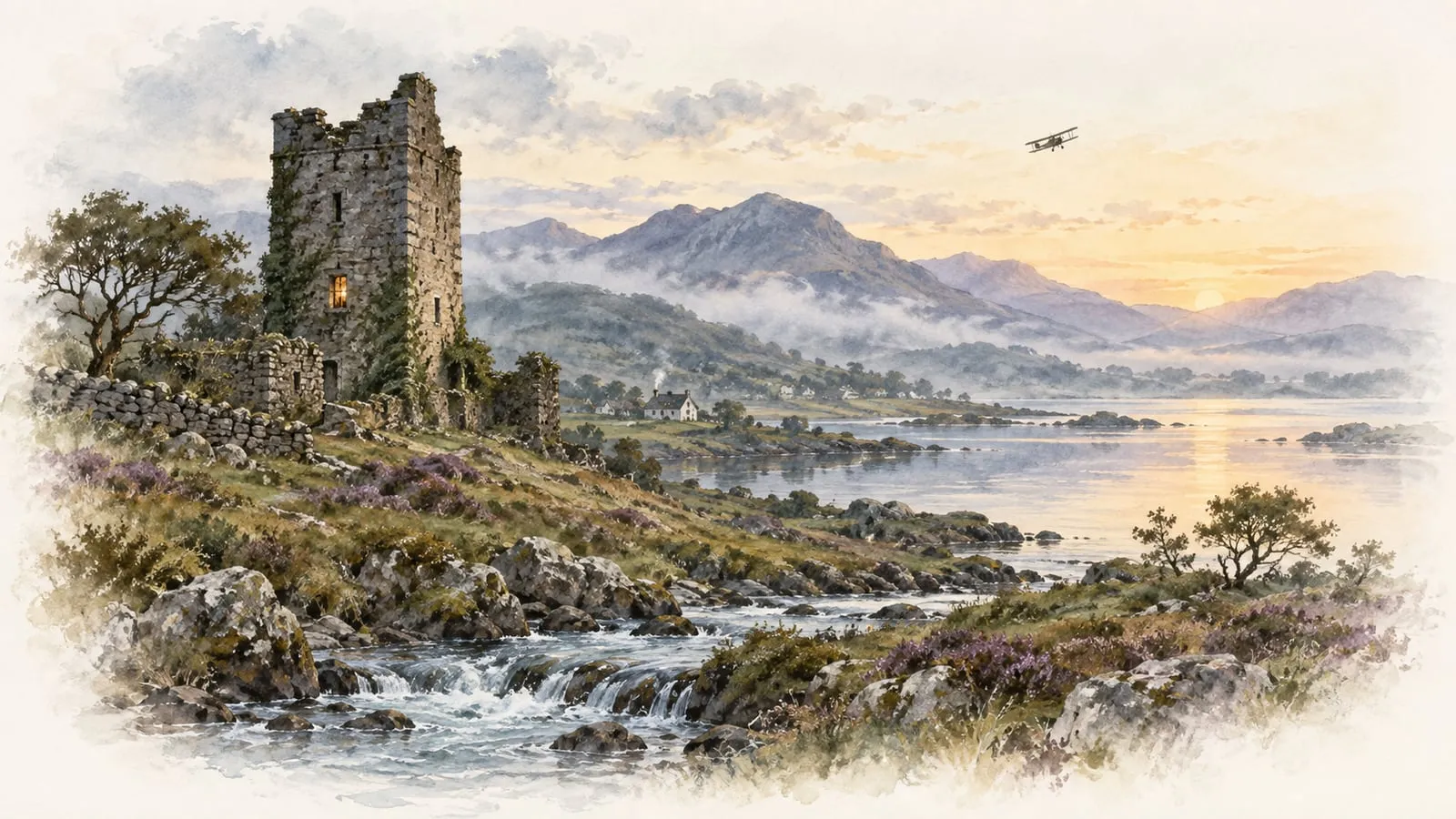
His loyalty is local: to Kiltartan Cross and "Kiltartan's poor", not to Britain or its empire. He admits that no likely end to the war could harm them or leave them "happier than before". It is a strikingly frank statement for a man fighting in that war.
Lines 9 to 12A lonely impulse
He lists the usual reasons for going to war (law, duty, a "public man", "angry crowds") and rejects every one. The true reason is "A lonely impulse of delight", a private thrill that "Drove" him "to this tumult in the clouds".
Lines 13 to 16Life in the balance
He has weighed everything, and found the years ahead and the years behind equally a "waste of breath". Lines 14 and 15 reverse the same phrase, as if setting it on the two pans of a scale. The last line holds "this life, this death" in perfect balance: a life fulfilled in the moment that ends it.
Themes
Death and fate
The poem opens with certainty: "I know that I shall meet my fate". There is no fear or protest. Death is accepted calmly, even chosen, and the final line sets it equal to life itself: "In balance with this life, this death." The airman's calm makes his death seem less a tragedy than a completion.
Freedom and choice
Lines 9 and 10 clear away every outside pressure: "Nor law, nor duty bade me fight, / Nor public man, nor angry crowds". What remains is purely personal: "A lonely impulse of delight". "Lonely" and "delight" sit oddly together, catching a solitary, almost ecstatic drive towards danger that belongs to him alone.
Irish identity
The airman fights in a British war but is loyal only to "Kiltartan Cross" and "Kiltartan's poor". He neither hates the enemy nor loves those he guards. The poem quietly captures the divided position of Irishmen who served in the First World War, whose country's future the war would not decide.
Balance
The poem is built on balance: "Those that I fight" against "Those that I guard", "loss" against "happier", "The years to come" against "the years behind". The speaker says "I balanced all", and the form does the same, ending on the evenly weighed "this life, this death". The structure enacts his calm reckoning.
Context
The airman is Major Robert Gregory, Lady Gregory's only son: a painter, stage designer and sportsman who became a pilot in the Royal Flying Corps and was killed on active service over Italy on 23 January 1918. Yeats wrote several poems about him, including "In Memory of Major Robert Gregory". This one speaks in Gregory's imagined voice.
Kiltartan is the parish that includes Coole, the Gregory estate in County Galway, so the airman's "country" is the local world of the Gregory tenants. Ireland was divided over the war, and conscription was never applied there, which gives weight to "Nor law, nor duty bade me fight". The poem was first collected in the enlarged Macmillan edition of The Wild Swans at Coole (1919).
Form
A single stanza of sixteen lines in iambic tetrameter, rhyming in four quatrains (ABAB CDCD EFEF GHGH). The steady metre, full rhymes ("fate" and "hate", "breath" and "death") and many lines split into balanced halves mirror the airman's calm, reasoned mind and his weighing of life against death.
Studying this poem
What to focus on
- The airman's detachment and the calm, reasoned tone of the poem.
- How structure (antithesis, repetition and the reversed phrasing of lines 14 and 15) enacts the idea of weighing life against death.
- His reasons for fighting: the rejection of law, duty, politics and crowds in favour of "A lonely impulse of delight".
- The Irish context: local loyalty to Kiltartan and the position of Irishmen fighting in the First World War.
- Whether the poem glorifies war or presents a purely personal, even existential, choice.
Key quotations
Those that I fight I do not hate,
Antithesis and repetition create perfect balance with the next line. He feels no hatred for the enemy, so his fighting is neither patriotic nor vengeful.
My country is Kiltartan Cross,
His loyalty is small, local and Irish, not imperial. It explains why the war's outcome means nothing to the people he really belongs to.
Nor law, nor duty bade me fight,
The list of rejected motives clears the ground: he was not compelled by law or by a sense of duty, which makes his choice purely his own.
A lonely impulse of delight
The key phrase of the poem. "Lonely" and "delight" sit together unexpectedly, capturing a solitary, almost ecstatic pull towards danger and intensity.
The years to come seemed waste of breath,
Reversed in the next line ("A waste of breath the years behind"), the phrase dismisses both future and past, leaving only the intense present.
In balance with this life, this death.
The final line weighs life and death as equals. Its calm, even rhythm suggests acceptance, and a life fulfilled in the moment of its ending.