Shepherd and Goatherd
Earlier titled "The Sad Shepherd"
Listen
Shepherd
Goatherd
Shepherd
Goatherd
Shepherd
Goatherd
Shepherd
Goatherd
Shepherd
Goatherd
Shepherd
Goatherd
Shepherd
Goatherd
Shepherd
He sings.
Goatherd
Shepherd
Goatherd
Shepherd
Goatherd
Sings.
Shepherd
Text: Poetry, by W. B. Yeats (Standard Ebooks, 2024), from the collected editions of 1908 to 1928. Public domain.
In brief
SummaryTwo countrymen mourn a young man killed in the Great War.
A young Shepherd and an old Goatherd meet on a mountain on the day the first cuckoo sings. The Shepherd has let his sheep stray because he is troubled: the best man in the district, a piper, sportsman and craftsman, has died "in the great war beyond the sea". Together they praise the dead man and his grieving mother, who goes about her house "erect and calm" and now works for her grandson. Each then sings a song. The Shepherd's compares the dead man to a migrating bird that stayed only a while. The Goatherd, who is said to have talked with apparitions, sings of the dead man growing younger, unwinding his life back to the cradle. They agree to cut their rhymes on bark and leave them, unsigned, at the mother's door.
Lines to remember
The exultation of their stone, that cried
Of sorrowful, austere, sweet, lofty pipe tunes.
He grows younger every second
Line by line
Lines 1 to 10The first cuckoo
The Shepherd made a wish on hearing the year's first cuckoo. The old Goatherd says nothing could make him wish today, except that "the old alone might die", which would go against Providence. The line quietly sets up the poem's grief: a young man has died before the old.
Lines 11 to 19Strayed sheep
The Shepherd tried to beat his trouble into rhyme, and while he drove "every rhyme into its place" his sheep strayed. The neat wordplay makes writing and shepherding mirror each other. The Goatherd already knows the cause.
Lines 20 to 33The news
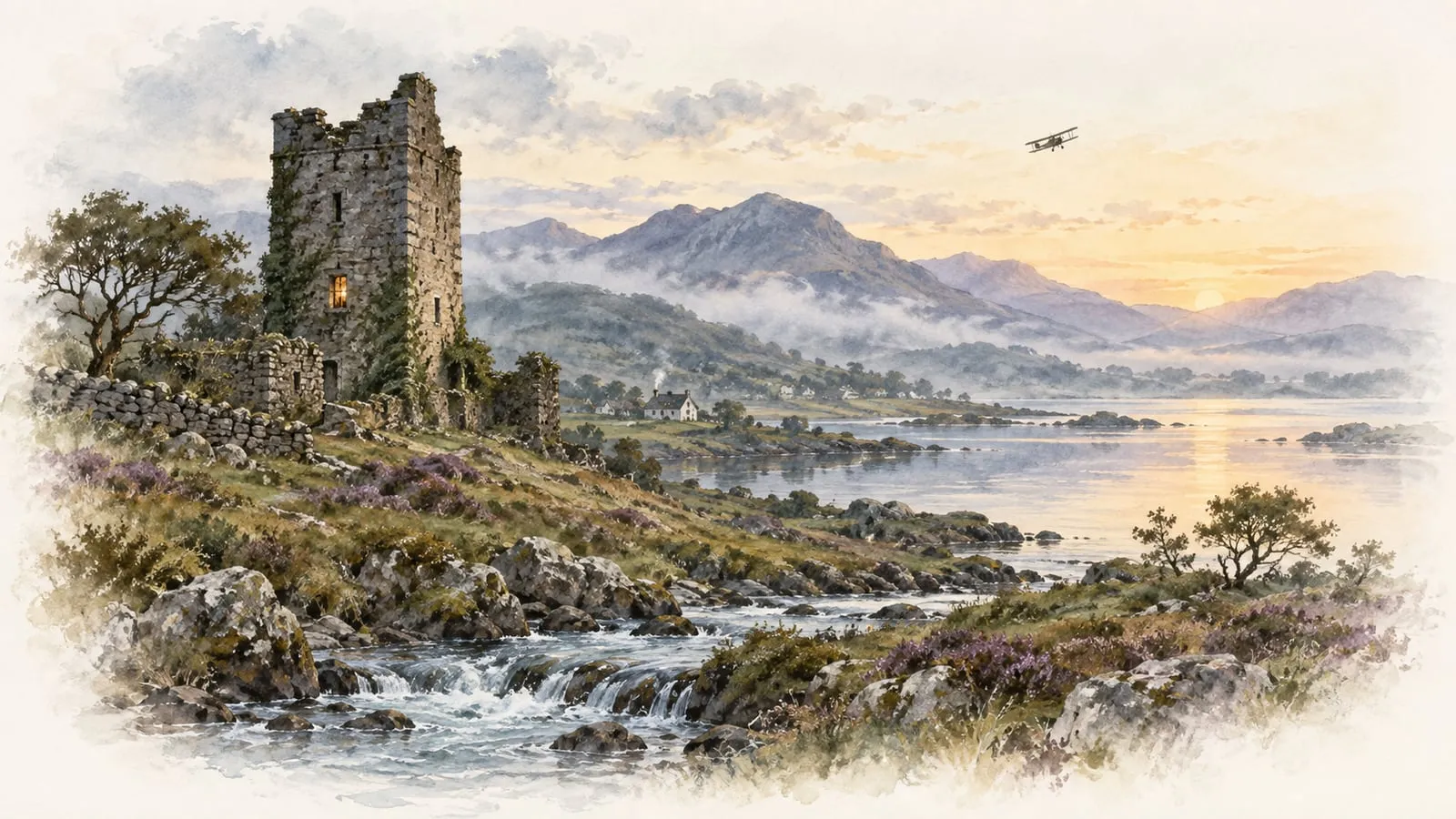
In short exchanges they name the loss: the man best "in every country sport / And every country craft" is dead, having "thrown the crook away" to die in the war. The Goatherd remembers his piping, when the hills' loneliness and "The exultation of their stone" seemed to cry through him.
Lines 34 to 48The mother
The Goatherd recalls the mother's old kindness to him in hard winters. The Shepherd describes her grief: she walks "erect and calm" between pantry and linen chest and oversees her labourers for her grandson. The only change in her face is the one he saw at harvest sports when her son's turn was over.
Lines 49 to 65No settled man
The Goatherd, "learned in waiting", asks for the Shepherd's song. First the Shepherd notes that the dead man built nothing and changed nothing on the estate: he lived "as it were, a cuckoo, / No settled man", and left only "half a score" of pipe tunes.
Lines 66 to 83The Shepherd's song
After apologising that plain prose might have been better, the Shepherd sings. The dead man was like "the speckled bird" that flies in from overseas, stays a while in the meadows and vanishes before anyone is used to him. The song ends in self-reproach: "man is a fool".
Lines 84 to 99The road of the soul
The Goatherd sighs for his own lost companions. The Shepherd has heard that the old man has "measured out the road that the soul treads" after death and "talked with apparitions", and he asks for a healing thought. The Goatherd's thoughts have brought back flowers "that are not all wild poppy", not only forgetfulness.
Lines 100 to 123The Goatherd's song
In quick rhyming couplets the dead man "grows younger every second". He unpacks the "loaded pern" of his experience, forgets "The outrageous war", pipes and courts again, and unwinds knowledge until he lies by the cradle, lost in "sweeter ignorance". Death runs life backwards into innocence.
Lines 124 to 130Rhymes on bark
The Shepherd proposes that they cut their rhymes on strips of bark and leave them, nameless, at the mother's door. The poem ends on its humblest hope: that knowing "the mountain and the valley have grieved" may bring her some quiet comfort.
Themes
Grief and elegy
This is an elegy in pastoral dress: two countrymen mourn a dead companion, praise him, and offer songs. Grief is shown through small, exact things, the strayed sheep, the "bare news" brought with a griddle cake, the mother "erect and calm" at her linen chest. The unsigned rhymes at her door are the poem's picture of what elegy can do.
Youth and age
The Shepherd is young and "hot to show whatever it has found"; the Goatherd is old and "learned in waiting". Their contrast frames the central wrong of the war: that the young man died before the old. The Goatherd's song reverses the order again, letting the dead man grow "younger every second".
The afterlife
The Goatherd has "talked with apparitions" and found "the path my goat's feet cannot find". His song imagines the dead unwinding their lives, unpacking "all 'twas pain or joy to learn", until knowledge is lost "in trance / Of sweeter ignorance". Consolation comes not from heaven but from this strange, backward journey to childhood.
The restless spirit
The dead man was "a cuckoo, / No settled man". He built no tables or sheds and left the house as it was in his father's time. The Shepherd's migrating "speckled bird" makes the same point: a gifted, unsettled life that passed through the place and left behind only music.
Context
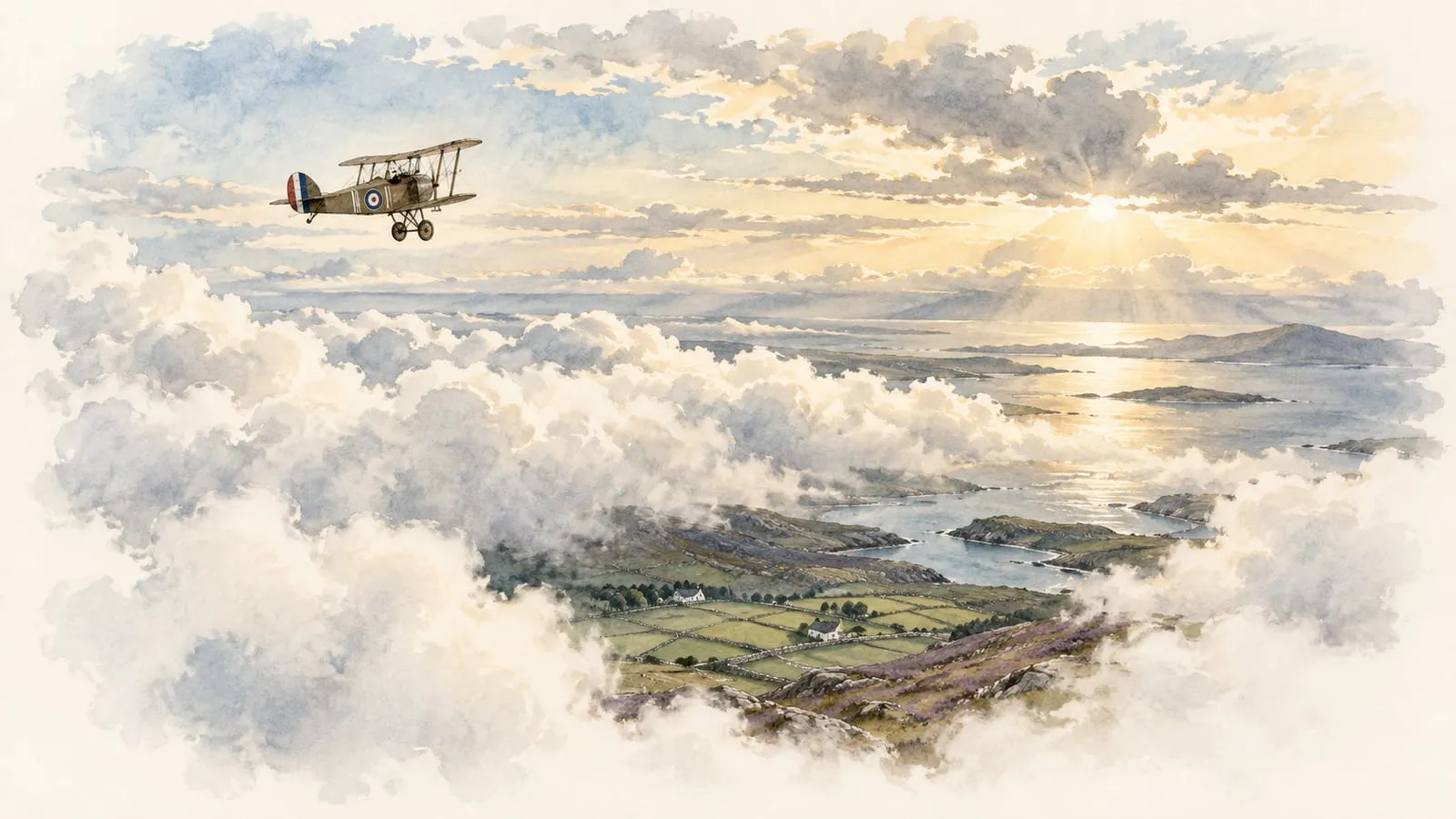
The poem is an elegy for Major Robert Gregory, Lady Gregory's only son, a painter, sportsman and pilot killed over Italy on 23 January 1918. The grieving mother is Lady Gregory, and the house left "as in his father's time" is Coole. Yeats also mourned Gregory in "In Memory of Major Robert Gregory" and "An Irish Airman Foresees His Death".
Yeats borrowed the old form of the pastoral elegy, in which shepherds mourn a dead companion in song. The poem was printed as "The Sad Shepherd" in the enlarged Wild Swans at Coole (1919) and renamed "Shepherd and Goatherd" from 1922; it is not the early poem of that name. Yeats's own note explains "pern" through the "pern mill" whose smoke he saw as a child in Sligo: a pern is a spool for thread.
Form
A dialogue in blank verse (unrhymed lines of five beats), with speeches that often share a single line. It contains two rhymed songs: the Shepherd's in loose, irregular lines, the Goatherd's in short, quick couplets ("second" and "reckoned", "served" and "reserved"). The shift from talk to song marks the move from news to mourning.
Yeats's own note
When I was a child at Sligo I could see above my grandfather’s trees a little column of smoke from “the pern mill,” and was told that “pern” was another name for the spool, as I was accustomed to call it, on which thread was wound. One could not see the chimney for the trees, and the smoke looked as if it came from the mountain, and one day a foreign sea-captain asked me if that was a burning mountain.
Titled 'The Sad Shepherd' in The Wild Swans at Coole (1919, Gutenberg 32491, Standard Ebooks); 'Shepherd and Goatherd' from 1922. Not the Crossways poem 'The Sad Shepherd'.