The Madness of King Goll
Earlier titled "King Goll"
Listen
Text: Poetry, by W. B. Yeats (Standard Ebooks, 2024), from the collected editions of 1908 to 1928. Public domain.
In brief
SummaryAn ancient Irish king goes mad in battle and wanders the woods.
King Goll tells his own story. He ruled wisely and well in ancient Ireland: his word was law, the fields grew fat, and the old poets praised him. When pirates raided, he led his men and chariots against them by starlight and slew them by the shore. But in the middle of the slaughter "A whirling and a wandering fire" rose in his spirit, and he ran laughing from the battle into the wild. Now he lives among wolves, deer and hares, through summer and winter. Passing a sleeping town, he found an old stringed instrument, a tympan, and his playing quieted the fire in his mind for a while. But its wires are broken, and he must wander on. Through every stanza runs the same line: "They will not hush, the leaves a-flutter round me, the beech leaves old."
Lines to remember
They will not hush, the leaves a-flutter round me, the beech leaves old.
A whirling and a wandering fire:
Arise the leopard-coloured trees,
Line by line
Lines 1 to 12The good king
Goll remembers his reign. Seated on "cushioned otter skin", his "word was law"; he drove off "world-troubling seamen" and kept the peace, so that "The fields grew fatter day by day". The old poets said he drove away "the Northern cold". Then the refrain breaks in with the restless beech leaves of his present.
Lines 13 to 24Battle with the pirates
A herdsman reports that pirates have stolen his pigs for their "dark-beaked hollow galleys". Goll gathers his "battle-breaking men" and "loud brazen battle-cars", falls on the raiders by starlight and hurls them "in the gulf of sleep". His hands won "many a torque of gold".
Lines 25 to 36The madness strikes
In the thick of the slaughter, "In my most secret spirit grew / A whirling and a wandering fire". He stands under the stars, sees his men's eyes on him, and laughs aloud and runs. He laughs simply "because birds fluttered by": the world's motion has entered him.
Lines 37 to 48Life in the wild
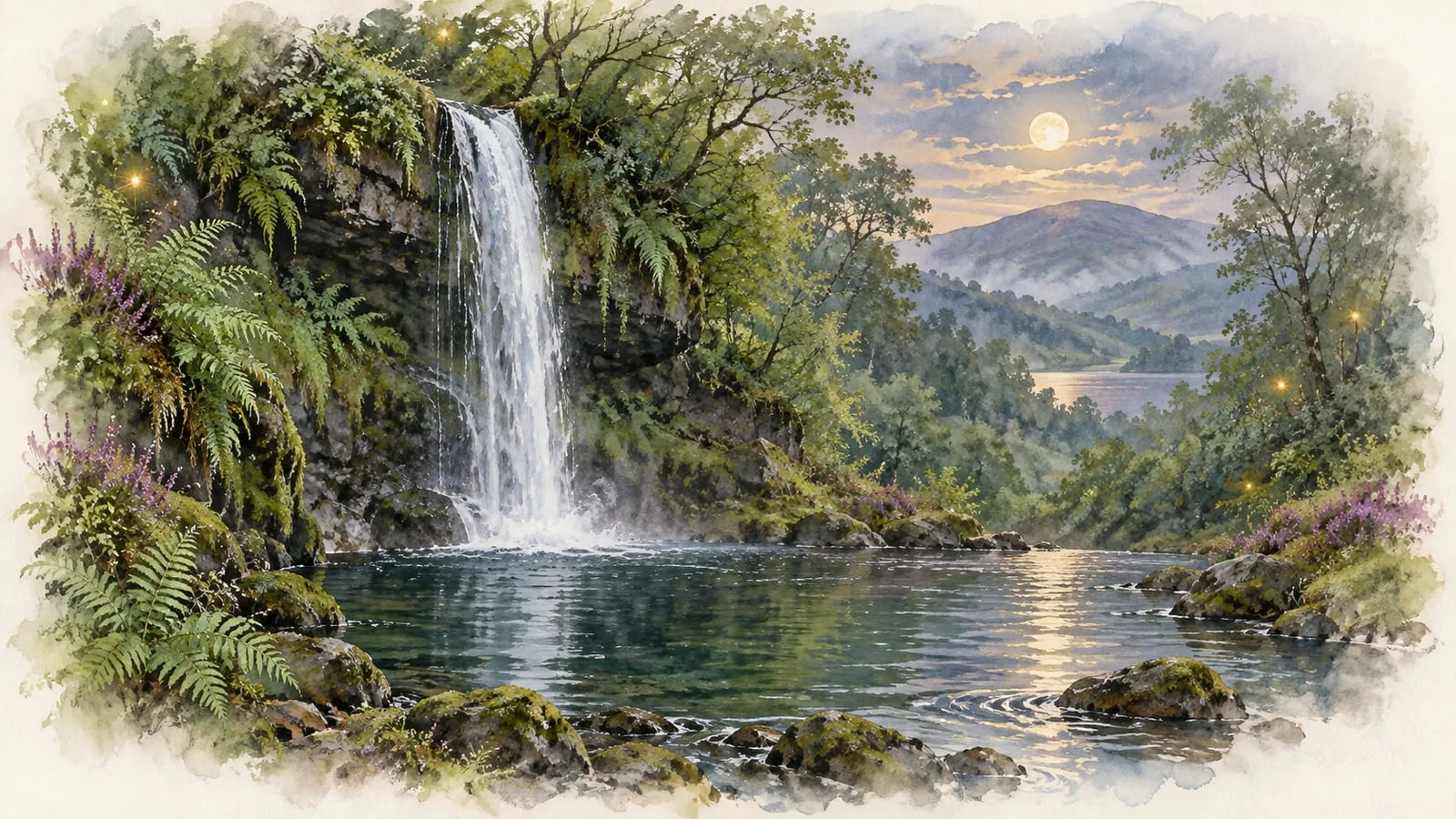
Now he wanders through all seasons: summer with its "golden bees", autumn's "leopard-coloured trees", winter shores where cormorants shiver. He waves his hands and sings. Wild creatures accept him: "The grey wolf knows me", he leads the deer by one ear, and the hares grow bold.
Lines 49 to 60The tympan
He comes on a little town asleep under "the harvest moon" and tiptoes through it, murmuring of "A tramping of tremendous feet" that he has followed. He finds an old tympan left on a doorway seat and carries it to the woods, where his voice and its strings sing together "Of some unhuman misery".
Lines 61 to 72The broken strings
He sang of Orchil, who shakes out her dark hair to hide the dying sun, and his playing quenched "The whirling and the wandering fire". But now "the kind wires are torn and still". He calls for a lament, "a mournful ulalu", and must wander on through heat and cold.
Themes
Madness and inspiration
Goll's madness comes as "A whirling and a wandering fire" in his "most secret spirit", and it drives him out of human life. Yet it is also a kind of gift: it opens him to the wild creatures and to song, and only music can quench it. The poem leaves open whether his madness is a curse or a strange freedom.
Power and its loss
The first two stanzas show a king at the height of his power: his "word was law", his "hands won many a torque of gold". In a moment it all falls away. By the end he owns only a broken tympan and wanders "wood and hill", a king of the wolves, deer and hares rather than of men.
Restless nature
The refrain, "They will not hush, the leaves a-flutter round me, the beech leaves old", never changes and never rests. Leaves, birds, clouds, rushes and waters are always moving, and Goll's mind moves with them. Nature here is not calm or healing but restless, matching the fire within him.
Context
The poem was first collected in The Wanderings of Oisin and Other Poems (London, January 1889), and once carried the shorter title "King Goll". Yeats later placed it among the early poems he called "Crossways". Like "The Wanderings of Oisin", the long poem of the same book, it takes its hero from the world of ancient Irish legend, with its ollaves, chariots and torques of gold.
The story of a warrior driven mad in battle who flees to live among wild creatures has a long history in Irish tradition. Yeats tells it as a dramatic monologue, letting Goll speak for himself, so that the reader hears the madness from inside.
Form
Six stanzas of twelve lines, each rhymed ababcdcdeeff. The first eleven lines have four beats, and the twelfth is always the same long refrain about the beech leaves, which rhymes with the line before it ("cold", "gold", "bold"). The refrain's length and its fixed return mimic the endless fluttering sound that haunts the king.