The White Birds
Listen
Text: Poetry, by W. B. Yeats (Standard Ebooks, 2024), from the collected editions of 1908 to 1928. Public domain.
In brief
SummaryA lover wishes he and his beloved were white seabirds, free of sorrow.
The speaker wishes that he and his beloved could be changed into white birds riding "on the foam of the sea". The bright things of the world have tired them: a meteor's brief flame, the evening star low in the sky, the dreamy lily and rose. Each leaves a sadness behind. He is "haunted by numberless islands", the fairy shores of the Danaan people, where time would forget them and sorrow never come near. The poem ends with the wish repeated: to be white birds, "buoyed out on the foam of the sea".
Lines to remember
I would that we were, my beloved, white birds on the foam of the sea!
I am haunted by numberless islands, and many a Danaan shore,
Where Time would surely forget us, and Sorrow come near us no more;
Line by line
Lines 1 to 4The wish
"I would that we were, my beloved, white birds on the foam of the sea!" The long line rises and falls like a wave. They are tired of the meteor's flame, which fades too soon, and the "blue star of twilight" has woken in them "a sadness that may not die".
Lines 5 to 8Weary of dreams
Even "the lily and rose", flowers of beauty and dreaming, bring "A weariness". He asks her not to dream of them, or of meteor and star, and repeats the wish more urgently: "I would we were changed to white birds on the wandering foam: I and you!"
Lines 9 to 12The fairy islands
He is "haunted by numberless islands, and many a Danaan shore", the Otherworld of Irish legend, "Where Time would surely forget us, and Sorrow come near us no more". The last line brings back the sea and the birds, "buoyed out on the foam", closing the poem on the dream of escape.
Themes
Escape from sorrow
The whole poem is a wish to be elsewhere and otherwise. The lovers are weary of bright, fading things, the meteor and the star, and of "a sadness that may not die". As white birds on the foam they would be free and weightless, far from the "fret of the flames", in a place where "Sorrow come near us no more".
Love and longing
"My beloved" is repeated four times, and every wish is for "we" and "us". The speaker cannot imagine escape alone. The white birds are a picture of the two lovers together, equal and untroubled, which is exactly what their human life does not allow.
The Otherworld
The "numberless islands" and "Danaan shore" come from Irish legend, where the fairy people live on islands out of time. Yeats joins this Irish Otherworld to his love poetry: the lovers' refuge would be a place where "Time would surely forget us".
Context
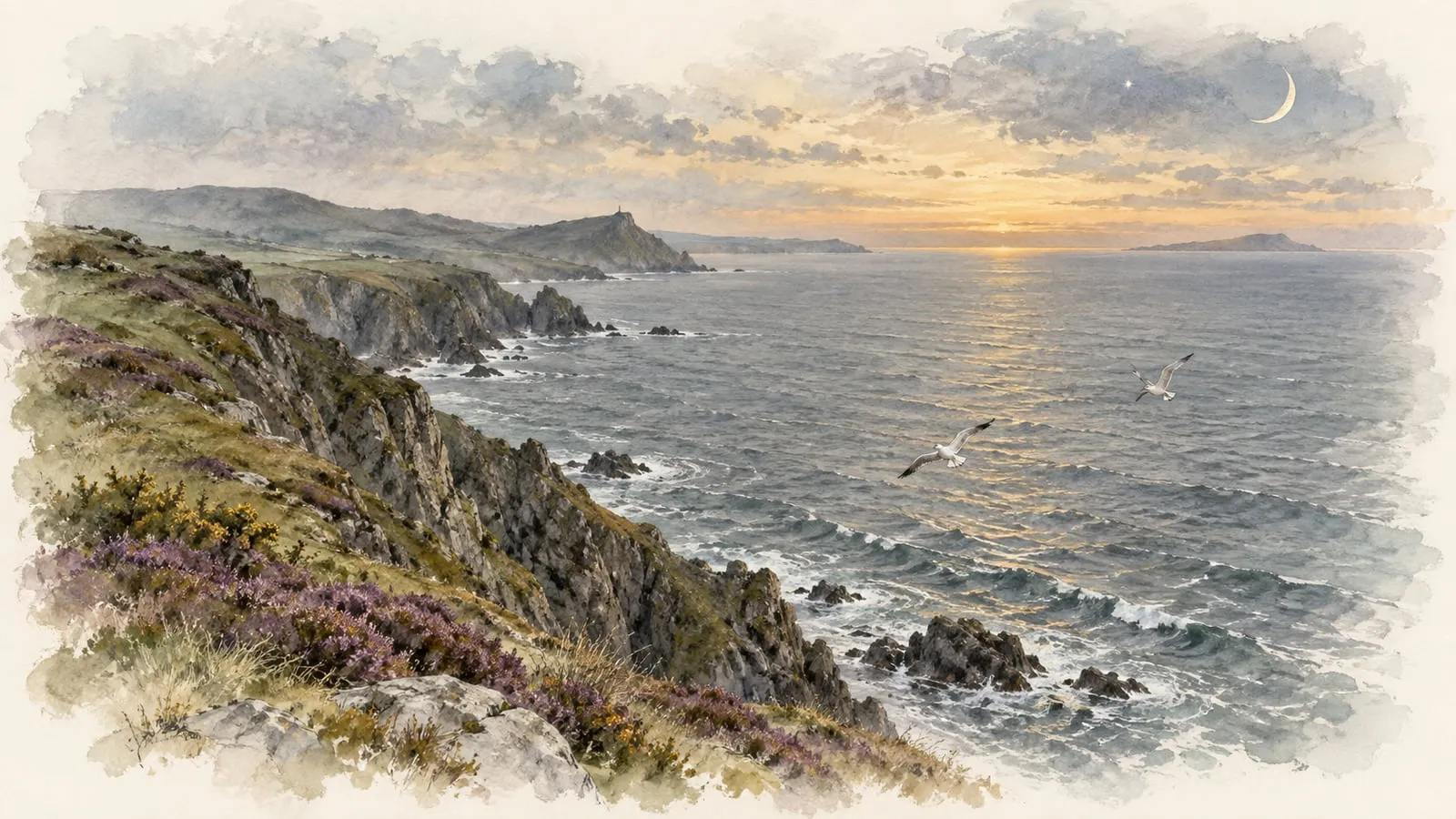
The poem was collected in The Countess Kathleen and Various Legends and Lyrics (1892), among the lyrics Yeats later grouped as "The Rose". It is a poem to Maud Gonne. It is linked to a walk the two took on the cliffs at Howth in 1891, when seagulls flew over and she said that of all birds she would most like to be a seagull. The lily and the rose, the meteor and the evening star were familiar symbols in Yeats's early work, and here they stand for a dreaming beauty the lovers have grown tired of.
Form
Three quatrains in rhyming couplets ("sea" and "flee", "sky" and "die") with very long lines of six or seven beats, in a rolling triple rhythm. The lines rise and fall like waves, and the opening and closing lines both end on "the foam of the sea", so the poem is framed by the same dream.