To be Carved on a Stone at Thoor Ballylee
Earlier titled "To be Carved on a Stone at Ballylee", "To be Carved on a Stone at Bally-Lee"
Text: Poetry, by W. B. Yeats (Standard Ebooks, 2024), from the collected editions of 1908 to 1928. Public domain.
In brief
SummaryThe poet's own inscription for the tower he restored for his wife.
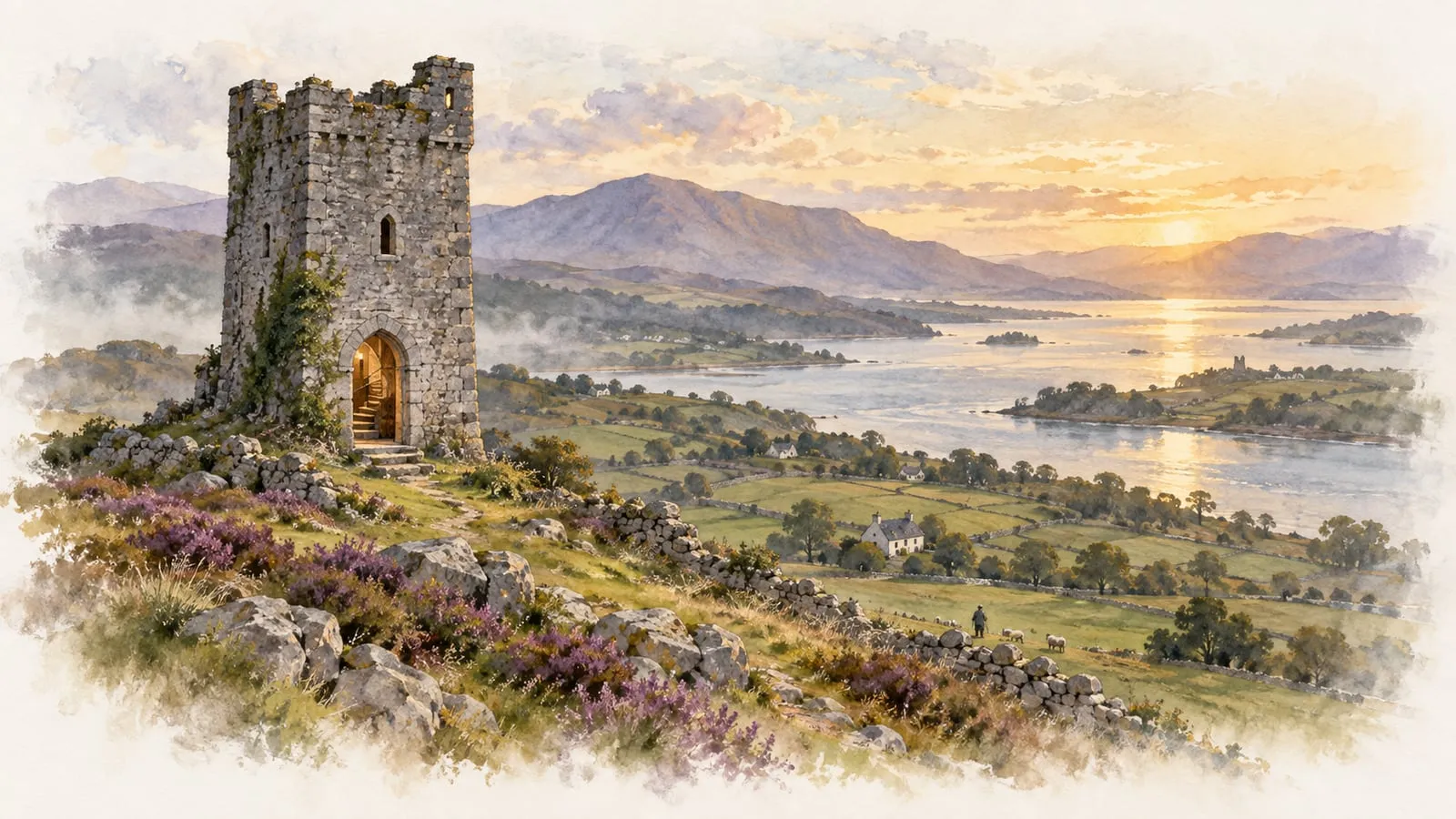
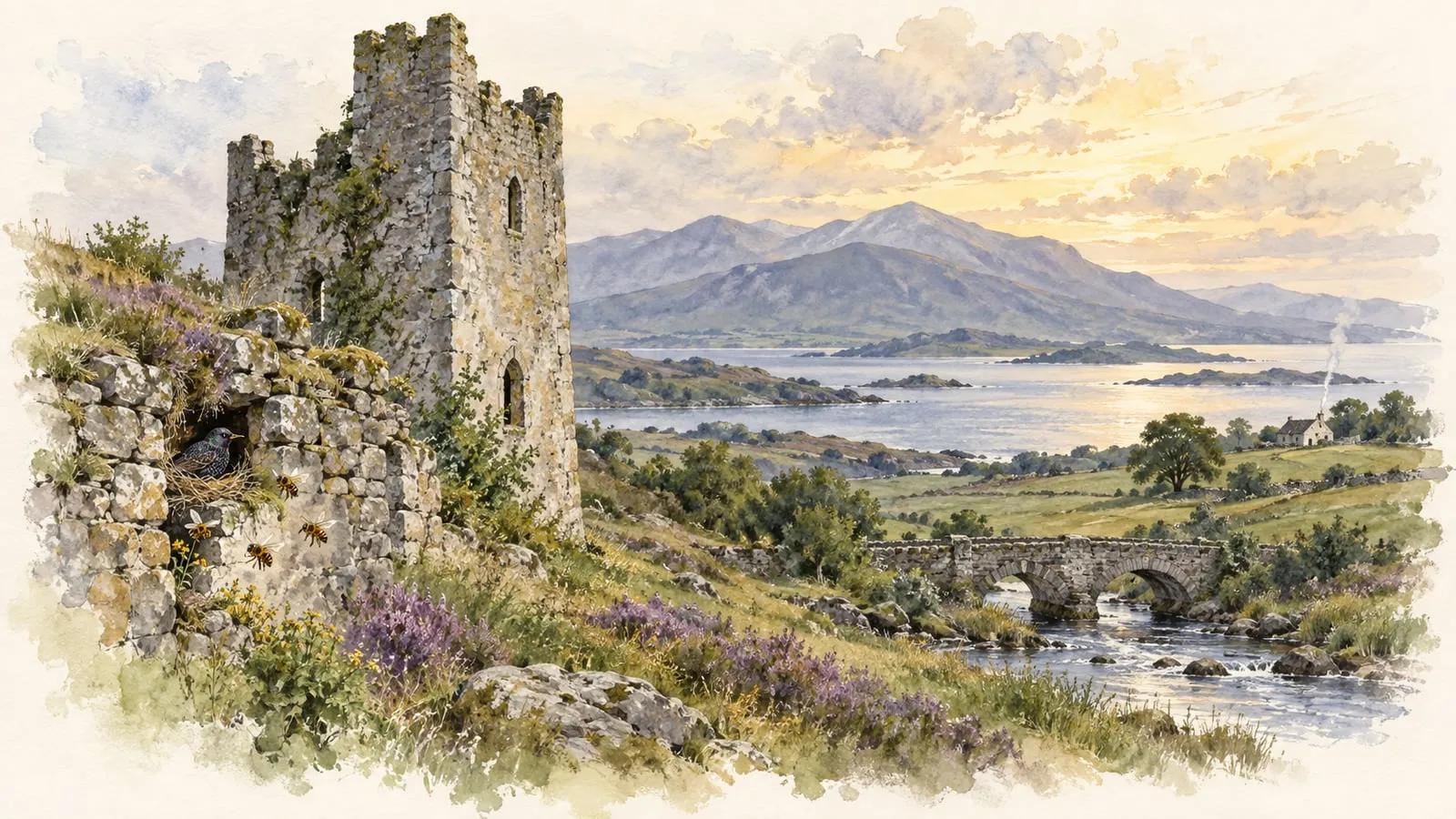
Written to be cut in stone, the poem names its maker and its materials. "William Yeats" records that he restored the tower with old mill boards, sea-green slates and ironwork from the forge at Gort, and that he did it "for my wife George". The last couplet turns from pride to a strange hope: that these words will survive "When all is ruin once again". The tower was a ruin when he found it, and he expects it to become one again, with only the inscription left.
Lines to remember
I, the poet William Yeats,
When all is ruin once again.
Line by line
Lines 1 to 4What was done
The opening is formal, like a signature: "I, the poet William Yeats". Then comes a plain builder's list of salvaged timber, slates and "smithy work from the Gort forge". The fourth line gives the purpose: he restored the tower "for my wife George".
Lines 5 to 6Looking to ruin
The "characters" are the carved letters themselves. He hopes they will last longer than the building, remaining "When all is ruin once again". The word "again" admits that the tower was a ruin before, and that his work is only a pause.
Themes
Building and ruin
The poem sets a small human act of making against the long time of decay. It lists practical, local materials with pride, then calmly foresees that everything will fall down. Only the words are meant to survive: the poem trusts writing, cut in stone, to outlast mill boards and slates.
Marriage and home
The tower was a home for a new marriage, and the inscription says so plainly: "Restored this tower for my wife George". The line puts his wife at the centre of the work, and the homely list of boards, slates and forge work makes the restoration feel like a shared, domestic task.
Context
Thoor Ballylee is a fifteenth-century de Burgo tower house near Gort, County Galway, which Yeats bought for 35 pounds in 1917. He married Georgie Hyde-Lees, known as George, on 20 October 1917, and they restored the tower and used it as a summer home until 1929. The poem was collected in Michael Robartes and the Dancer (Cuala Press, dated 1920, issued February 1921), having earlier been titled "To be Carved on a Stone at Ballylee".
The lines were carved on a stone tablet set in the tower wall, where they can still be read. After the family left, the tower did fall into decay; it was restored and opened as a museum in 1965, and again in 2015 after flood damage.
Form
Six lines in three rhyming couplets ("Yeats" and "slates", "forge" and "George", "remain" and "again"), each line with four beats. The plain, list-like build and the firm rhymes suit an inscription meant for stone: short, clear and made to last.