A Prayer for my Daughter
Listen
June 1919.
Text: Poetry, by W. B. Yeats (Standard Ebooks, 2024), from the collected editions of 1908 to 1928. Public domain.
In brief
SummaryA father, during a storm, prays for his baby daughter's future life.
A storm howls in from the Atlantic while Yeats's infant daughter sleeps. Walking and praying, he fears the violent years ahead and sets out what he wants for her. Beauty, but not so much that it makes her proud or lonely. Courtesy, kindness and a mind free of hatred, rooted like a tree in "one dear perpetual place". He sets this against the example of "the loveliest woman born", whose "opinionated mind" traded away every gift for an "old bellows full of angry wind". The poem ends by wishing her a marriage and a house where custom and ceremony protect innocence and beauty. It is a father's hope, but also Yeats's argument about how a good life, and a good society, are made.
Lines to remember
Out of the murderous innocence of the sea.
Hearts are not had as a gift but hearts are earned
How but in custom and in ceremony
Line by line
Lines 1 to 8The storm
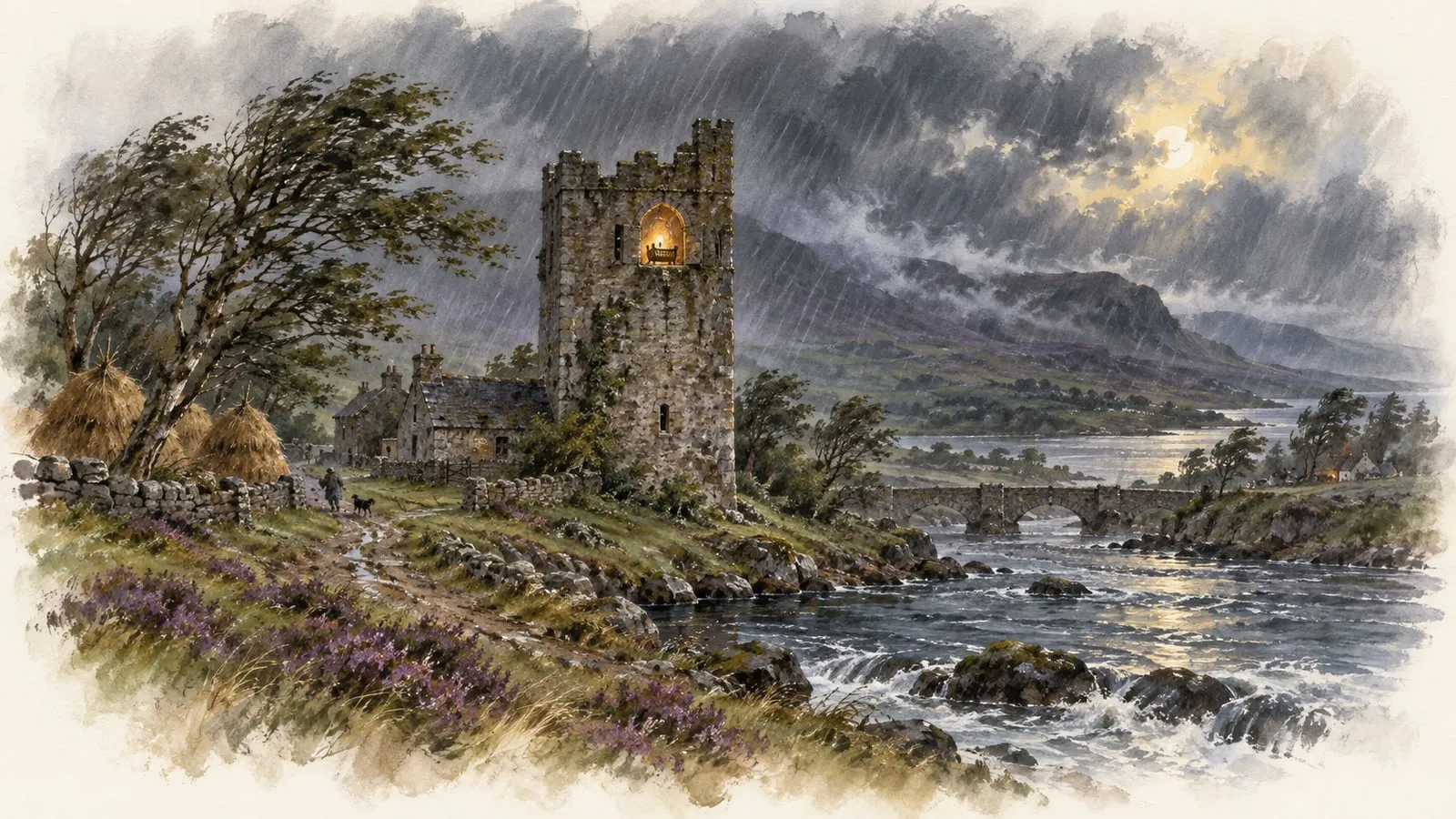
The storm is "howling" and only "Gregory's wood and one bare hill" stand between the sleeping child and the Atlantic wind. The father has "walked and prayed" for an hour "Because of the great gloom that is in my mind". Outer storm and inner gloom mirror each other from the start.
Lines 9 to 16Fear of the future
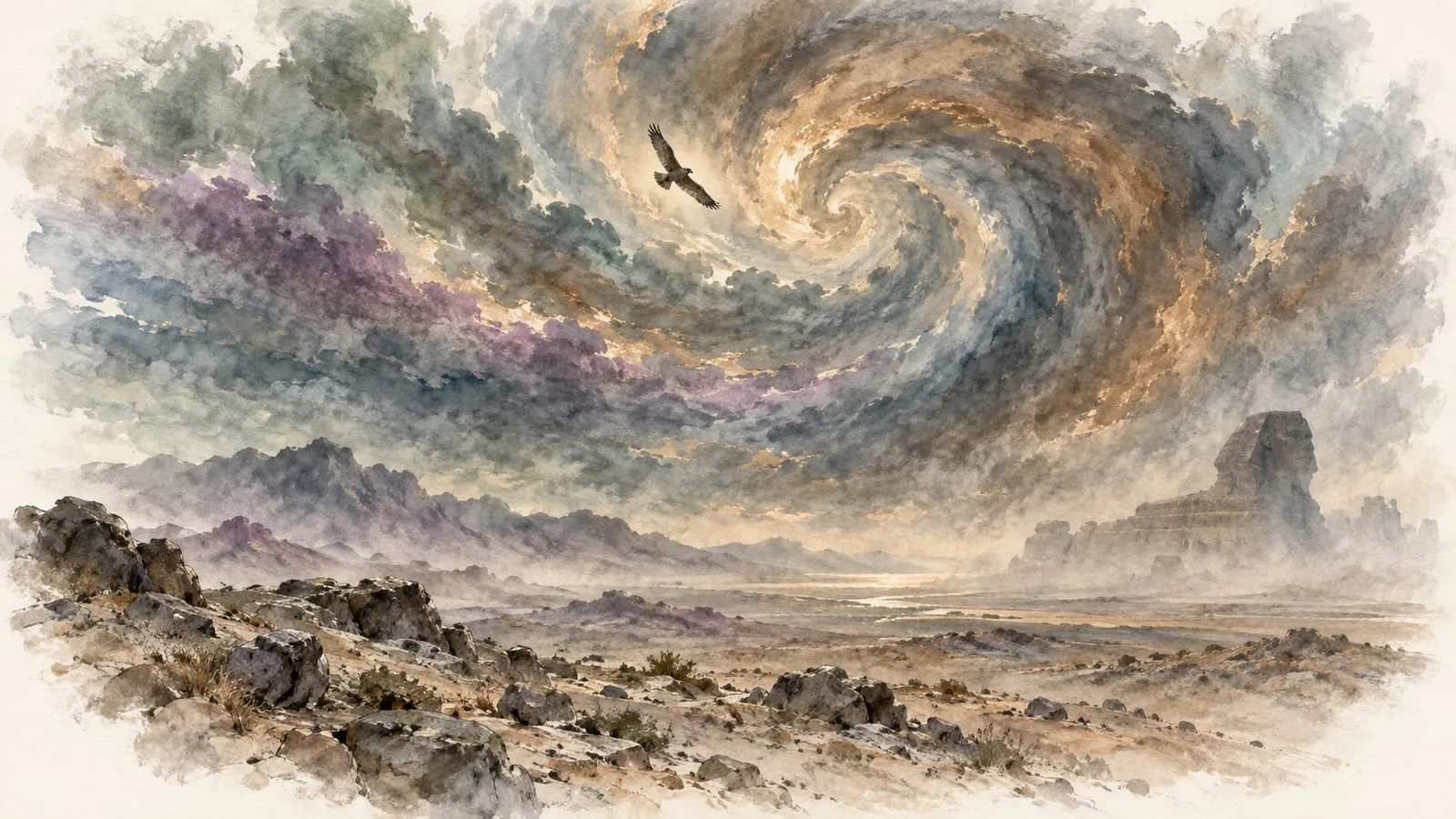
He hears the wind scream over the tower and the flooded stream, and imagines the future years "Dancing to a frenzied drum" out of "the murderous innocence of the sea". The sea is innocent because it has no intent, yet it kills: a picture of a violent age that he fears his daughter will inherit.
Lines 17 to 24Beauty, but not too much
His first wish is for beauty, "and yet not / Beauty to make a stranger's eye distraught". Women made "beautiful overmuch", he argues, may treat beauty as "a sufficient end" and lose "natural kindness" and the intimacy that "chooses right", and so never find a friend.
Lines 25 to 32Helen and Venus
He gives examples from myth. Helen found life "flat and dull" and later suffered through "a fool", and the great Queen who "rose out of the spray", Venus, chose "a bandy-legged smith". Such beautiful women "eat / A crazy salad with their meat", making choices that waste the "Horn of Plenty" they were given.
Lines 33 to 40The value of courtesy
He wants her "chiefly learned" in courtesy. "Hearts are not had as a gift but hearts are earned", he says, by those who are not "entirely beautiful". A lover who has roamed and suffered cannot take his eyes "From a glad kindness": warmth, not beauty, is what holds.
Lines 41 to 48The hidden tree
He prays that she will be "a flourishing hidden tree", her thoughts like the linnet, a small songbird, that only sings. Any chase or quarrel should begin "in merriment". She should live "like some green laurel / Rooted in one dear perpetual place", settled, sheltered and secure.
Lines 49 to 56The danger of hatred
He turns to himself. His own mind has "dried up of late" because the minds and the beauty he loved have not prospered. He knows that "to be choked with hate" is perhaps the worst evil, and that if there is "no hatred in a mind", no storm can "tear the linnet from the leaf".
Lines 57 to 64The loveliest woman
"An intellectual hatred is the worst", so she should think "opinions are accursed". He points to "the loveliest woman born", given everything from "Plenty's horn", who bartered it all, because of her "opinionated mind", "For an old bellows full of angry wind": the empty noise of political hatred.
Lines 65 to 72Radical innocence
With hatred driven out, "The soul recovers radical innocence", an innocence rooted deep, and finds it is "self-delighting, / Self-appeasing, self-affrighting". Its own will becomes "heaven's will". Such a soul can "be happy still" though every face should scowl and every wind should howl.
Lines 73 to 80Custom and ceremony
Finally he wishes her a husband who brings her "to a house / Where all's accustomed, ceremonious". Arrogance and hatred are "Peddled in the thoroughfares", but innocence and beauty are born "in custom and in ceremony". The two symbols come back: ceremony is "the rich horn", custom "the spreading laurel tree".
Themes
Fatherhood and fear
The poem begins with a father keeping watch, "walked and prayed" for an hour, while the storm howls round the cradle. His fear for the "future years", which come "Dancing to a frenzied drum", gives the prayer its urgency. Every wish that follows is shaped by the violence he expects her to face.
Beauty and kindness
Yeats does not wish his daughter great beauty. Women "made beautiful overmuch" risk losing "natural kindness" and friendship, as Helen and the sea-born Queen do in lines 25 to 32. Instead he prizes courtesy and "a glad kindness", because "Hearts are not had as a gift but hearts are earned".
Hatred and politics
"An intellectual hatred is the worst". The poem sets a mind free of hatred, like the linnet that no storm can tear "from the leaf", against "the loveliest woman born" who traded Plenty's horn "For an old bellows full of angry wind". Most readers take this woman to be Maud Gonne and the bellows to be political rhetoric.
Custom and ceremony
The poem ends by trusting tradition. Innocence and beauty are born "in custom and in ceremony", while "arrogance and hatred" are sold in the street. The symbols of the horn of plenty and the "spreading laurel tree" return, joining the private wish for a happy home to Yeats's larger belief in rooted, ordered life.
Context
Yeats's daughter Anne was born in Dublin on 26 February 1919. He worked on the poem in the months that followed and dated it June 1919; it is set at Thoor Ballylee, his tower in County Galway. The tower, the bridge and the flooded stream are all there in the second stanza, and "Gregory's wood" is the woodland of Coole, the estate of his friend Lady Gregory nearby.
The poem was published in Michael Robartes and the Dancer (Cuala Press, 1921), the book that also contains "Easter, 1916" and "The Second Coming". Read beside them, its storm and "frenzied drum" reflect years of war and revolution, and its closing praise of custom and ceremony is Yeats's answer to that disorder.
Form
Ten eight-line stanzas rhymed aabbcddc, mixing five-beat and shorter four-beat lines. The couplets move the argument forward, while the enclosing c rhyme ("wind" and "mind" in the first stanza) closes each stanza firmly. The steady pattern suits a prayer made against a storm: calm, measured and deliberate.