Demon and Beast
Listen
Text: Poetry, by W. B. Yeats (Standard Ebooks, 2024), from the collected editions of 1908 to 1928. Public domain.
In brief
SummaryA rare hour free of hatred and desire, and the wish to keep it.
For a few minutes the "crafty demon" and the "loud beast" that torment the speaker day and night run out of sight, and he feels free. In a picture gallery the old portraits seem to welcome him, and every man's thoughts seem clear and dear. Outside, a gull diving for bread and a comic duck shaking off water move him to tears of "aimless joy". Then he checks himself: this sweetness is no victory of the will but a gift of age, which chills the blood. All he wants is to make it last half a day, and he ends with the desert hermits of Egypt, whose starved sweetness he sets above the thrones of the Caesars.
Lines to remember
That crafty demon and that loud beast
To make it linger half a day.
What had the Caesars but their thrones?
Line by line
Lines 1 to 8Free for a moment
The relief is measured modestly: "For certain minutes at the least". The demon and the beast, which he ties to "my hatred and desire", have run off. He has long whirled "in the gyre" between the two, and now, for once, he sees his "freedom won" and "all laugh in the sun."
Lines 9 to 20Portraits that welcome him
In a gallery the painted dead greet him: Luke Wadding's "glittering eyes", the Ormonds nodding on the wall, Stafford smiling as if glad to be understood. With the beast gone, every portrait "beckoned to sweet company", and other men's thoughts seem as dear to him as his own.
Lines 21 to 32The gull and the duck
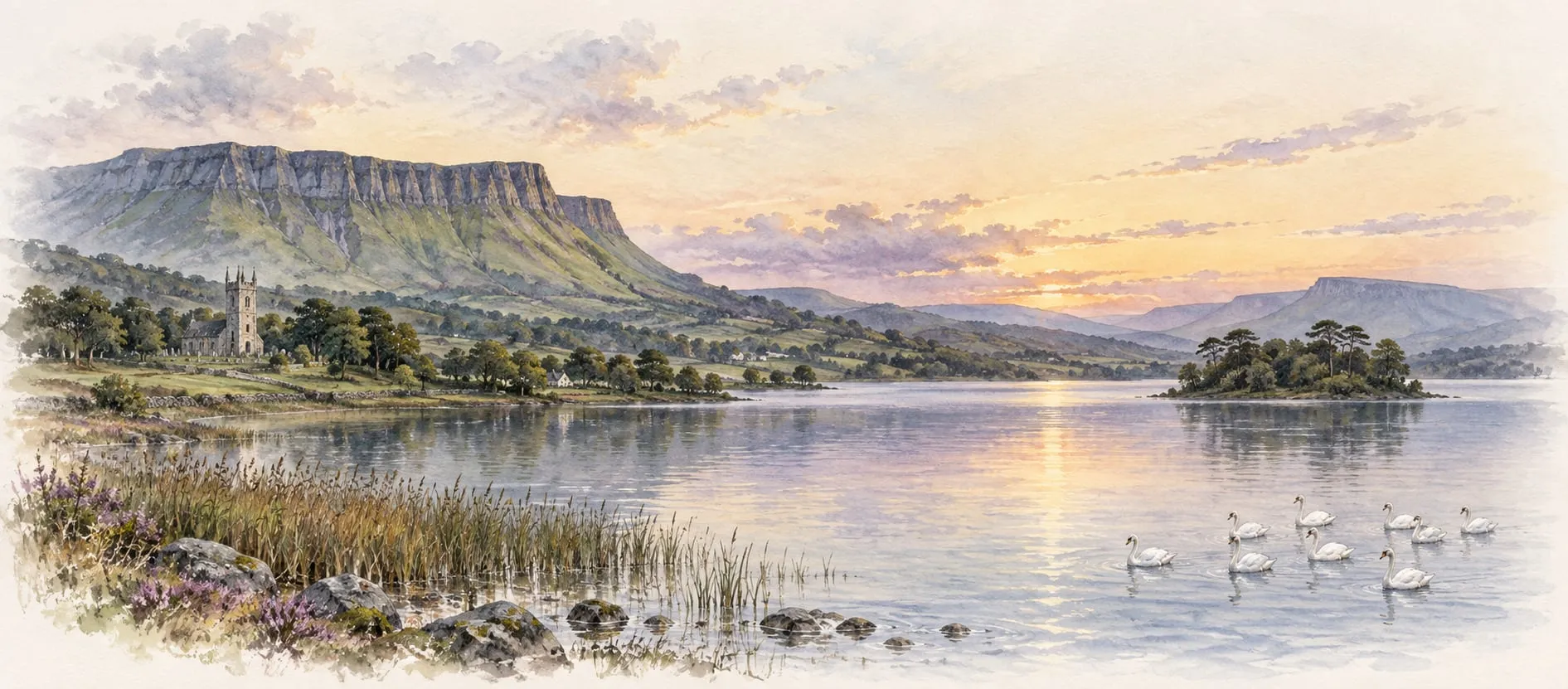
Outside, "aimless joy" stops him by a little lake, close to tears. A white gull swoops for a crust and splashes near a "Portly green-pated bird" shaking water off its back. Because he is "no more demoniac", even a "stupid happy creature" can rouse his "whole nature".
Lines 33 to 42Age, not victory
He corrects himself. Every "natural victory" belongs to beast or demon; no free man has ever truly mastered his nature. The sweetness came from "mere growing old", which chills the blood. Still, his dearest wish is to find a way "To make it linger half a day."
Lines 43 to 50The desert saints
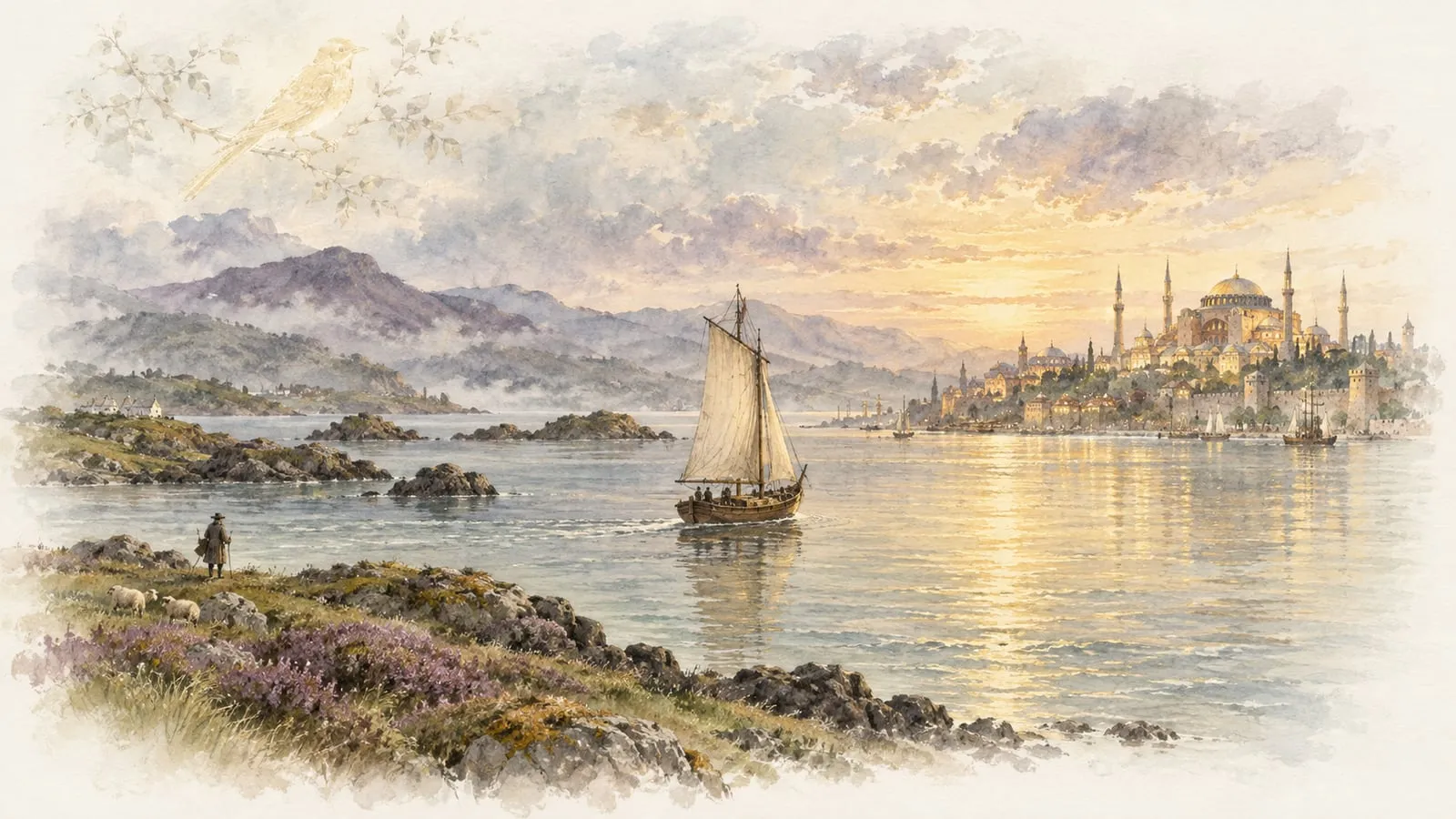
The last stanza leaps to the early Christian hermits of Egypt: Anthony and "twice a thousand more", starving by the Mareotic sea until they "withered to a bag of bones". Their sweetness came from emptying the body, and the closing question sets it above all worldly power.
Themes
Hatred and desire
The demon and the beast are never described, only felt: they "plague me day and night". Line 6 names what they stand for, "my hatred and desire", the two passions that have driven the speaker round and round "in the gyre". Freedom from them is not calm but joy: suddenly the portraits, the gull and the duck all seem friendly, and everyone laughs "in the sun".
Ageing
The poem refuses to take credit for its happy mood. Freedom was not won by effort; it came because "mere growing old" brings "Chilled blood". Age is both a loss and a release, cooling the passions that made him "demoniac". The wish "To make it linger half a day" is touchingly small: an old man hoping to hold on to a good afternoon.
The body and the spirit
The last stanza sets the poet's brief, accidental sweetness beside the saints who sought it on purpose, starving in the desert until they "withered to a bag of bones". The final question, "What had the Caesars but their thrones?", ranks that inner sweetness above empire. The poem half admires the hermits and half wonders at them, without choosing their path.
Context
The poem was collected in Michael Robartes and the Dancer, printed by the Cuala Press in Dundrum and dated 1920, though issued in February 1921. The same book holds "Easter, 1916" and "The Second Coming", so this private moment of peace sits among poems of violence and crisis.
The gallery is usually taken to be the National Gallery of Ireland in Dublin, whose portraits include the seventeenth-century Franciscan Luke Wadding and members of the Butler family, dukes of Ormond. "Stafford" is usually read as Thomas Wentworth, Earl of Strafford, Charles I's governor of Ireland. The gyre, a whirling spiral, became one of Yeats's central images, and he uses the same odd verb in "Sailing to Byzantium": "perne in a gyre".
Form
Five stanzas of unequal length (8, 12, 12, 10 and 8 lines) in rhyming couplets. Pairs of four-beat lines alternate with pairs of shorter three-beat lines, as in "That plague me day and night" and "Ran out of my sight". The quick, light movement suits the mood of release, and some rhymes are only approximate ("demon", "freeman").