The Leaders of the Crowd
Listen
Text: Poetry, by W. B. Yeats (Standard Ebooks, 2024), from the collected editions of 1908 to 1928. Public domain.
In brief
SummaryPopular leaders trade in slander, while truth needs the solitary student's lamp.
A single sharp stanza against the leaders of popular movements. To keep their certainty they must accuse everyone who differs of base motives, tear down established reputations, and peddle whatever rumours they can invent, whispering them as if the gutter were the Muses' mountain and slander a song. They cannot know that truth grows only where "the student's lamp has shone", because they have no solitude. They have noise, daily hope and "heartier loves"; the lamp, by contrast, "is from the tomb". The poem is scornful, but its last phrase admits the cost of the scholar's way: it is lonely and close to death.
Lines to remember
Truth flourishes where the student's lamp has shone,
And heartier loves; that lamp is from the tomb.
Line by line
Lines 1 to 4Their methods
To "keep their certainty" the leaders must accuse "All that are different of a base intent", "Pull down established honour" and "hawk for news" whatever their "loose fantasy" invents. "Hawk" means to sell in the street, like a pedlar crying his wares.
Lines 5 to 9Gutter and Helicon
They murmur their inventions "with bated breath", as though "The abounding gutter had been Helicon", the mountain of the Muses, "Or calumny a song". Then the question: how can they know that truth grows only where "the student's lamp has shone", when they "have no solitude"?
Lines 10 to 12The lamp from the tomb
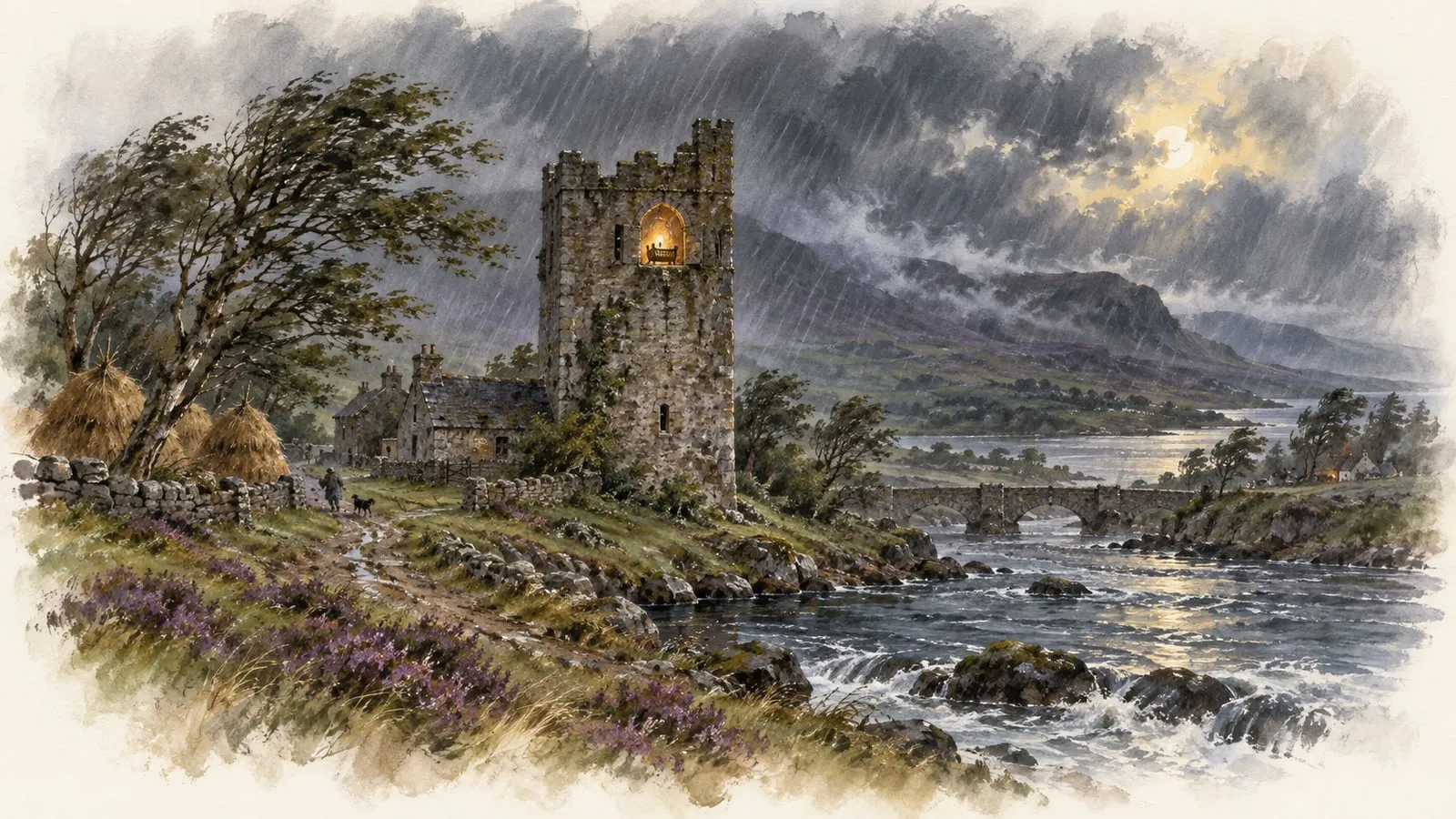
"So the crowd come they care not what may come": they do not care where they are led. They have "loud music" and hope "every day renewed". The final phrase is stark: the student's lamp "is from the tomb", lit by the dead writers of the past and burning in isolation.
Themes
Truth and solitude
The poem's claim is that "Truth flourishes where the student's lamp has shone, / And there alone". Truth needs solitude, study and the company of the dead, "from the tomb". The crowd's leaders, who "have no solitude", can only have certainty, which is a different thing.
Slander
The leaders' tools are accusation, rumour and "calumny". They "hawk for news" and murmur it "with bated breath". Comparing the "abounding gutter" to Helicon shows how they dress up gossip as inspiration. Yeats had often felt the force of such attacks in Dublin controversies.
The crowd
The crowd is given the attractions of popular life: "loud music, hope every day renewed / And heartier loves". The poem does not pretend the scholar's life is warmer. Its sympathy is clear, but its last image admits that the lamp belongs to the dead.
Context
The poem was collected in Michael Robartes and the Dancer, issued by the Cuala Press in February 1921, a book shaped by the Easter Rising and the political turmoil that followed. It stands near "On a Political Prisoner", which also laments minds narrowed by political hatred. The leaders are not named, and the poem reads as a general attack on the politics of rumour and mass feeling in Ireland in these years.
Form
One stanza of twelve pentameter lines rhymed abab cdcd efef ("accuse", "intent", "news", "invent"). The long sentences run over line ends, so the verse sounds like an argument pressed hard. The pun in "come they care not what may come" gives the crowd's recklessness a mocking twist.