The Rose Tree
Listen
Text: Poetry, by W. B. Yeats (Standard Ebooks, 2024), from the collected editions of 1908 to 1928. Public domain.
In brief
SummaryPearse and Connolly agree that only blood can revive Ireland's rose tree.
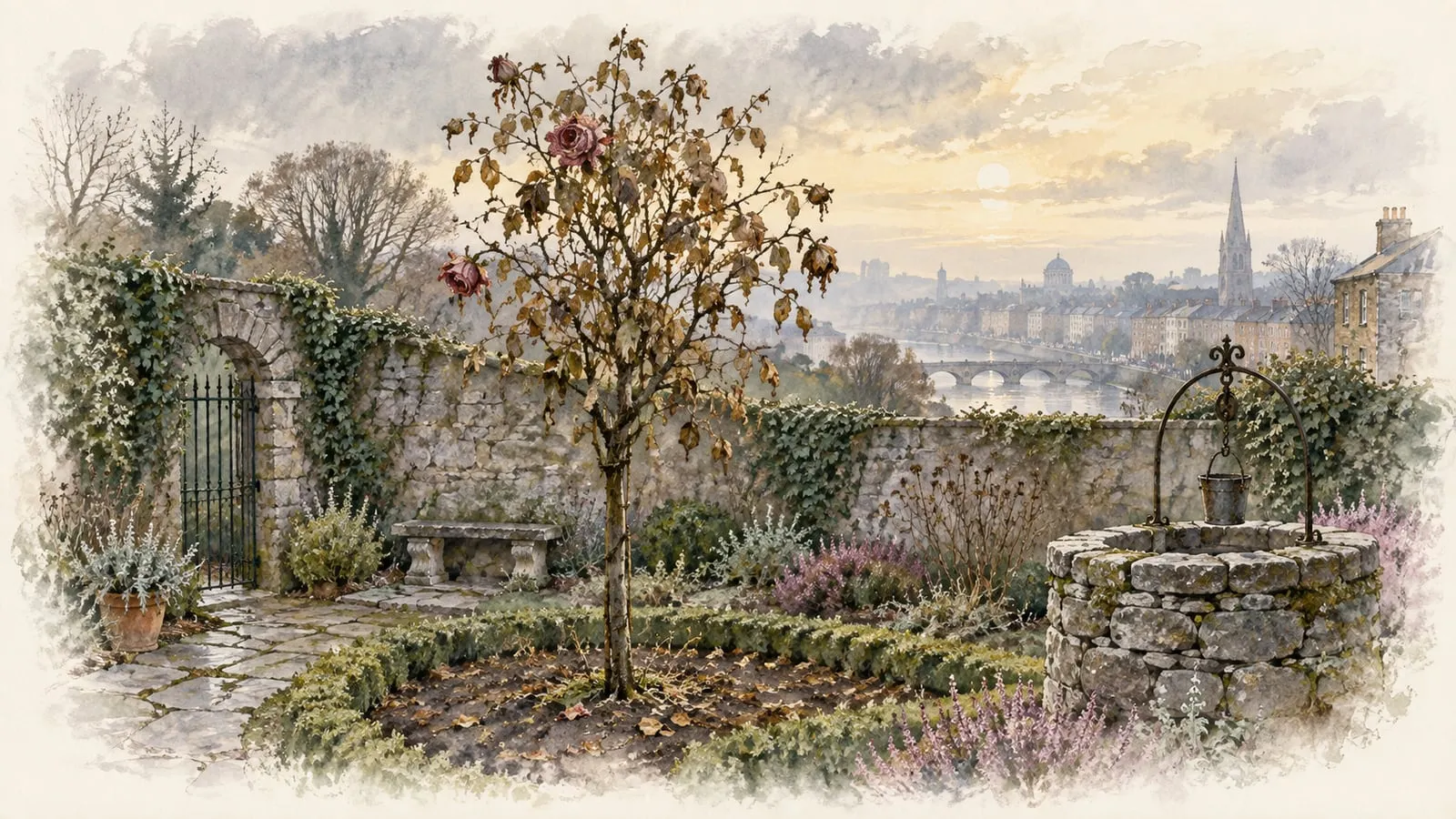
A short ballad in which two leaders of the Easter Rising, Patrick Pearse and James Connolly, talk about Ireland as a withered rose tree. Pearse fears that "politic words", or a wind blowing "Across the bitter sea" from England, have withered it. Connolly says it only needs watering to turn green again and blossom. But Pearse asks where the water can come from, since "all the wells are parched away". His answer is the poem's chilling last line: "There's nothing but our own red blood / Can make a right Rose Tree." The simple song form carries the idea of blood sacrifice that drove the Rising.
Lines to remember
"O words are lightly spoken,"
There's nothing but our own red blood
Can make a right Rose Tree.
Line by line
Lines 1 to 6The withered tree
Pearse begins: "O words are lightly spoken." He suspects that "a breath of politic words", the talk of careful politicians, has withered "our Rose Tree", or else a wind from "Across the bitter sea", which points to England.
Lines 7 to 12Only water it
Connolly replies that the tree "needs to be but watered" to make "the green come out again" and "shake the blossom from the bud". Green is the colour of Irish nationalism, so the garden image is also political.
Lines 13 to 18Our own red blood
Pearse asks where water can be found "When all the wells are parched away". The answer is plain and terrible: "nothing but our own red blood / Can make a right Rose Tree." The gentle garden image turns into a picture of sacrifice.
Themes
Blood sacrifice
The poem ends with the idea that Ireland can only be renewed by the deaths of its patriots: "our own red blood". The garden image of watering a rose becomes a vow to die. It sets out, without comment, the belief that led the leaders of 1916 into a rising they expected to lose.
Words and action
"O words are lightly spoken" dismisses talk. The "politic words" of negotiation are what have withered the tree. Against them the poem sets action and blood, which are not light at all. The poem is itself made of words, but it records men who had given up on them.
Ireland as a rose
The rose tree stands for Ireland, as the rose often did in Irish song and in Yeats's own early poems. It is "our Rose Tree", something shared and tended, that should be "the garden's pride". The simple symbol lets the poem speak of politics as if of gardening.
Context
The poem was collected in Michael Robartes and the Dancer, issued by the Cuala Press in February 1921, among Yeats's poems on the Easter Rising of 1916. Patrick Pearse and James Connolly were both leaders of the Rising, based in the General Post Office, and both were executed that May.
Pearse had written of the need for a blood sacrifice to redeem Ireland, and the poem gives that idea to him directly. Yeats puts it in a plain ballad, the kind of song that might be sung in the street, rather than in the questioning voice of "Easter, 1916".
Form
Three six-line stanzas in the manner of a ballad, with short lines of three or four beats and rhymes on the even lines ("Connolly", "Tree", "sea"). "Said Pearse to Connolly" returns as the second line of the first and third stanzas, like a refrain. The easy, singable form makes the last line's message all the starker.