Towards Break of Day
Listen
Text: Poetry, by W. B. Yeats (Standard Ebooks, 2024), from the collected editions of 1908 to 1928. Public domain.
In brief
SummaryAt dawn, a man and the woman beside him dream halves of one dream.
Waking near dawn, the speaker wonders whether the woman beside him dreamed a double of his dream, or whether they shared one dream between them. His was of a waterfall on the side of Ben Bulben that he loved as a child. He wanted to touch it, but knew he would feel only "Cold stone and water", and he raged at heaven for its law that nothing we love too much can be grasped. She, meanwhile, in "bitterer sleep", had watched the white stag of Arthur leap from mountain to mountain. The two dreams differ, yet both are of wild heights and of things that cannot be held.
Lines to remember
Nothing that we love over-much
Is ponderable to our touch.
The marvellous stag of Arthur,
Line by line
Lines 1 to 4A shared dream
The poem opens with a question. Was the woman's dream "the double of my dream", or did they "halve a dream / Under the first cold gleam of day"? The idea of two sleepers splitting one dream sets up everything that follows.
Lines 5 to 11The waterfall
He dreamed of "a waterfall / Upon Ben Bulben side" that his childhood "counted dear": nothing in the wide world could match it. But he notices that memory has "magnified / So many times childish delight", enlarging the place beyond what it was.
Lines 12 to 18Heaven's law
He longed to touch it "like a child", but knew he would feel only "Cold stone and water". He "grew wild", accusing heaven of a law: "Nothing that we love over-much / Is ponderable to our touch." What we love most cannot be weighed or held.
Lines 19 to 25The white stag
His dream ends with "The cold blown spray in my nostril", a sharp physical detail. But she, "in bitterer sleep", had watched "The marvellous stag of Arthur" leap "From mountain steep to steep", a legendary image beside his remembered one.
Themes
Dreams
The poem asks whether two sleepers can share a dream: "did we halve a dream"? His half is a real place remembered, the waterfall; hers is a figure from legend, the white stag. The two halves match in their wildness and height, as if one dream had been divided between them.
Memory and childhood
The waterfall is precious because of childhood, but memory has "magnified / So many times childish delight". He is clear-eyed enough to see that the real thing would be only "Cold stone and water". The poem holds both the love and the knowledge that it has been enlarged.
Longing
The law he accuses heaven of, "Nothing that we love over-much / Is ponderable to our touch", sums up the poem. The waterfall cannot be touched, and the stag leaps away "From mountain steep to steep". What is most loved is always just out of reach.
Context
The poem was collected in Michael Robartes and the Dancer, issued by the Cuala Press in February 1921. The woman beside him is usually taken to be his wife George, whom he married in October 1917. Like "An Image from a Past Life" in the same book, it is a poem of a couple at night, each seeing something the other cannot.
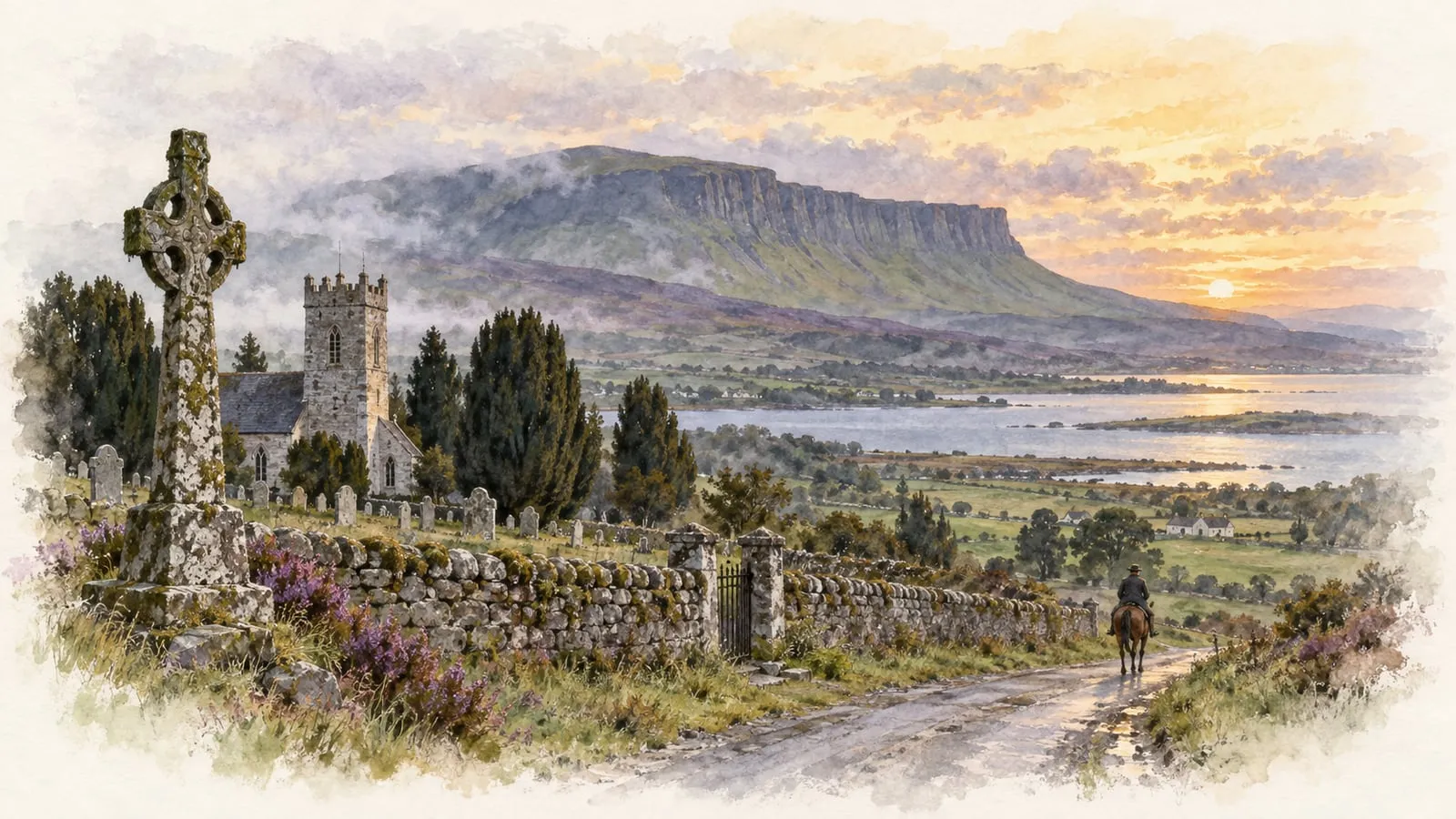
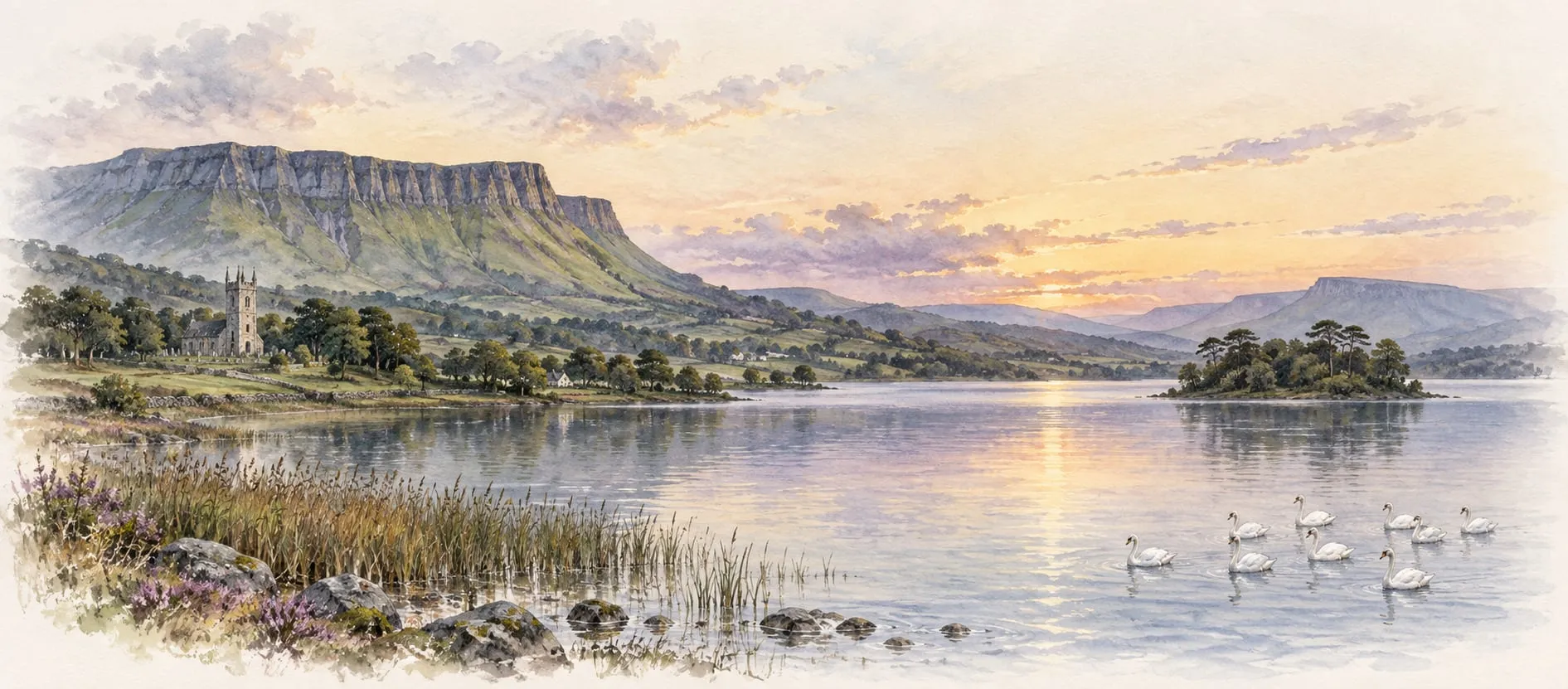
Ben Bulben is the great flat-topped mountain north of Sligo, above Drumcliffe, at the centre of the landscape of Yeats's childhood summers. The waterfall is sometimes identified with the fall at Glencar, in the same range of hills, though the poem does not name it.
Form
Four stanzas: a quatrain rhymed abab, then three stanzas of seven lines with freer rhyme, some full ("lay" and "day", "sleep" and "leap" and "steep") and some slant ("touched" and "over-much"). The short three- and four-beat lines keep the voice hushed, like someone speaking at first light.