An Image from a Past Life
Listen
He
She
He
She
He
She
Text: Poetry, by W. B. Yeats (Standard Ebooks, 2024), from the collected editions of 1908 to 1928. Public domain.
In brief
SummaryBy a starlit river, a woman sees the ghost of her lover's former sweetheart.
A man and a woman stand by a dark stream at night. He is moved by the starlight on the water and by a sudden scream from some unseen creature. She feels her heart "smitten through" without reason, just when she thought her life was settled. Then she covers his eyes. He cannot see why: there is only the fading west and the river reflecting the sky. She sees "A sweetheart from another life" floating on the water, loosening a tress of her starry hair. He insists that any image could only make him fonder of her. She is not reassured, and ends afraid "Of the hovering thing night brought me."
Lines to remember
A sweetheart from another life floats there
Among the starry eddies of her hair
Of the hovering thing night brought me.
Line by line
Lines 1 to 7The scream
He has "Never until this night" been so stirred. "The elaborate star-light" gleams on the eddies of a dark stream, and then "that scream" comes from some "invisible beast or bird". He calls it an "Image of poignant recollection", something that stirs deep memory.
Lines 8 to 14Her heart smitten
She takes up his word "image": the cry is an image of her own heart, "smitten through / Out of all likelihood". She had thought that, with "Youth's bitterness being past", her days were settled "Amid most lovely places", and yet her heart is struck again as if it "had not learned its lesson".
Lines 15 to 21Hands over his eyes
She has covered his eyes. He asks what could have alarmed her so that his eyes "should never rest" on it. As far as he can see, there is only "the slowly fading west" and the river "imaging the flashing skies", the scene that until now "charmed you".
Lines 22 to 28The sweetheart
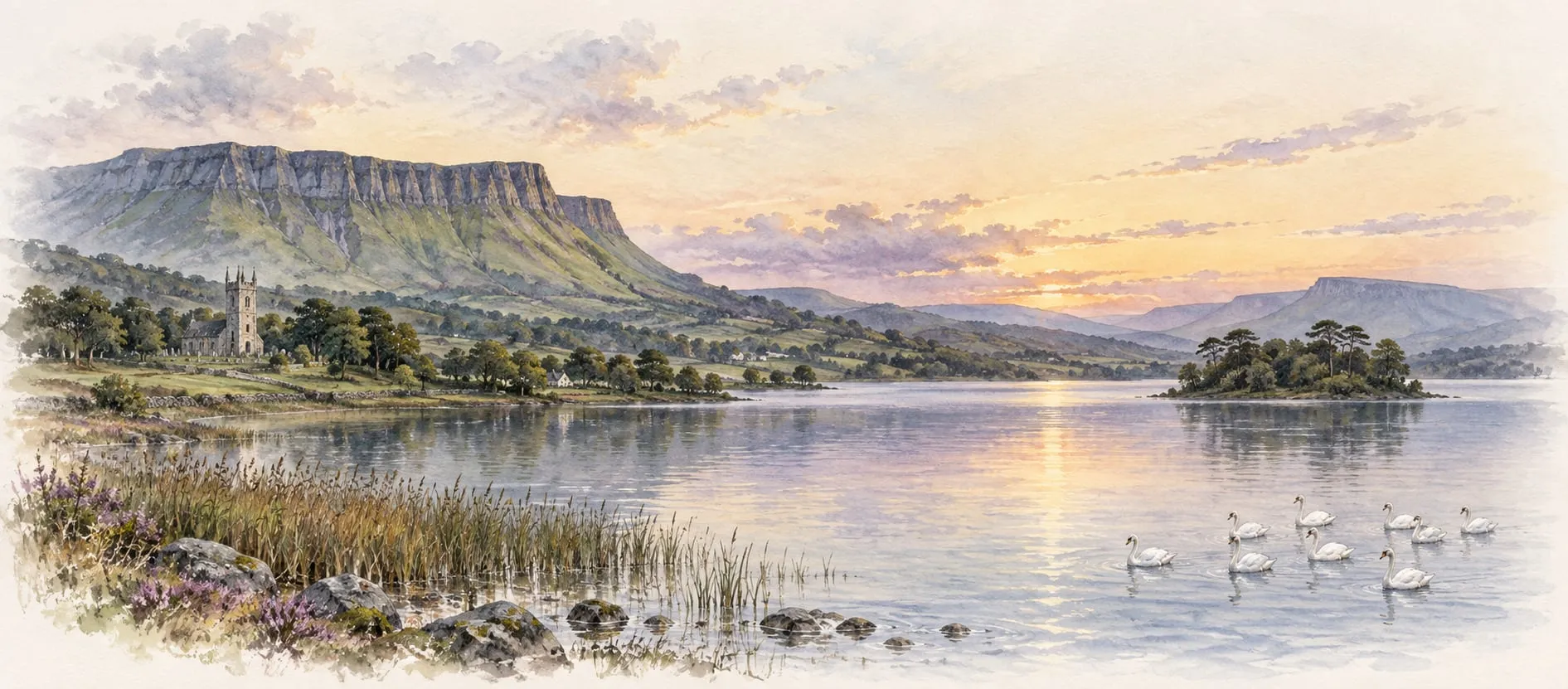
She sees "A sweetheart from another life" floating on the water, lingering from "vague distress / Or arrogant loveliness". The phantom lifts a tress of hair "Among the starry eddies" on a pale finger, and the stars in the stream become the stars in her hair.
Lines 29 to 35His reassurance
He asks why she should start in fear, with him at her shoulder, imagining that any night could raise an image except "images to make me fonder". Even for eyes "that beauty had driven mad", he insists, his love for her is secure.
Lines 36 to 42The hovering thing
She does not take up his comfort. The phantom "has thrown her arms above her head", whether to "flout" her or simply to let her hair stream on the wind. She cannot tell, and knows only that she is "afraid / Of the hovering thing night brought me."
Themes
Past love
The poem is about the way an earlier love can haunt a later one. The "sweetheart from another life" is seen only by the woman, and only when the man is deeply stirred. His promise of "images to make me fonder" cannot undo what she has seen.
Images
The word "image" runs through the poem: "Image of poignant recollection", "An image of my heart", "An image up". Reflections on the water become images of feeling, and one image becomes a figure with hair and fingers. The line between reflection, memory and ghost is never fixed.
Fear and jealousy
She has passed "Youth's bitterness" and thought herself safe, but her heart is "smitten" again. Her covering his eyes is protective and possessive at once. The poem ends not with his reassurance but with her fear of "the hovering thing".
Context
The poem was collected in Michael Robartes and the Dancer, issued by the Cuala Press in February 1921, soon after Yeats's marriage to George Hyde-Lees in 1917. The idea of lives that recur and images that pass from one life to another belongs to the system the couple were then working out together, later published as A Vision.
It is usually read as a scene between Yeats and his wife, with the phantom as the memory of an earlier love, often taken to be Maud Gonne. The poem itself names no one, and its fear works whether the "sweetheart" is a ghost, a memory or a jealous fancy.
Form
A dialogue in six seven-line stanzas, alternating "He" and "She". Each stanza has long lines framing two very short ones, and rhymes abcccab ("stirred", "reflections", "stream", "gleam", "scream", "bird", "recollection"). The triple rhyme in the middle of each stanza gives a brief, chiming intensity before the long lines return.