In the Seven Woods
Listen
August 1902.
Text: Poetry, by W. B. Yeats (Standard Ebooks, 2024), from the collected editions of 1908 to 1928. Public domain.
In brief
SummaryAt Coole, the poet finds a brief peace from public bitterness.
The speaker has been listening to the pigeons of the Seven Woods and the bees in the lime flowers, and for a while he has put away "the old bitterness". He has forgotten, for now, "Tara uprooted" and the "new commonness" that sits on the throne and hangs "paper flowers from post to post" in the streets. He is content because he knows that Quiet still wanders among the pigeons and bees, while a Great Archer waits in the clouds over Parc-na-Lee for his hour to shoot. The peace is real, but it is held under a threat.
Lines to remember
I have heard the pigeons of the Seven Woods
Make their faint thunder, and the garden bees
A cloudy quiver over Parc-na-Lee.
Line by line
Lines 1 to 4Pigeons and bees
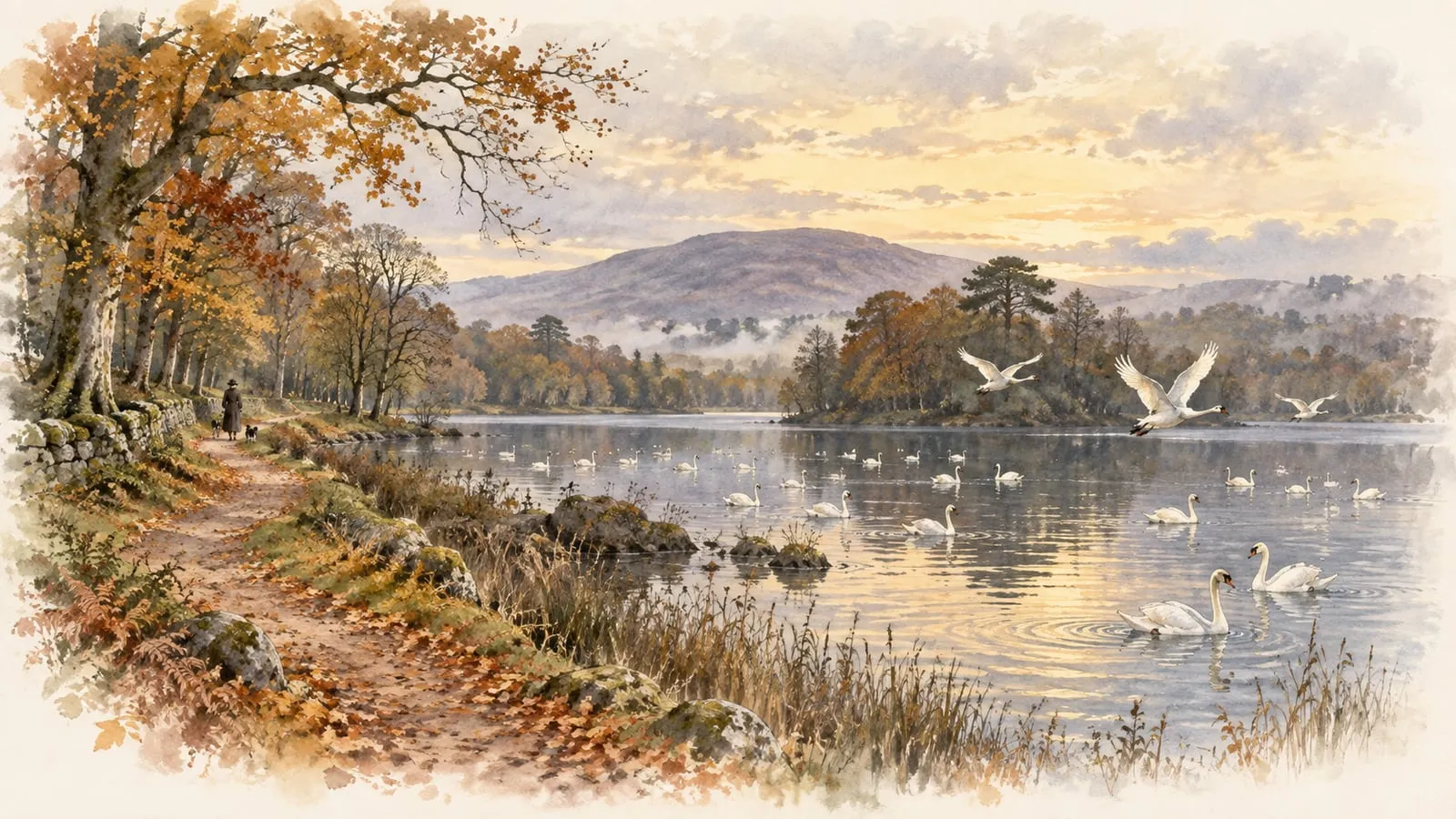
He has heard the pigeons "Make their faint thunder", a lovely paradox for their soft, rumbling calls, and the bees "Hum in the lime tree flowers". The sounds of the woods let him set aside "The unavailing outcries and the old bitterness".
Lines 5 to 9What he has forgotten
Line 5 turns: "I have forgot awhile" the troubles of public life, "Tara uprooted" and a "new commonness" on the throne and in the streets, "hanging its paper flowers from post to post". The bitter joke of line 9 is that the crowd celebrates "Because it is alone of all things happy".
Lines 10 to 14Quiet and the Archer
He is content, knowing that Quiet "Wanders laughing and eating her wild heart" among the pigeons and bees. Yet the final image is ominous: "that Great Archer" waits for His hour to shoot, and hangs "A cloudy quiver over Parc-na-Lee". Peace and threat share the same sky.
Themes
Nature and peace
The woods offer a cure for bitterness. The sounds are small and exact: the "faint thunder" of pigeons, bees in the lime flowers. Quiet, the figure of "Maid Quiet", wanders "laughing and eating her wild heart", a strange image of a calm that feeds on its own passion. The contentment is private and rooted in one place.
Public life
Lines 6 to 9 glance at the world outside with contempt. "Tara uprooted" mourns the ancient seat of Ireland's High Kings disturbed, and the "new commonness" on the throne and in the streets, with its "paper flowers", mocks cheap public celebration. The bitterness he has put away is anger at this modern, vulgar Ireland.
Waiting for the end
The "Great Archer" who "but awaits His hour to shoot" keeps the poem from settling into simple peace. The capital "His" makes him godlike, perhaps the constellation of the Archer, perhaps a figure of coming judgment. The contentment exists only because the arrow has not yet been loosed.
Context
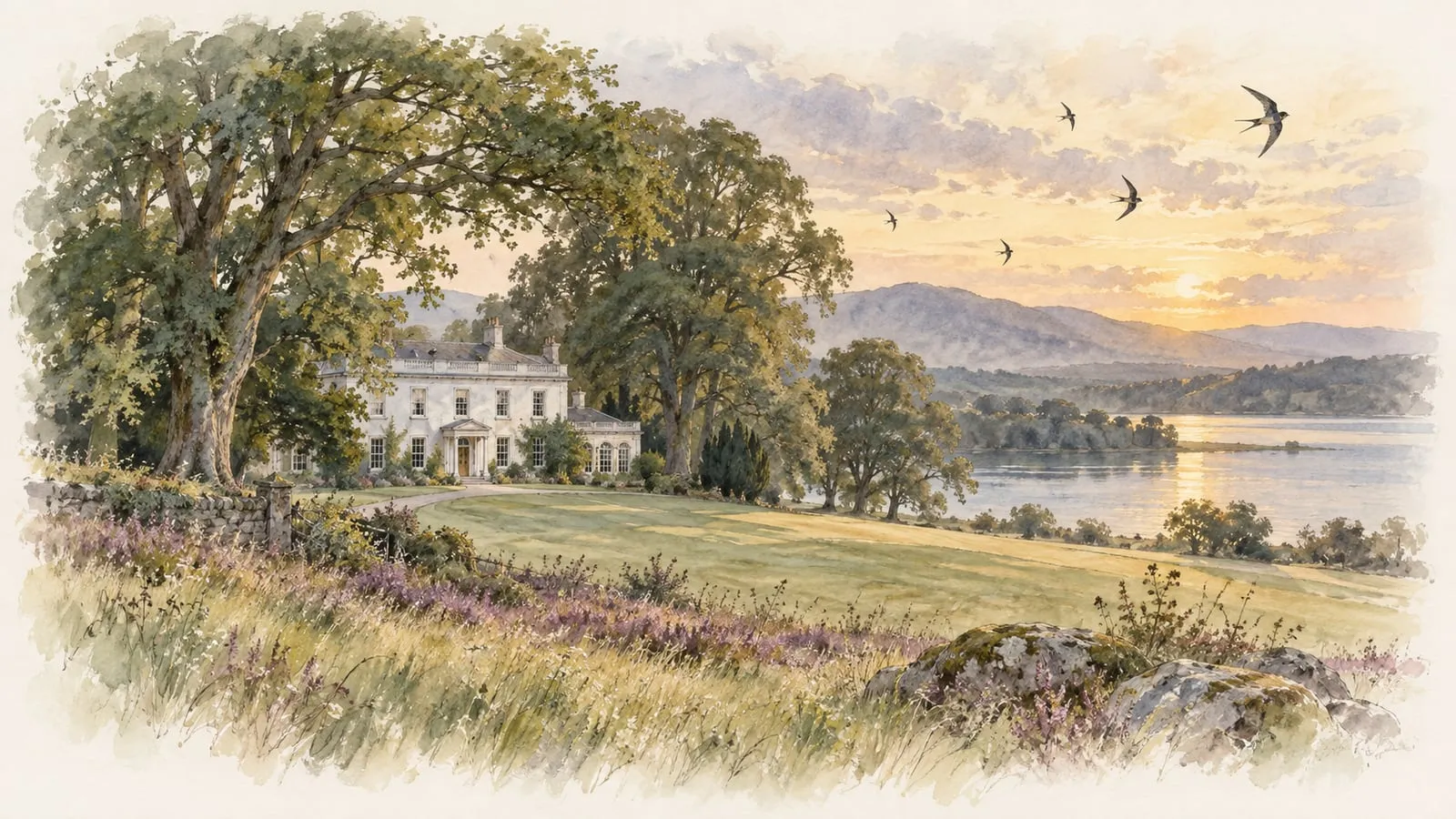
This is the title poem of In the Seven Woods (1903), the first book from the Dun Emer Press run by Yeats's sisters. The Seven Woods are at Coole Park, Lady Gregory's estate in County Galway, where Yeats spent most summers from 1897; Parc-na-Lee is one of those woods.
Yeats dated the poem August 1902. That summer the coronation of Edward VII was celebrated in Irish streets, and a group searching for the Ark of the Covenant had been digging into the Hill of Tara, which Yeats publicly protested against. Both lie behind lines 6 to 8.
Form
Fourteen lines, the length of a sonnet, but in unrhymed blank verse: loose iambic pentameter with sentences running across the line ends. The tone is close to conversation. Only "bees" at the end of line 2 and "Parc-na-Lee" at the close faintly chime, linking the humming woods to the place where the Archer waits.