Adam's Curse
Listen
Text: Poetry, by W. B. Yeats (Standard Ebooks, 2024), from the collected editions of 1908 to 1928. Public domain.
In brief
SummaryPoetry, beauty and love all take hard labour, and love has grown weary.
At the end of a summer, three people talk about poetry. The poet says a good line may take hours, yet must look like "a moment's thought", and that such work is harder than scrubbing floors or breaking stones, though the world thinks poets idle. The beloved's friend replies that women too "must labour to be beautiful". Since Adam's fall, the poet adds, every fine thing needs labour, even love. They fall quiet, watching a worn moon rise, and he ends with a private thought: he tried to love the woman "in the old high way of love", and they have grown "As weary hearted as that hollow moon".
Lines to remember
Our stitching and unstitching has been naught.
That we must labour to be beautiful.
As weary hearted as that hollow moon.
Line by line
Lines 1 to 3A summer's end
The scene is set simply: "one summer's end", the speaker, the woman he loves ("you") and her "close friend", a "beautiful mild woman". They talk of poetry. The easy, conversational opening hides how much feeling the poem will carry.
Lines 4 to 14The poet's labour
The poet says a line may take hours, but if it does not "seem a moment's thought", all the "stitching and unstitching" is wasted. Scrubbing a kitchen floor or breaking stones is easier, yet poets are thought idlers by "bankers, schoolmasters, and clergymen", the people "The martyrs call the world".
Lines 15 to 21The labour of beauty
The friend, whose low sweet voice will break many hearts, answers from a woman's side: "To be born woman is to know", though schools never say so, "That we must labour to be beautiful." Beauty, like poetry, must look effortless and is not.
Lines 22 to 28Adam's fall and love
The poet agrees: since "Adam's fall" no "fine thing" comes without "much labouring". Lovers once made love an art of "high courtesy", quoting precedents "out of beautiful old books". Now that seems "an idle trade enough", a hint that his own long courtship has come to nothing.
Lines 29 to 34The worn moon
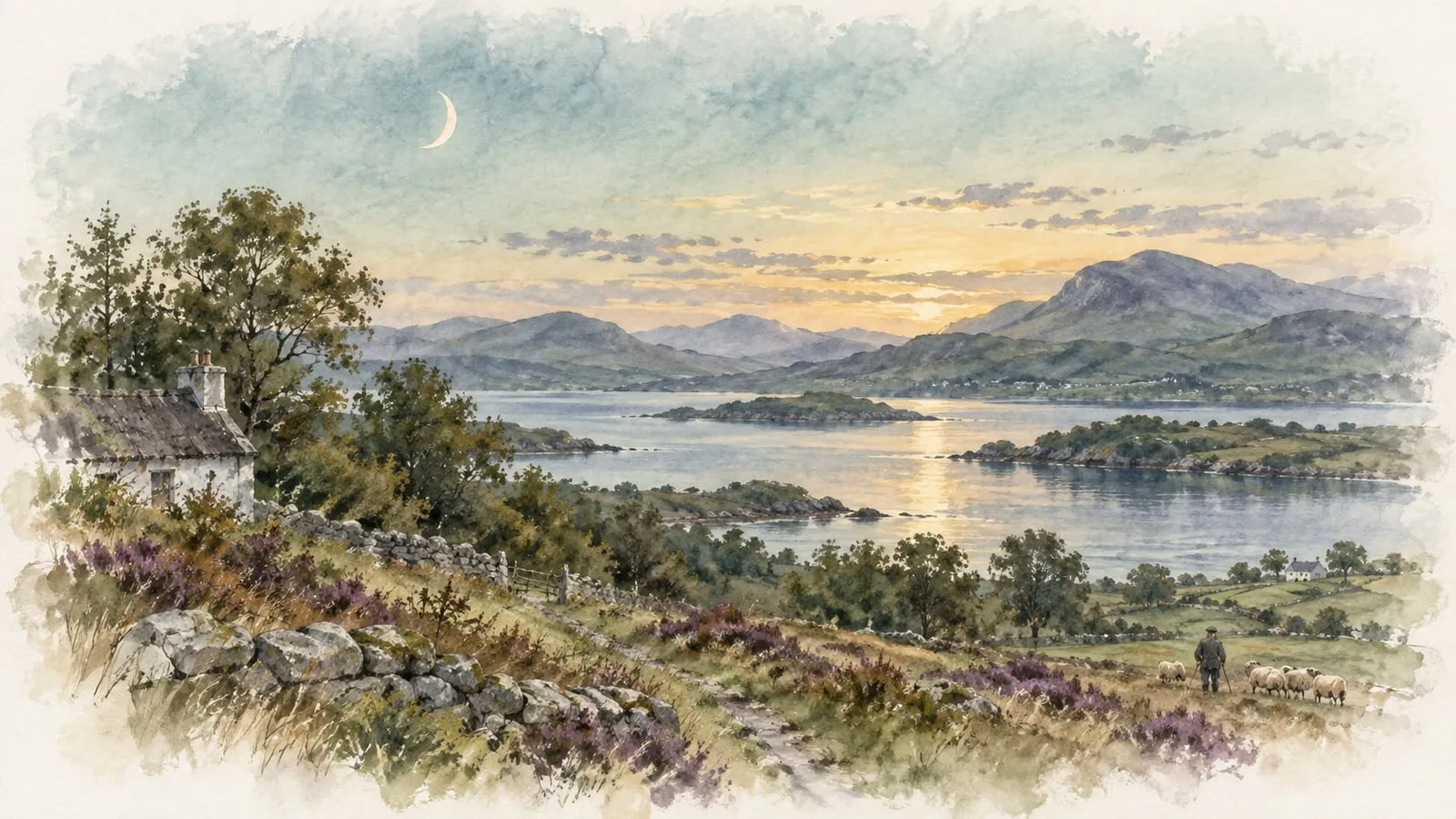
The word "love" silences them. The daylight dies, and in the "trembling blue-green of the sky" a moon appears, "worn as if it had been a shell / Washed by time's waters". The moon is thin and weathered, a quiet picture of something beautiful worn down by time.
Lines 35 to 39A private thought
Now he speaks only to her, in thought: she was beautiful, and he "strove / To love you in the old high way of love". It all "seemed happy", yet they have grown "As weary hearted as that hollow moon". The poem's labour ends in exhaustion, not reward.
Themes
Art as labour
The poem insists that poetry is hard work disguised as ease. A line may take hours but must "seem a moment's thought", and "stitching and unstitching" makes writing a craft like sewing. The poet's work is harder than breaking stones, yet the "noisy set" of practical men calls him an idler. Yeats makes the case for the seriousness of art.
Beauty and effort
The friend's reply widens the argument: "we must labour to be beautiful". Poetry and a woman's beauty both hide their effort. The title explains why: after Adam's fall, the Bible says, humans must earn everything by toil, so "no fine thing" comes free, whether a poem, a lovely face or a love.
Weary love
The poem ends on a personal defeat. He tried to love her "in the old high way of love", courtly, patient and devoted, and it "seemed happy", but now they are "weary hearted". The "hollow moon", worn like a shell by "time's waters", mirrors a love that has been worked at so long it has worn thin.
Context
The poem was published in In the Seven Woods (Dun Emer Press, 1903), the first book printed by his sisters' press at Dundrum. The "you" is Maud Gonne, whom Yeats had loved since 1889 and who refused his proposals. The "beautiful mild woman" is usually identified as her sister Kathleen. Maud Gonne married John MacBride in 1903, the year the book appeared.
The title refers to the Book of Genesis, where Adam's disobedience brings the curse that humans must labour "in the sweat" of their faces. Yeats turns that curse into a theory of art, beauty and love, each needing hidden, patient work. The poem's plain, talking voice points towards the harder, more direct style of his later work.
Form
Thirty-nine lines of iambic pentameter in rhymed couplets, arranged in verse paragraphs of different lengths. Several couplets reach across the stanza breaks ("poetry" and "maybe", "enough" and "love", "years" and "ears"), so the conversation flows on while the rhyme holds it together. The easy couplets make hard labour sound like talk.