The Old Men admiring Themselves in the Water
Earlier titled "The Old Men Admirings Themselves in the Water"
Listen
Text: Poetry, by W. B. Yeats (Standard Ebooks, 2024), from the collected editions of 1908 to 1928. Public domain.
In brief
SummaryOld men gaze into water and lament that everything drifts away.
The speaker overhears some very old men talking by the water. They say that "Everything alters" and that people drop away one by one. He describes them: hands like claws, knees twisted like the thorn trees on the bank. Then he hears them again: "All that's beautiful drifts away" like the waters. The title adds a quiet irony. They are "admiring themselves" in the water, as the young might, but what they see there is age and loss.
Lines to remember
Everything alters,
All that's beautiful drifts away
Line by line
Lines 1 to 3What they say
The poem starts with overheard speech. "I heard the old, old men say" that everything changes and that "one by one we drop away", like leaves or drops of water. The doubled "old, old" makes them sound ancient.
Lines 4 to 6What they look like
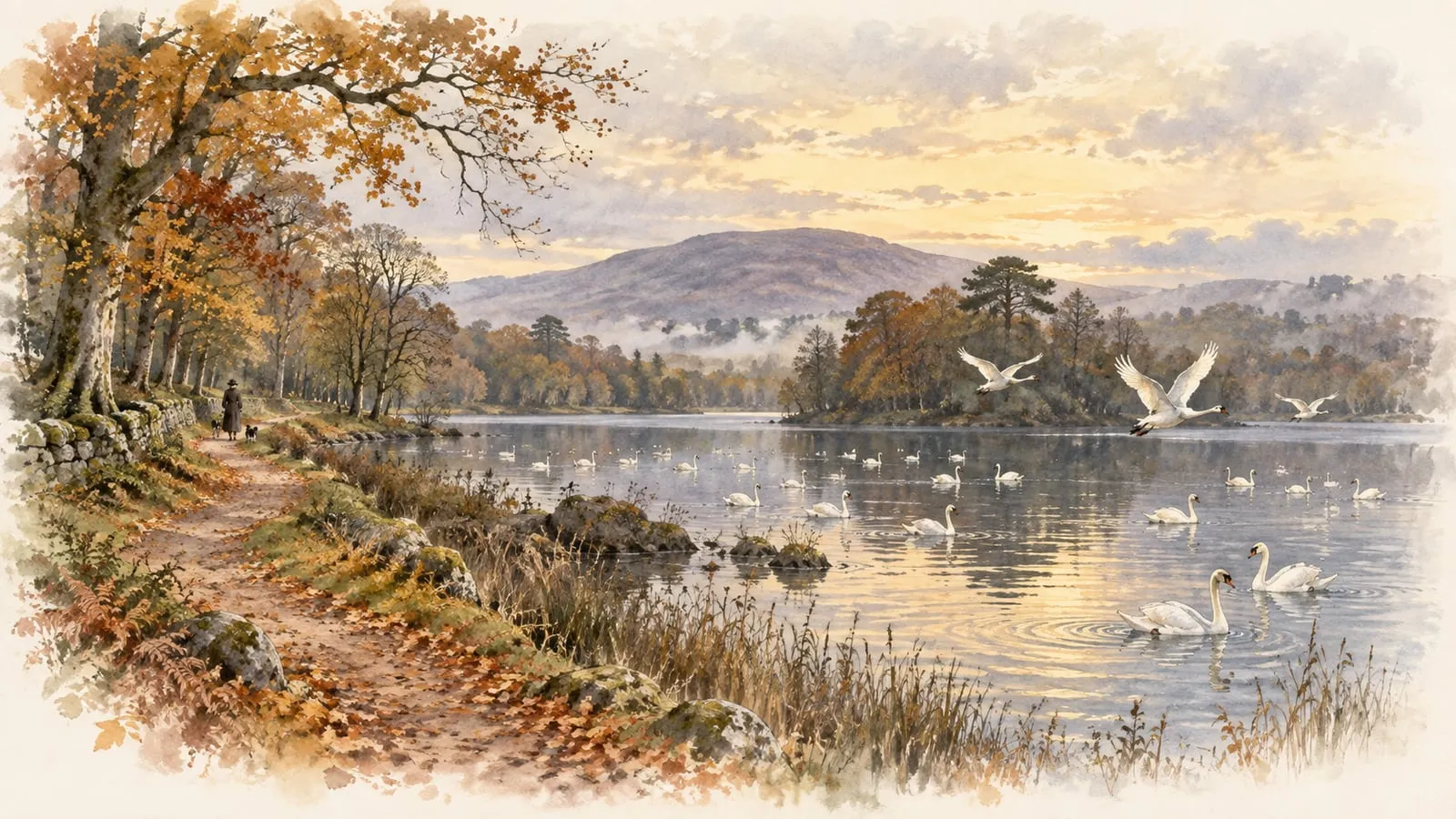
Now the speaker looks at them. Their hands are "like claws" and their knees are "twisted like the old thorn trees" by the water. They have grown into the landscape, as gnarled and weathered as the trees.
Lines 7 to 9What they say again
The opening line returns, and the old men speak a second time. Now the loss is sharper: not just everything, but "All that's beautiful drifts away". The final short line, "Like the waters", echoes line 6 and lets the poem drift to a close.
Themes
Ageing
The poem is a small portrait of old age. The old men's bodies have become claws and twisted thorn, and their talk is all of loss. Looking into the water, the traditional mirror of vanity, they find no beauty of their own to admire, only a reflection of what time has done.
Change and loss
"Everything alters" is the poem's whole philosophy. The flowing water by which the men sit is the image of it: it never stays, and neither does beauty. The closing words, "drifts away" and "Like the waters", give a gentle, almost soothing sound to a sad idea.
Context
The poem was published in In the Seven Woods (Dun Emer Press, 1903), among love poems and poems of Irish legend. It is one of Yeats's shortest early lyrics, and its concern with old age anticipates a subject that would fill much of his later work, from "The Wild Swans at Coole" to "Sailing to Byzantium".
Form
Nine short lines in a single stanza, mostly of three or four beats, with two very short lines ending on "waters". The rhymes ("say", "away", "knees", "trees") are simple, and line 7 repeats line 1. The repetitions make it sound like a folk song or a nursery rhyme, which suits its plain wisdom.
Standard Ebooks has a typo in the title ('Admirings').