The Withering of the Boughs
Listen
Text: Poetry, by W. B. Yeats (Standard Ebooks, 2024), from the collected editions of 1908 to 1928. Public domain.
In brief
SummaryA lonely dreamer's visions of faery are so sad they wither trees.
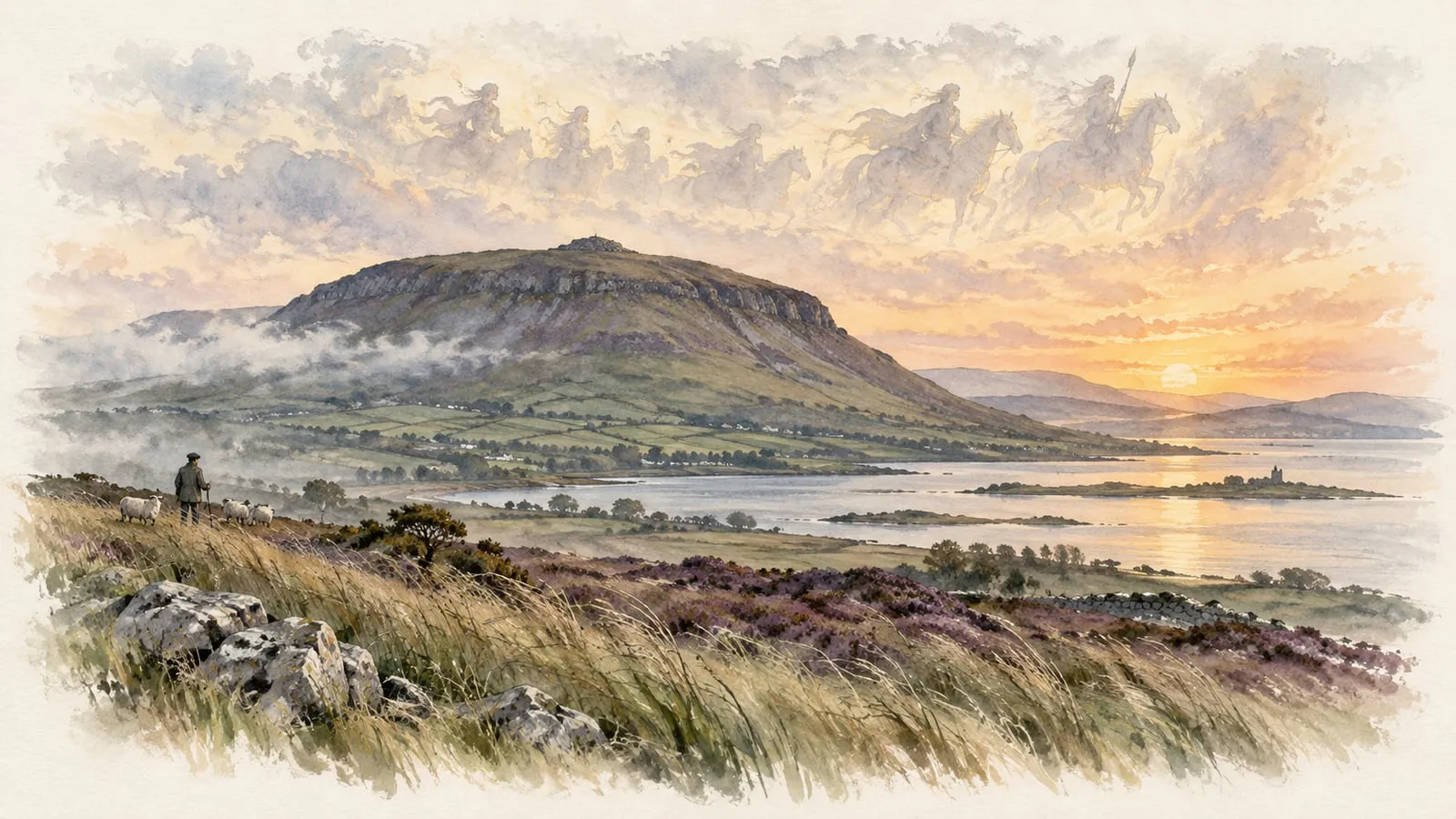
The speaker, wandering alone on the Echtge hills, cries out to the moon that he longs for a loved one's "merry and tender and pitiful words". He falls asleep and dreams. Each stanza then unfolds a vision of the otherworld: witches rising from a lake, the Danaan people dancing on island lawns, swans linked by golden chains, and a king and queen made "happy and hopeless" by music. After each vision comes the same strange boast: the boughs have not withered from winter wind but because he has told them his dreams. His longing is so heavy that it blights the natural world.
Lines to remember
I long for your merry and tender and pitiful words,
The boughs have withered because I have told them my dreams.
Line by line
Lines 1 to 4A cry to the moon
The poem opens with a cry, spoken while the moon murmurs to the birds. Let the peewit and curlew call where they like, he says: he longs only for the loved one's words. "The roads are unending", and he has no settled place of rest.
Lines 5 to 8Sleep and the refrain
Under a "honey-pale moon" he falls asleep on "lonely Echtge of streams". Then the refrain sounds for the first time. The trees have withered not from "the wintry wind" but from hearing his dreams, a boast that makes sorrow into a kind of power.
Lines 9 to 16Witches and dancers
Now the dreams themselves. He knows the "leafy paths" of witches with crowns of pearl who rise from the lake, and the place where the Danaan kind dance on island lawns by "the pale foam". The repeated "I know" gives the visions the certainty of someone who has been there.
Lines 17 to 24The swan lovers
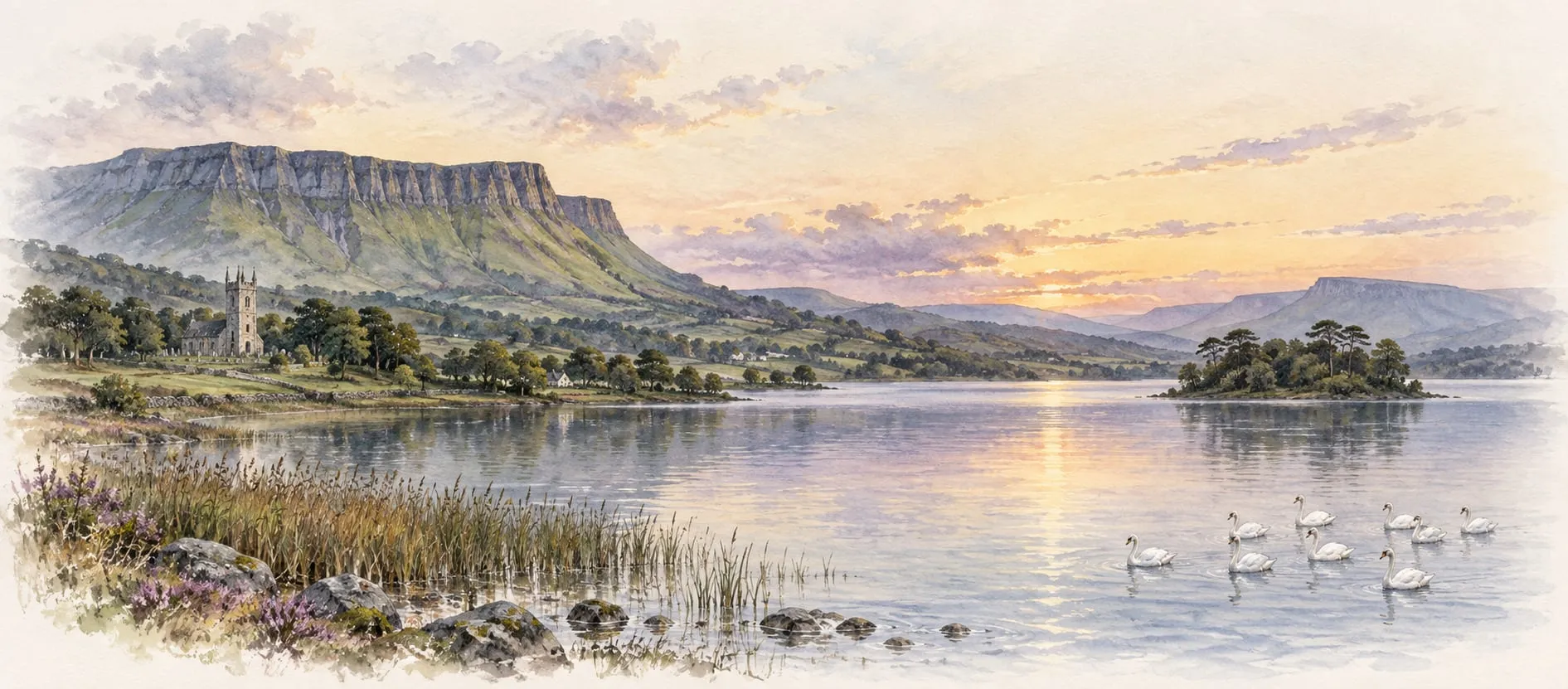
The last vision is a "sleepy country" where swans fly "Coupled with golden chains" and a king and queen wander, made "so happy and hopeless" by music that they are deaf and blind to the passing years. Only he, and the curlew and peewit of Echtge, know it. The refrain closes the poem a third time.
Themes
Longing
The poem begins with a plain ache: "I long for your merry and tender and pitiful words". Everything after is shaped by that absence. The roads are "unending", the hill is "sleepy", Echtge is "lonely". The dreams he tells are all of lovers or dancers together, which only sharpens his own solitude.
Dreams and faery
The visions come from Irish legend: witches from the depths of a lake, the Danaan people dancing, lovers turned to swans. Yeats presents them as real knowledge, repeating "I know". Yet these worlds are "happy and hopeless" at once, beautiful and cut off from ordinary life, and telling them has a cost.
Sorrow and nature
The refrain turns a natural event into a human one. Boughs usually wither in winter, but here they wither "because I have told them my dreams". The idea is half fairy tale, half confession: his grief is so strong that it seems to drain the life out of the trees that hear it.
Context
The poem was published in In the Seven Woods (Dun Emer Press, 1903), the first book printed by the Yeats sisters' press at Dundrum. The collection mixes love poems with poems drawn from Irish legend, and this one does both at once, setting a lover's grief among the figures of the otherworld.
Echtge is the range of hills on the Galway and Clare border, near the Coole country Yeats came to know through Lady Gregory. The swans "Coupled with golden chains" belong to the same legendary world as Yeats's narrative poem "Baile and Aillinn", published in the same year, in which the dead lovers become swans linked by a golden chain.
Form
Three eight-line stanzas of long, loosely rolling lines, rhymed abacbdcd ("birds", "will", "words", "mind", "hill", "streams", "wind", "dreams"). "Wind" is rhymed with "mind" and "kind" in the older poetic way. The last two lines of each stanza are a refrain, so every vision ends in the same withering.