Upon a House shaken by the Land Agitation
Earlier titled "Upon a Threatened House"
Listen
Text: Poetry, by W. B. Yeats (Standard Ebooks, 2024), from the collected editions of 1908 to 1928. Public domain.
In brief
SummaryYeats defends a great country house threatened by land reform.
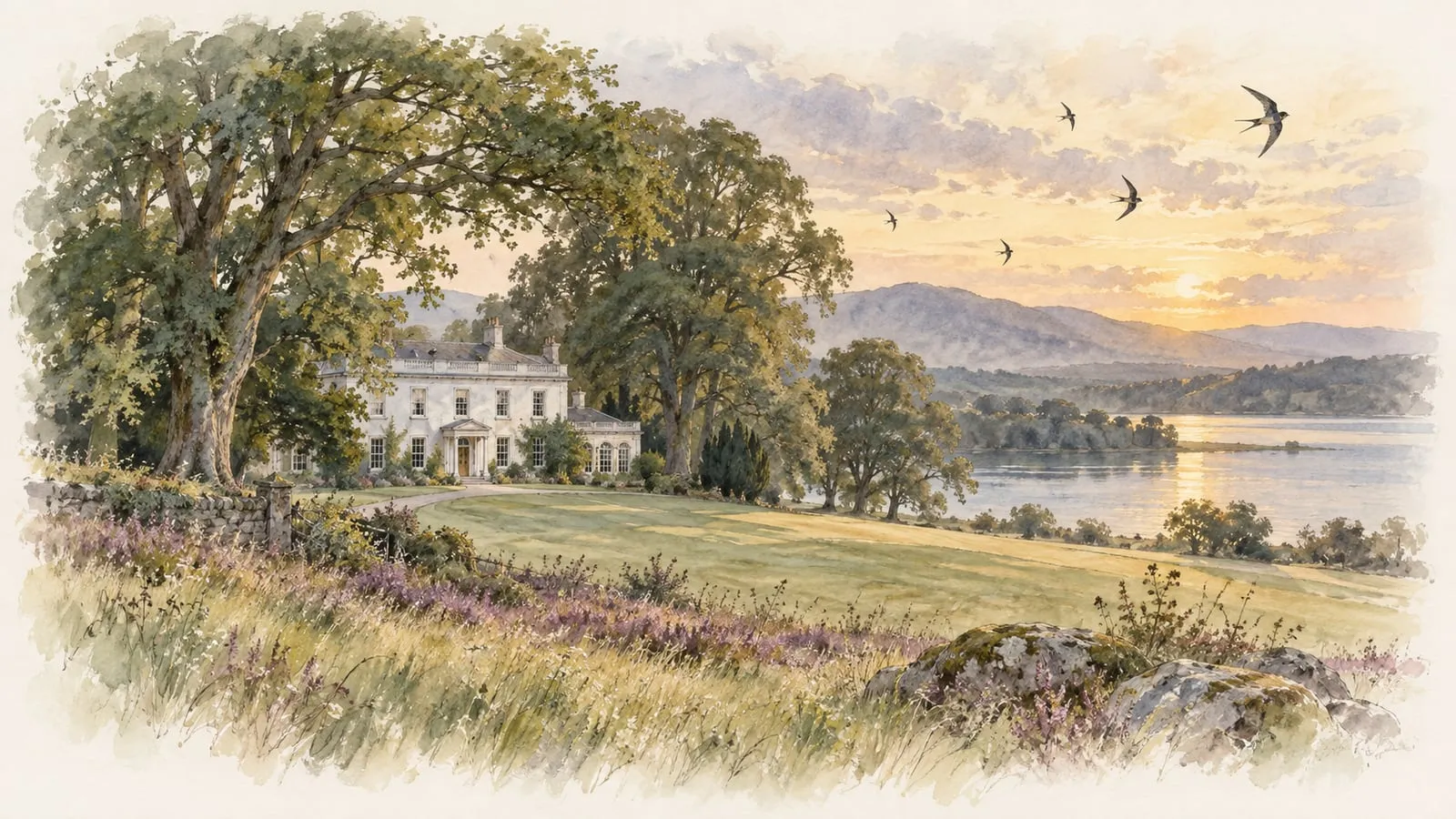
The poem is made of two long questions. How would the world be luckier, Yeats asks, if this house fell into ruin? For generations it has joined "passion and precision" and bred people of eagle-like vision and "laughing eagle thoughts". Humble homes might grow sturdier from its fall, but they could never rise high enough to produce what it produces: the gifts that govern, and last of all a "written speech" of "high laughter, loveliness and ease". The house is Coole Park, and the poem is a proud, unapologetic case for inherited culture.
Lines to remember
Where passion and precision have been one
To breed the lidless eye that loves the sun?
Line by line
Lines 1 to 4The question
The opening question expects the answer that the world would be no luckier at all. The house has united "passion and precision" for "Time out of mind". If it became "too ruinous", it could no longer "breed the lidless eye that loves the sun": the eagle, which was said to gaze straight at the sun.
Lines 5 to 7Eagle thoughts
The eagle image grows into "sweet laughing eagle thoughts", thoughts that soar. They grow "Where wings have memory of wings", where each generation remembers the last, and from "the best knit to the best": marriages that join good families, like the careful breeding of fine stock.
Lines 8 to 12Time's last gift
Yeats concedes that "Mean roof-trees", humble cottages, might be "the sturdier for its fall". But their luck could never reach so high: to "The gifts that govern men", and then to "gradual Time's last gift", a written style of "high laughter, loveliness and ease".
Themes
Tradition
The house is valued for what it breeds over many generations: "Time out of mind", "wings have memory of wings", "the best knit to the best". Yeats writes as if culture were an inheritance, like a bloodline. The poem does not deny that others would gain, but it insists that something rare would be lost for good.
Culture and time
The finest gift comes last and slowly: "gradual Time's last gift, a written speech". After governing men, the house produces art, a style of "high laughter, loveliness and ease". Yeats sees great writing as the late flower of a long, settled tradition, something no single lucky generation could produce.
Ireland and politics
The "Land Agitation" of the title was the movement that broke up large estates and passed the land to tenant farmers. Yeats does not deny the farmers' gain: "Mean roof-trees" would be "the sturdier for its fall". His argument is that the world as a whole would be poorer. It is a deliberately unfashionable position, stated without apology.
Context
The house is Coole Park in County Galway, the home of Lady Gregory, where Yeats spent most of his summers from the late 1890s. From the 1880s a series of Land Acts helped tenant farmers buy the land they worked, and estates like Coole were steadily broken up. The Cuala Green Helmet of 1910 printed the poem as "Upon a Threatened House"; the present title came later.
The "written speech" of the last line is usually read as a tribute to Lady Gregory's own writing, the plays and versions of Irish legend she was producing at Coole. Yeats returned to Coole and its fate in later poems, among them "Coole Park, 1929" and "Coole Park and Ballylee, 1931".
Form
Twelve lines of iambic pentameter rhymed ABAB CDCD EFEF, printed as one block, with some rhymes only half chiming ("house" and "ruinous"). The sentences run on over the line ends, so the rhymes are felt rather than heard, which suits the long, reasoning voice. Both sentences are questions, and neither needs an answer.
Titled 'Upon a Threatened House' in the Cuala Green Helmet (1910).