Oil and Blood
Listen
Text: The Winding Stair and Other Poems (Macmillan, London, 1933). Public domain.
In brief
SummarySaints' bodies give off holy oil; vampires' bodies stay full of blood.
Two three-line stanzas set two kinds of the dead side by side. In golden tombs the bodies of holy men and women give off a "Miraculous oil" that smells of violets. Under heavy clay lie the vampires, full of blood, with bloody shrouds and wet lips. The poem offers no comment. It lets the two images face each other: the sweetness of holiness and the horror of a hunger that outlives death.
Lines to remember
Their shrouds are bloody and their lips are wet.
Line by line
Lines 1 to 3The saints
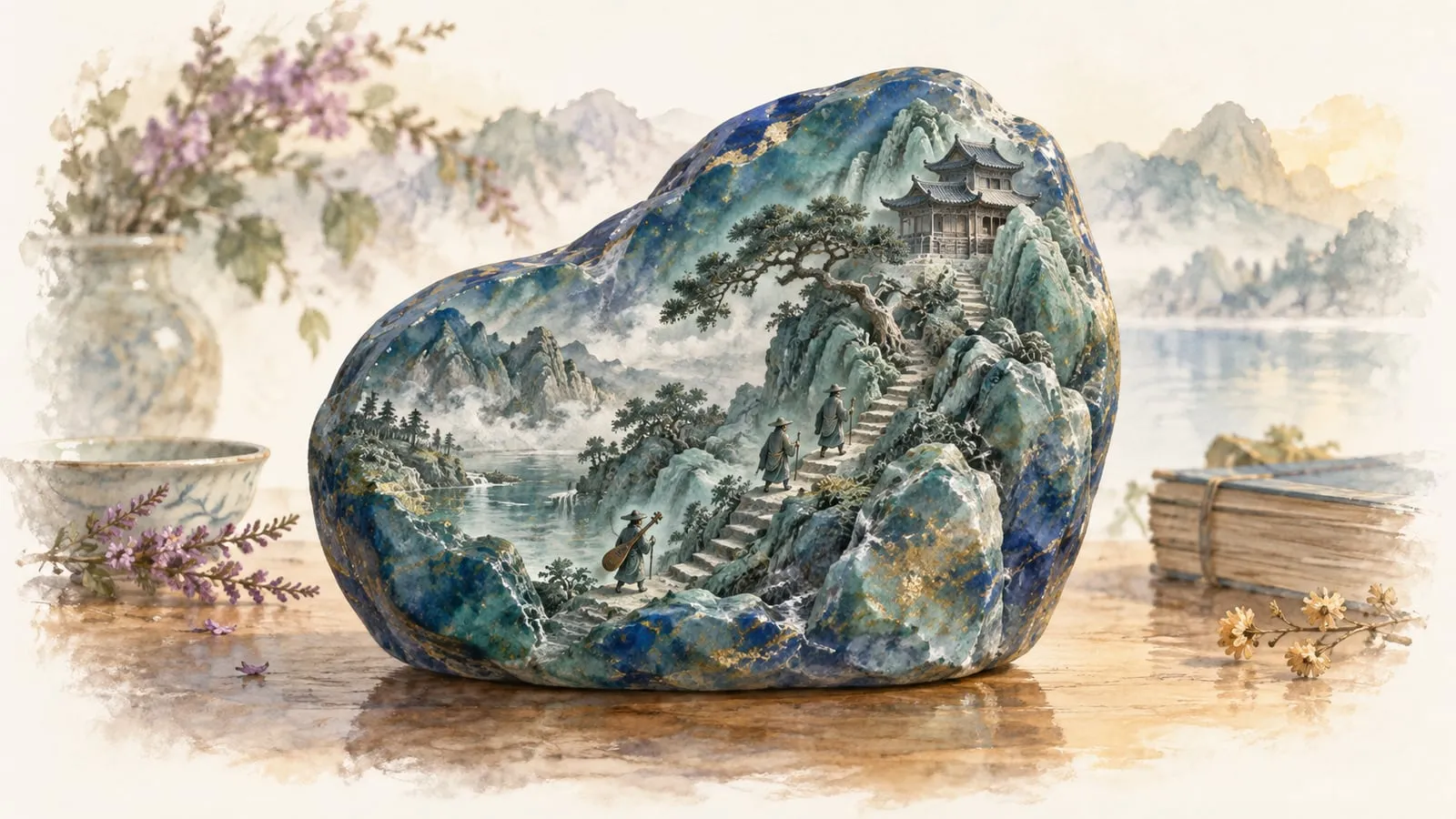
The first stanza is rich and still: tombs "of gold and lapis lazuli", and holy bodies that give off "Miraculous oil" scented like violets. Behind the image lies the old belief that the bodies of saints do not decay.
Lines 4 to 6The vampires
"But" turns the poem underground. Beneath "heavy loads of trampled clay" lie vampires "full of blood", and the final line is deliberately physical and disturbing: "Their shrouds are bloody and their lips are wet."
Themes
Holiness and horror
The two stanzas mirror each other line for line: tomb and clay, holy bodies and vampire bodies, oil and blood, violets and wet lips. Both kinds of body refuse ordinary decay. One is changed into sweetness; the other stays gorged with the life it has taken.
Life after death
Neither the saints nor the vampires are truly at rest. Their bodies go on acting, giving off oil or holding blood. The poem pictures two opposite ways of outlasting death, one spiritual and one grossly bodily, and leaves the reader to weigh them.
Context
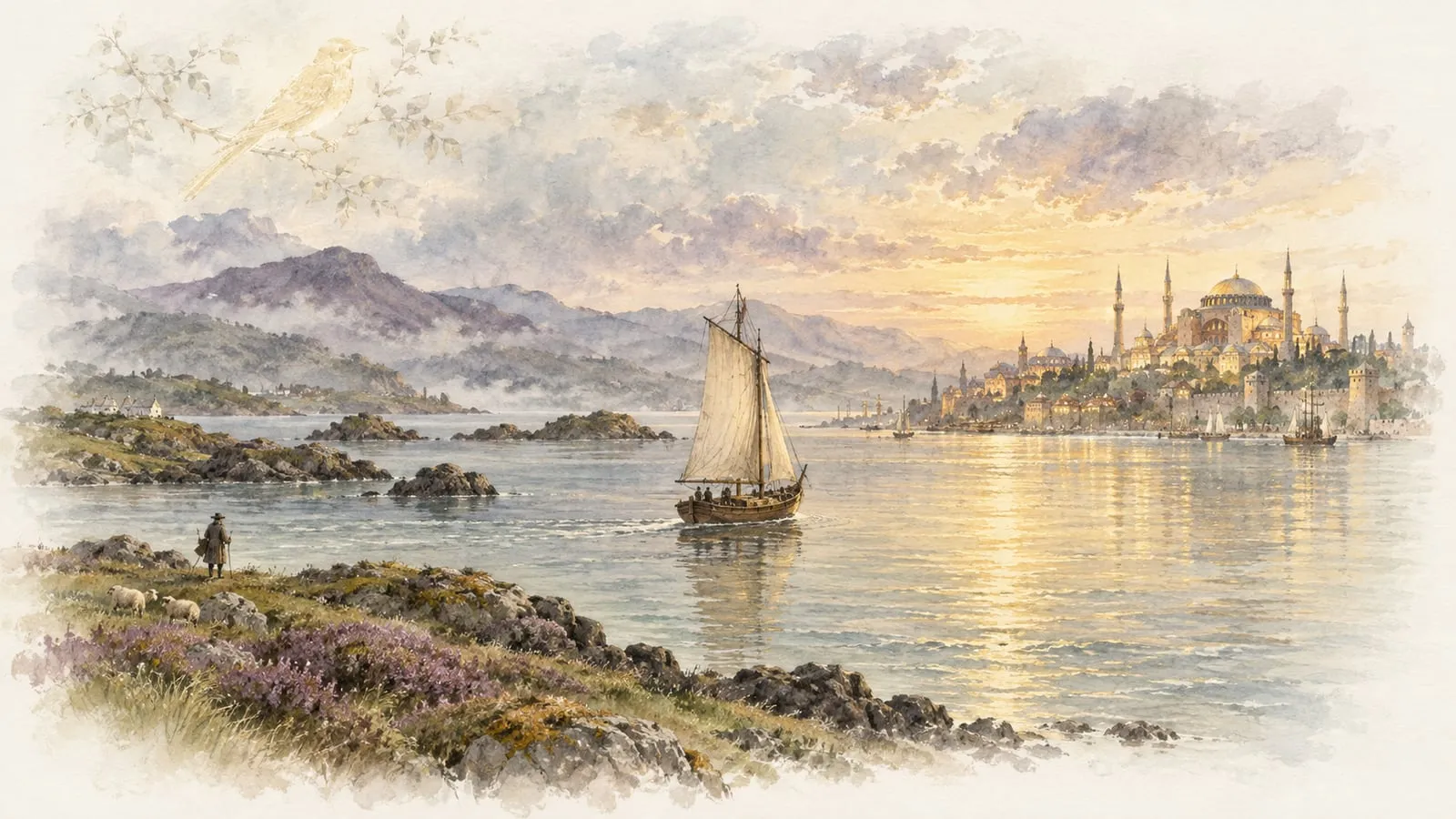
The poem was first published in The Winding Stair (New York, 1929) and collected in The Winding Stair and Other Poems (1933). Its golden tombs recall the Byzantine splendour of "Sailing to Byzantium" and "Byzantium", where Yeats also set the holy and eternal against the bodily and decaying.
Form
Two three-line stanzas of five-beat lines, built as exact mirrors: each line of the second answers the matching line of the first. Only "violet" and "wet" rhyme clearly, so the two closing words land hardest.