Symbols
About the text
Yeats first published this poem in 1933. It is out of copyright in Ireland and the EU, but in the United States it stays in copyright until the start of 2029, and this site is served partly from American servers. So for now we give the notes without the full text; it will appear here in 2029.
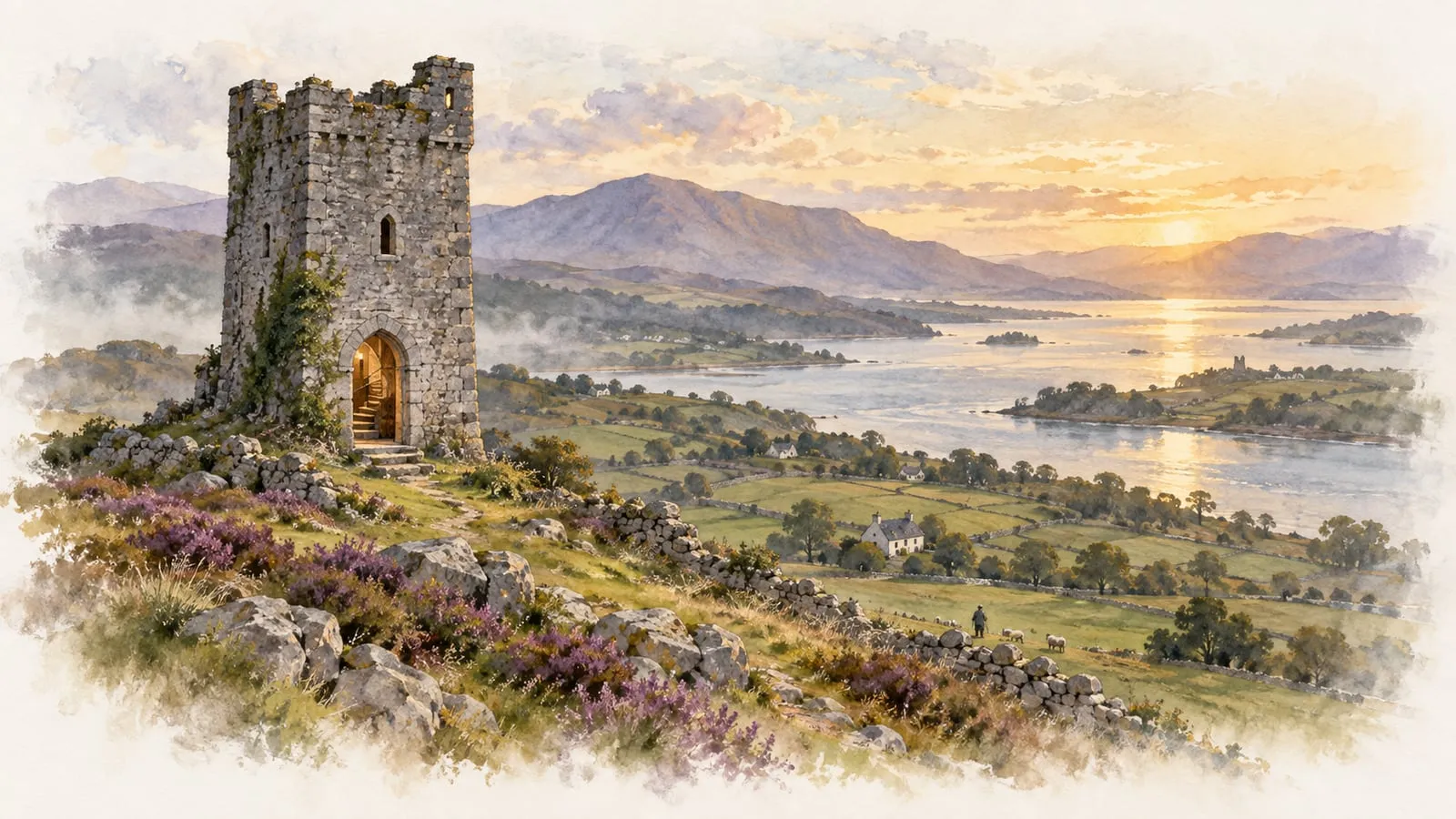
It begins: A storm-beaten old watch-tower
In brief
SummaryThree emblems: a tower, a sword, and silk wrapped round the blade.
Six lines set out three pictures and let them speak for themselves. First, a weather-beaten watch-tower where a blind hermit rings the hours. Second, a sword that can destroy anything, still carried by a wandering fool. Third, silk sewn with gold lying on that blade, so that beauty and folly are laid side by side. The poem offers no explanation; the reader is left to connect wisdom, violence and beauty.
Lines to remember
Beauty and fool together laid.
Line by line
Lines 1 to 2Tower and hermit
The first emblem is solitary wisdom: an old tower beaten by storms, and a hermit who is blind yet keeps time by ringing the hour. His blindness suggests inward vision, knowledge that does not depend on looking at the world.
Lines 3 to 4Sword and fool
The second emblem is action at its most dangerous: an "All-destroying" blade, in the keeping of a wandering fool. The word "still" implies that the power to destroy never goes away, and that it rests in careless or innocent hands.
Lines 5 to 6Silk on the blade
The third picture joins the others. Gold-embroidered silk lies on the sword, so that beauty and the fool are laid together. Destruction and loveliness, folly and art, are shown as belonging to one another.
Themes
Emblems
The title announces the method. Each couplet is a picture rather than a statement, like the emblem books of the Renaissance, in which an image carried a moral. The tower, the sword and the silk recur across Yeats's poems of this period, and here they are stripped down to their barest outline.
Opposites joined
The poem moves from the contemplative hermit to the violent sword and then brings beauty and folly together in its final line. Yeats often pairs contraries, and the gold-sewn silk wrapped around a blade is one of his favourite images of that union: something delicate covering something deadly.
Context
The poem was collected in The Winding Stair and Other Poems (Macmillan, 1933). Its images echo "A Dialogue of Self and Soul" in the same book, where Yeats writes of an old Japanese sword wrapped in embroidered silk from a court-lady's dress, and of the winding stair of his tower. Here the same objects appear without a speaker, as bare symbols.
Form
Three rhymed couplets of about four beats, each a separate picture set apart on the page. The lines are built from nouns and compound words, with hardly a verb, so the poem feels like a row of carved images rather than an argument.