The Nineteenth Century and After
About the text
Yeats first published this poem in 1933. It is out of copyright in Ireland and the EU, but in the United States it stays in copyright until the start of 2029, and this site is served partly from American servers. So for now we give the notes without the full text; it will appear here in 2029.
It begins: Though the great song return no more
In brief
SummaryAfter the great age of poetry, small pleasures still remain.
Four lines about coming after greatness. The speaker accepts that the great poetry of an earlier age may never come back. Even so, there is sharp delight to be had in what is left, and he gives one example: the rattle of pebbles on a beach as a wave pulls back. The image is modest but exact, and it is a kind of music too.
Lines to remember
The rattle of pebbles on the shore
Line by line
Lines 1 to 4Pebbles on the shore
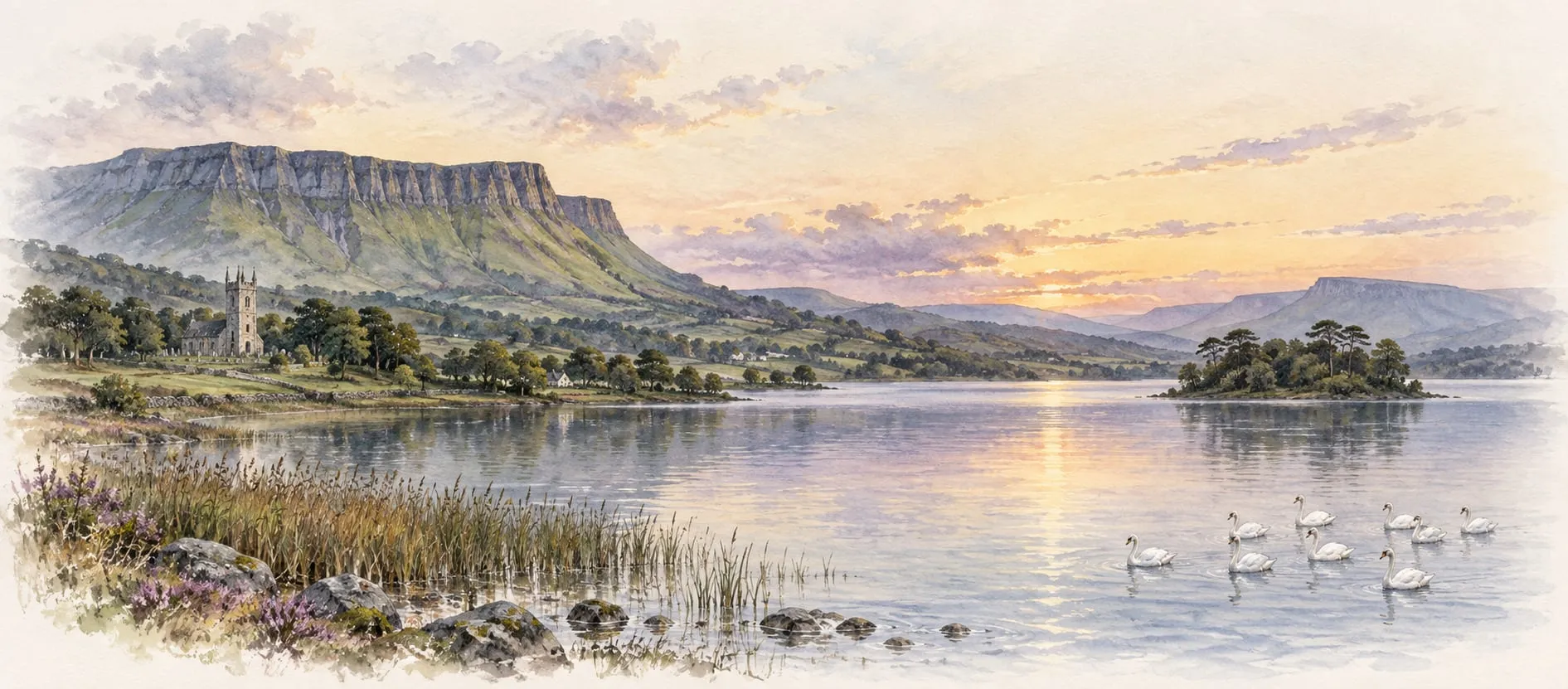
The first line concedes a loss; the second insists on delight all the same. The last two lines supply the proof in a single sound picture, the clatter of stones drawn back by the sea. The receding wave suggests an age ebbing away, and the noise it leaves behind.
Themes
Literary decline
The title places the poem at a turning point in literary history. "The great song" can be read as the high poetry of the Romantics and the Victorians, which the modern age cannot repeat. The poem does not rage against this. It accepts the loss and looks for what is still worth hearing.
Small delights
Instead of a great song there is a rattle of pebbles: smaller, harsher, but real and precise. The word "keen" makes the delight sharp rather than faint. The poem itself is an example of what it praises, a tiny, exact piece of music made after the great tide has gone out.
Context
The poem was collected in The Winding Stair and Other Poems (Macmillan, 1933), in a run of very short poems on age and history. Its title is also the name of a London review, The Nineteenth Century and After. Many readers hear in its receding wave and rattling pebbles an echo of Matthew Arnold's "Dover Beach", where the sea draws back across the shingle as religious faith withdraws.
Form
A single quatrain rhymed ABAB, with a near-rhyme on "have" and "wave", in lines of about four beats. The hard consonants of the third line imitate the clatter of stones, while the last line, softer and slower, pulls back like the water.