The Danaan Quicken Tree
Text: Poetry, by W. B. Yeats (Standard Ebooks, 2024), from the collected editions of 1908 to 1928. Public domain.
In brief
SummaryA man who ate fairy berries on Innisfree tells his beloved he is enchanted.
The speaker tells his beloved a "bitter tale". He rowed and sailed to Innisfree and picked small fruits there. Those berries grew from one that a passing crowd of fairies had thrown down, and the fruit of that tree is poison to mortals and food for the fairy host. Now he is under their spell: if he ever throws down his sword or leaves a task undone, she must blame the Danaan and their snare. In the last stanza he gives in completely and asks her to taste the fairies' food with him. Each stanza ends with the same sighing refrain.
Lines to remember
And plucked small fruits on Innisfree.
(Ah, mournful Danaan quicken tree!)
Line by line
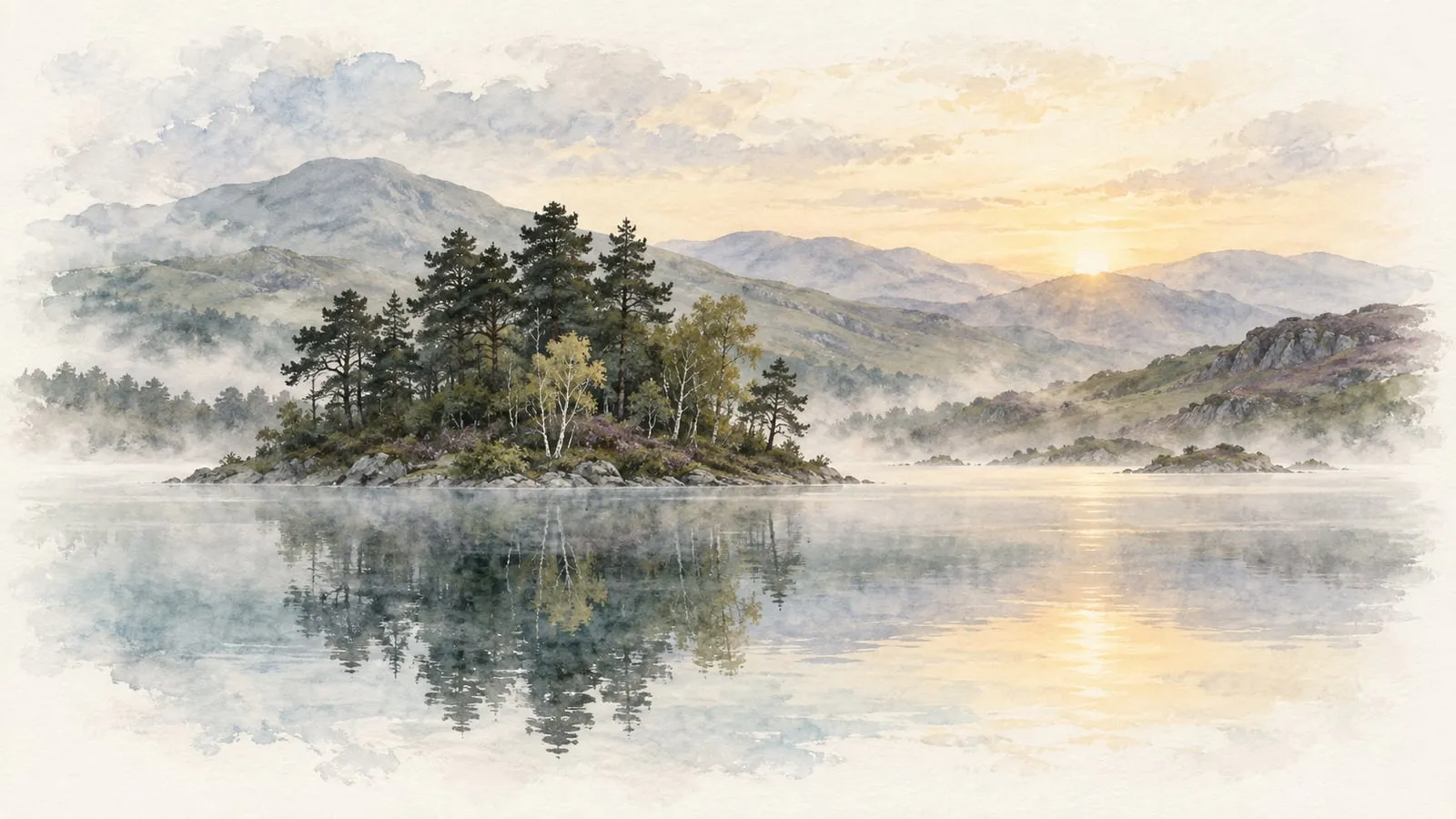
Lines 1 to 6To Innisfree
The busy, practical verbs ("making busy with the oar", "flinging loose the slanting sail") show a man hurrying to the island. The fifth line states the fatal act plainly: he "plucked small fruits on Innisfree". The bracketed refrain sounds like a sigh added afterwards.
Lines 7 to 12A fairy berry
A "murmuring faery multitude" flying home "to the heart of light" had been "playing hurley in the wood" with creatures of the human world. One of them threw down a berry, "for me, or thee": the gift, or trap, was meant for the lovers.
Lines 13 to 18The poison tree
Three lines beginning "And thereon grew" trace root, stem and "ruddy fruit", like a folk tale or a spell. The fruit is "a poison to all men" but "meat", meaning food, for the fairy people.
Lines 19 to 24Blame the fairies
He warns her in advance. If he flings away his sword with the battle "half won", or leaves a duty undone, she must "blame the Danaan whim". The fairy food has made him unreliable in the human world.
Lines 25 to 30Taste with me
The ending turns. "Cast out all hope, cast out all fear": he now asks her to share the fairies' meat. Even while he blamed them he could hear "Dark Joan" praising the berries and the revelry led by Niam. The enchantment has won.
Themes
Fairy enchantment
As in "The Stolen Child", the fairy world is both lovely and dangerous. Their fruit is "a poison to all men", and those who taste it lose their place among humans. Yet by the last stanza the speaker cannot resist, and the revelry "Where Niam heads" sounds more tempting than hope or fear.
Duty and desire
The fourth stanza imagines the cost: a sword flung away "when the battle is half won", "some service all undone". The enchanted man cannot be trusted with human tasks. The poem leaves him torn between the "bitter tale" he tells and the sweetness he cannot give up.
Context
This is one of Yeats's early poems that he did not keep in his collected work, and our text comes from the Standard Ebooks edition of his poetry. Its details of first publication are not confirmed here. It is set on Innisfree, the small island in Lough Gill, County Sligo, that he made famous in "The Lake Isle of Innisfree".
The Danaan are the Tuatha De Danann, the ancient divine race of Irish legend who were believed to have become the fairy people of the hills. Niam is Niamh, the fairy woman who carries Oisin away in "The Wanderings of Oisin".
Form
Five six-line stanzas in four-beat lines, rhymed ABABCC. The final couplet always rhymes on the same sound as the refrain, "(Ah, mournful Danaan quicken tree!)", so every stanza ends on the long "ee" of "Innisfree" and "tree". The repeated lament gives the poem the feel of a ballad or charm.