Wisdom and Dreams
Text: Poetry, by W. B. Yeats (Standard Ebooks, 2024), from the collected editions of 1908 to 1928. Public domain.
In brief
SummaryA poet prays to weave wise songs from the moon's thread.
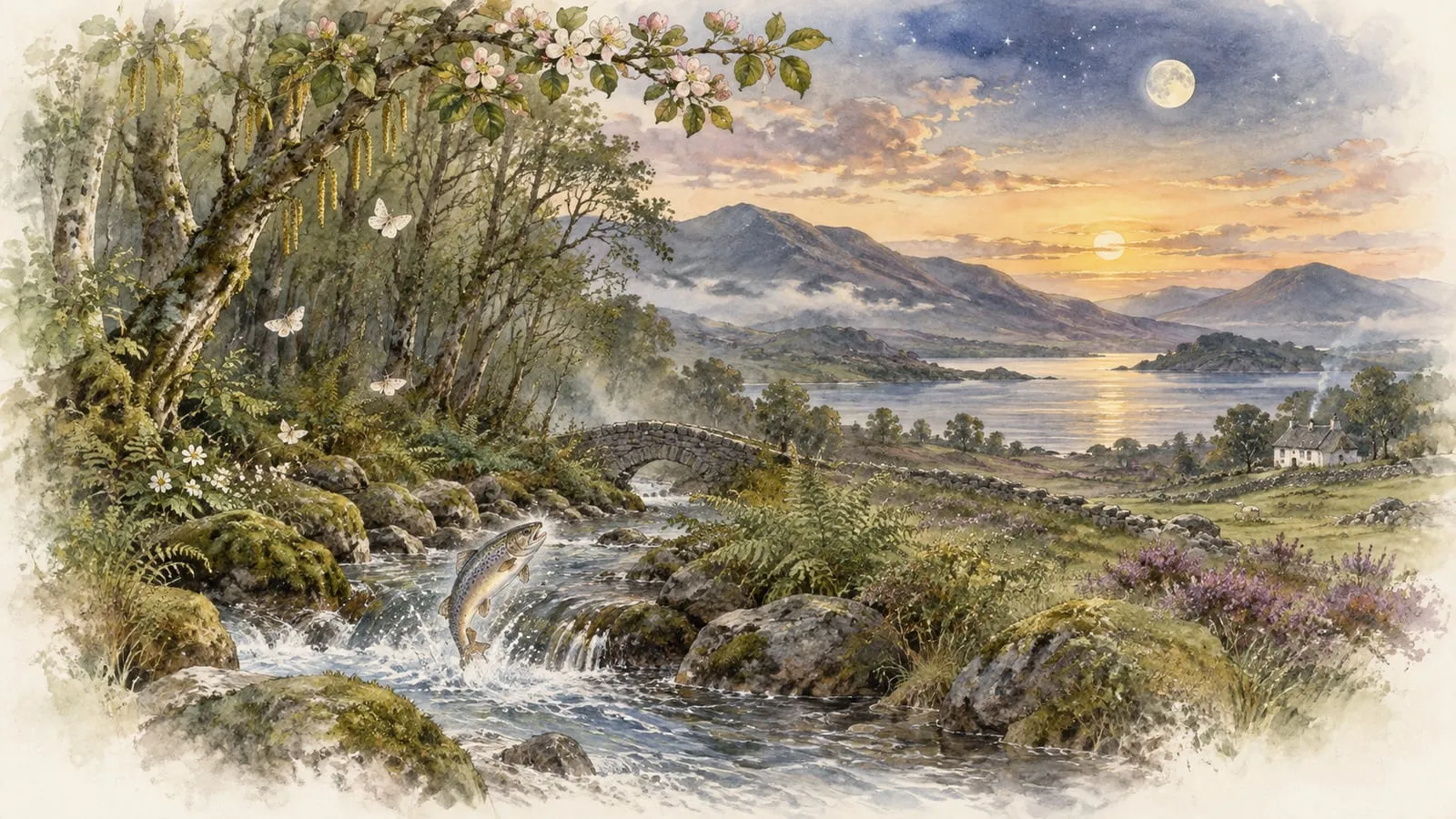
In the first stanza the poet prays that he may always be "weaving / An intellectual tune", but from threads spun on "the distaff of the moon": thought, that is, made out of dream. The second stanza states the idea outright: "Wisdom and dreams are one". Dreams are the blossoms and wisdom the fruit of the same garden, planted by God long ago. The poem is a small statement of faith about poetry.
Lines to remember
From the distaff of the moon.
Wisdom and dreams are one,
Line by line
Lines 1 to 4The prayer
He wants his songs to be "intellectual", full of thought, yet spun from moonlight. The image of the moon's "distaff", the stick that holds wool for spinning, makes dreaming a kind of patient craft.
Lines 5 to 8Flower and fruit
"Wisdom and dreams are one" because one grows from the other, as fruit follows flower. Dreams are "the flowers ablow", and Wisdom, given capital letter and the pronoun "him", is a fruit God planted "long ago".
Themes
Wisdom and imagination
The poem refuses to separate thinking from dreaming. The "intellectual tune" is woven from moon threads, and wisdom ripens from dreams as fruit from flowers. For a young poet, this is a claim that imagination is a path to truth, not an escape from it.
Poetry as craft
Weaving and spinning are the poem's central images: the tune is woven, the threads come from a distaff. Poetry is pictured as handwork, steady and patient, even when its materials are as insubstantial as moonlight. The prayer asks that this work should never stop: "I pray that I ever be weaving".
Context
This is one of Yeats's early poems that he did not keep in his collected work, and our text comes from the Standard Ebooks edition of his poetry. Its details of first publication are not confirmed here. The pairing of wisdom and dream anticipates later poems such as "The Coming of Wisdom with Time", and the moon was to remain one of his most lasting symbols.
Form
Two quatrains in short lines of three stresses. Only the second and fourth lines rhyme ("tune", "moon"; "ablow", "ago"). The first stanza is a single sentence of prayer; the second answers it with a flat statement and an image.