When Helen lived
Listen
Text: Poetry, by W. B. Yeats (Standard Ebooks, 2024), from the collected editions of 1908 to 1928. Public domain.
In brief
SummaryThe poet complains that people neglect beauty, then admits he would too.
The poem begins with a complaint. "We" (the poet and those who share his cause) have cried out in despair that people turn away from hard-won beauty for "some trivial affair / Or noisy, insolent sport". Then comes a turn on "Yet": had we lived in Troy, walking where Helen walked, we would have given her no more than everyone else did, "A word and a jest". The poem ends by including the poet in the failing it set out to condemn.
Lines to remember
Where Helen walked with her boy,
A word and a jest.
Line by line
Lines 1 to 6The complaint
The speakers grieve that men "desert" beauty for trivial things and "noisy, insolent sport". The beauty was not easily come by: it was "won / From bitterest hours", made through struggle and suffering, which makes the neglect sting more.
Lines 7 to 12In Troy
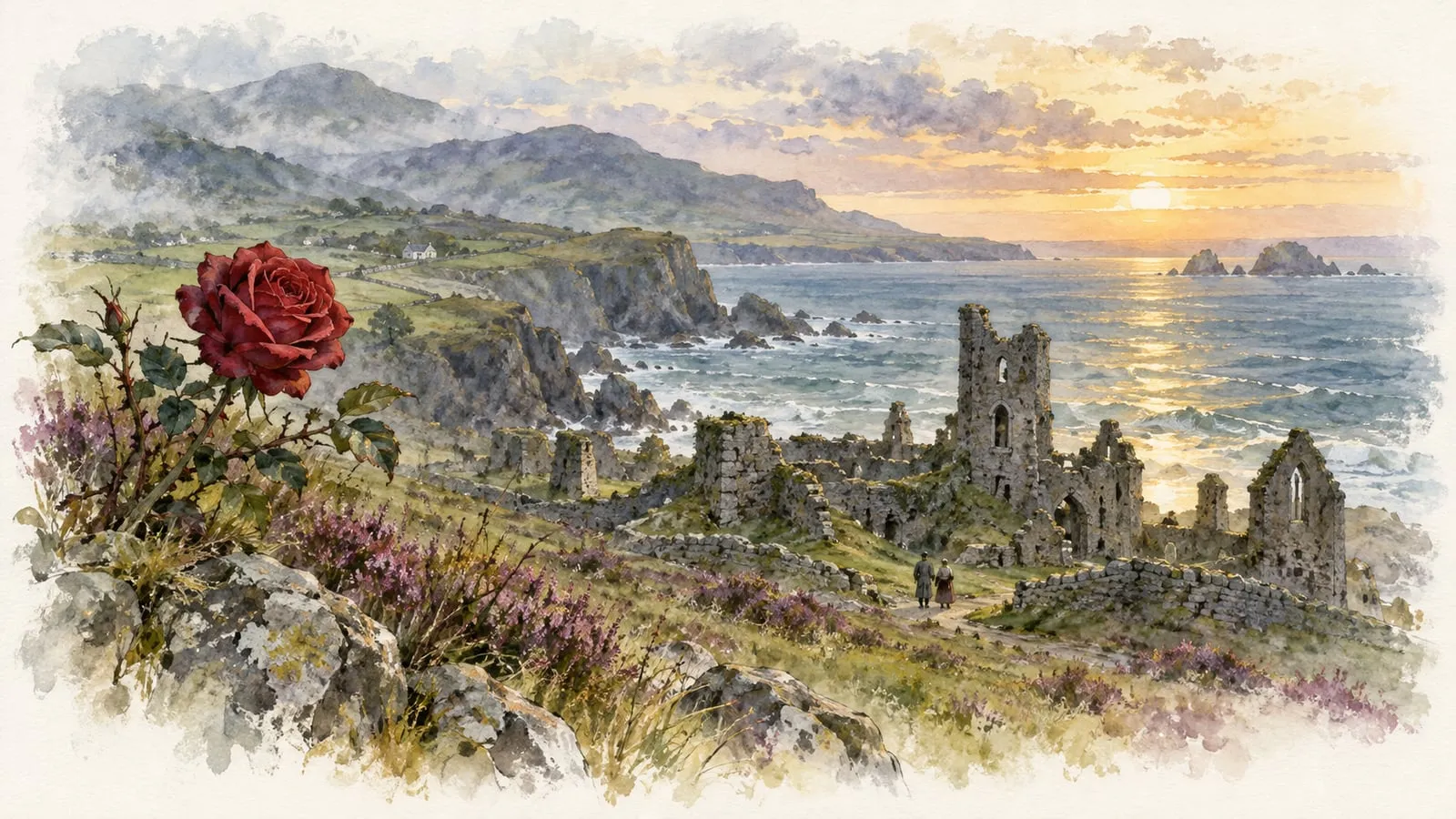
"Yet" turns the argument round. Had we walked in "Those topless towers" beside Helen herself, we would have behaved like "the rest / Of the men and women of Troy". The flat final phrase, "A word and a jest", shows how little even the greatest beauty is noticed by those who live beside it.
Themes
Beauty neglected
The poem takes Helen, the most famous beauty in legend, and imagines her treated casually by her neighbours. If Troy could offer Helen only "A word and a jest", then indifference to beauty is an old human habit and not a Dublin failing alone. The "trivial affair" and "insolent sport" of the present are set against beauty "won / From bitterest hours".
Self-judgement
The poem could have been a simple complaint, but the "Yet" in line 7 turns the charge on the speakers. "Had given but as the rest" admits that they are no better than those they blame. The humility gives the poem its force: it knows that beauty is easier to honour in retrospect than in daily life.
Context
"When Helen lived" was collected in Responsibilities (Cuala Press, 1914). It is usually read with the other poems of 1913 about Dublin's indifference to art, written during the quarrel over Hugh Lane's pictures. Helen of Troy appears often in Yeats's poems, most famously in "No Second Troy", where she stands for the woman he loved. Here she stands for beauty itself.
Form
Twelve short lines in three groups of four, rhyming ABAB ("despair", "desert", "affair", "sport"), with some half-rhymes such as "won" and "within". Longer lines of three beats alternate with shorter lines of two, so each pair ends with a clipped fall. The poem is one sentence of complaint and one of admission, divided at "Yet".