To a Shade
Listen
September 29, 1913.
Text: Poetry, by W. B. Yeats (Standard Ebooks, 2024), from the collected editions of 1908 to 1928. Public domain.
In brief
SummaryA ghost revisiting Dublin is told to go back to his grave.
The poet speaks to a "thin Shade", the ghost of a great man, usually read as Charles Stewart Parnell, who has come back to Dublin to see his monument or breathe the sea air. Let those things content you, the poet says, and leave, because the city is "at their old tricks yet". Another man of the same generous kind has been driven out and insulted, and the same old enemy set "The pack upon him". The ghost should pull the grave's coverlet over his head again: "You are safer in the tomb."
Lines to remember
(I wonder if the builder has been paid)
Away, away! You are safer in the tomb.
Line by line
Lines 1 to 4The ghost returns
The poet imagines a ghost walking the town, perhaps to look at his own monument. The bracketed aside, "(I wonder if the builder has been paid)", is a sour joke: even honouring the dead, this city may cheat.
Lines 5 to 8The sea at evening
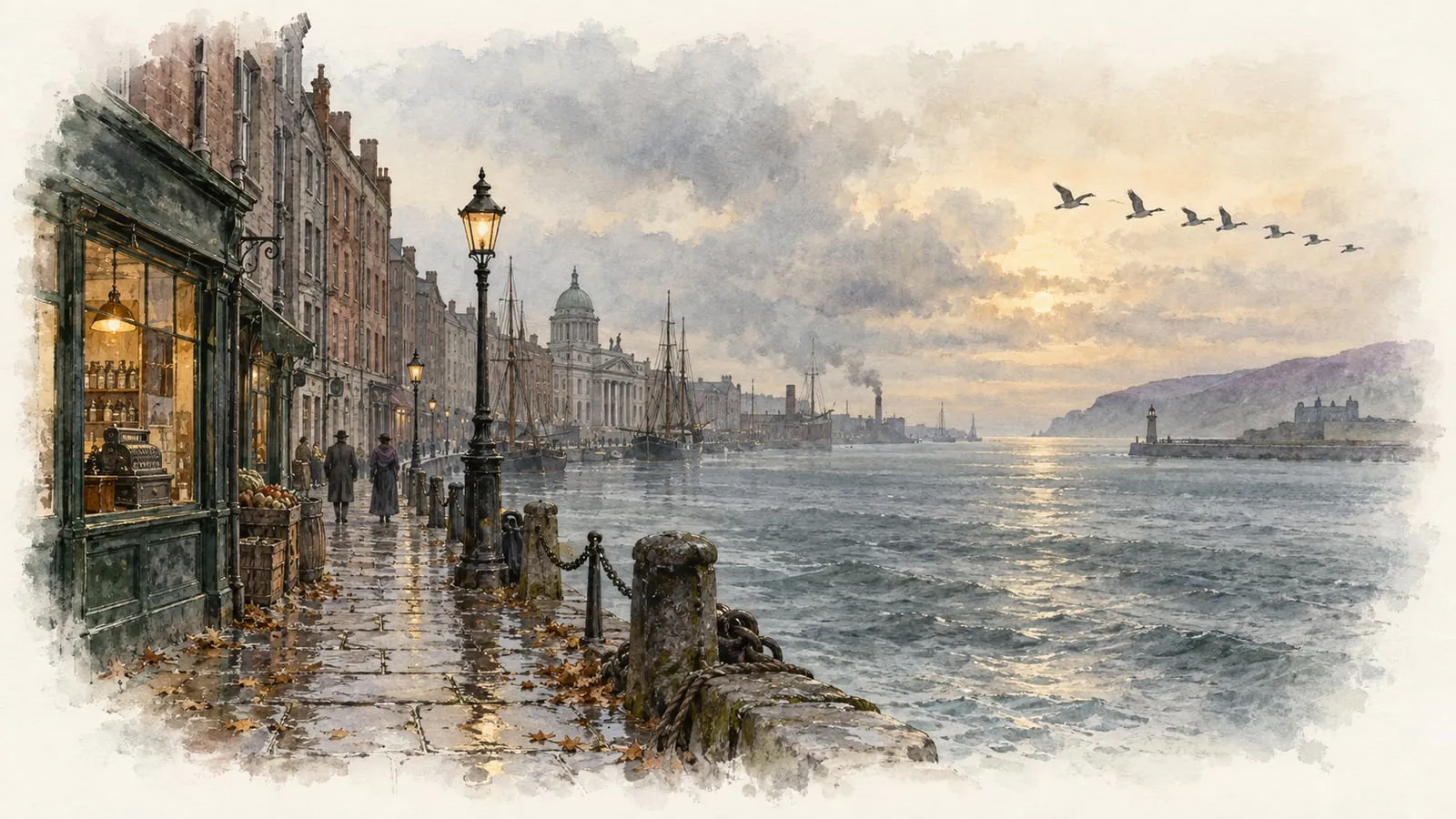
The one thing worth coming back for is "that salt breath out of the sea" at dusk, when "grey gulls flit about instead of men" and "the gaunt houses put on majesty". The city is only fine once its people have gone home. "Let these content you" is kind but firm.
Lines 9 to 14Old tricks
"For they are at their old tricks yet." A man of the ghost's "own passionate serving kind" (read as Hugh Lane) brought gifts in "full hands" that could have given future generations "loftier thought". The simile "Like gentle blood" makes culture something that would have entered the city's veins, and he has been "driven from the place".
Lines 15 to 18The pack
His reward was "insult" and "disgrace" for his generosity. "Your enemy, an old foul mouth" is usually read as the newspaper owner William Martin Murphy, who opposed both men. He "set / The pack upon him", the image of hounds hunting a quarry.
Lines 19 to 24Back to the grave
The poet tells the "unquiet wanderer" to "gather the Glasnevin coverlet" about his head, as if the grave were a bed. The time to walk the streets again "has not come". The last line, "Away, away! You are safer in the tomb", is tender and bitter at once.
Themes
Dublin's ingratitude
The poem sets two generous men against a mean city. Both brought gifts in "full hands", and both met "insult" and "disgrace". The phrase "at their old tricks yet" makes the treatment of the living man a repeat of what was done to the dead one. Even the monument raises a doubt: "I wonder if the builder has been paid".
Death as refuge
Usually the dead are pitied, but here the grave is the safe place. The ghost is told to pull the earth over himself like a "coverlet" and stop his ears with dust. "You had enough of sorrow before death" explains why: the living city offers him nothing but a second round of sorrow.
Service and greatness
Yeats honours the "passionate serving kind": people who give themselves to a public cause without calculating the reward. Their gifts would have worked "Like gentle blood" in the veins of later generations. The poem measures a city by how it treats such people, and finds Dublin wanting.
Context
The poem is dated in its text September 29, 1913, and was collected in Responsibilities (Cuala Press, 1914). That year Dublin refused to build a gallery for the modern pictures Hugh Lane, Lady Gregory's nephew, had offered the city, and Yeats wrote several furious poems about it.
The Shade is usually identified as Parnell, the Irish Party leader who fell from power in 1890 and is buried in Glasnevin. His monument stands at the top of what is now O'Connell Street. By pairing Lane with him, Yeats presents the gallery quarrel as another case of Ireland turning on its best.
Form
Twenty-four lines of iambic pentameter in one unbroken verse paragraph, rhyming alternately ("Shade", "monument", "paid", "spent"), with a few half-rhymes such as "man" and "known". Lines 9 and 18 are split across the page where a sentence ends, so the voice seems to break off and start again, like someone speaking in anger.