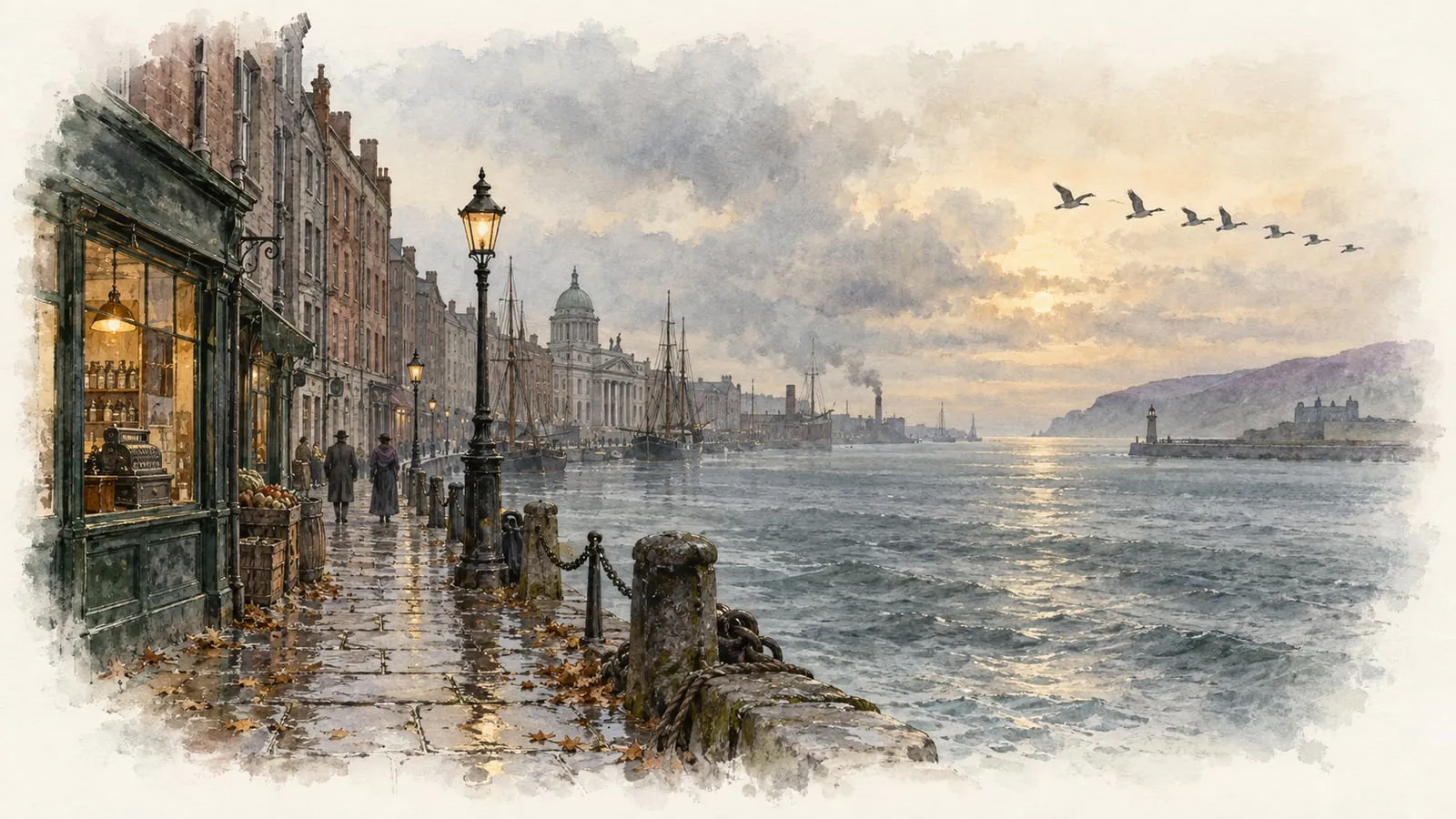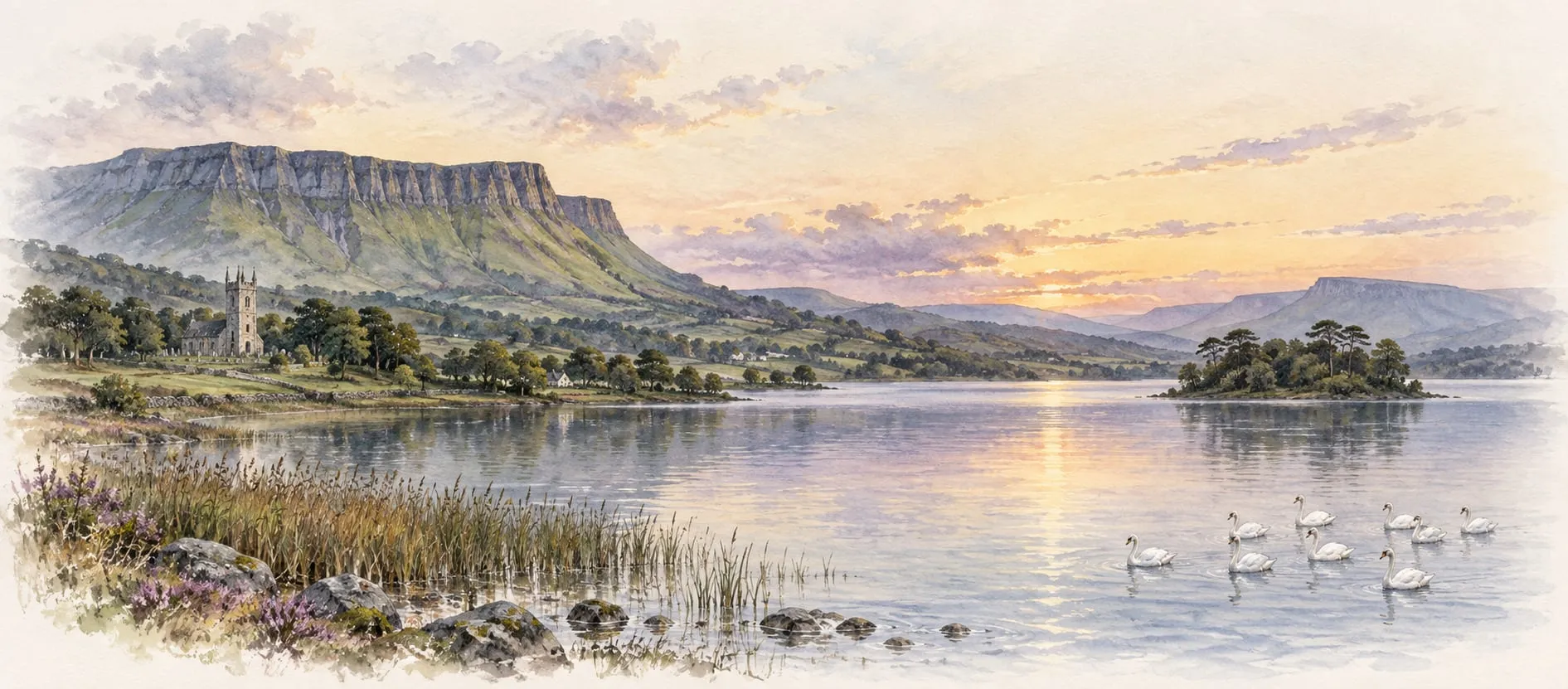
Paudeen
Listen
Text: Poetry, by W. B. Yeats (Standard Ebooks, 2024), from the collected editions of 1908 to 1928. Public domain.
In brief
SummaryIrritated by a petty shopkeeper, the poet is calmed by curlews' cries.
The poet stumbles out among stones and thorn trees, angry at "the fumbling wits, the obscure spite" of a shopkeeper he calls Paudeen. Then a curlew cries and another answers, and his mood turns. He suddenly sees that from the height of God's view, where the noise of human quarrels is forgotten, there is no soul without "a sweet crystalline cry" of its own. The whole poem is one sentence, moving from spite to charity in eight lines.
Lines to remember
A single soul that lacks a sweet crystalline cry.
Line by line
Lines 1 to 3Stumbling in anger
He is so angry at Paudeen's small-minded spite that he walks "blind" among "the stones and thorn trees". The harsh landscape mirrors his mood, though it is lit by "morning light" he is too cross to notice.
Lines 4 to 8The curlews answer
One curlew cries and another answers "in the luminous wind", and the call and reply prompt a sudden thought. On "the lonely height where all are in God's eye", every soul, even Paudeen's, has its own pure music. The "confusion of our sound" is the din of everyday squabbling, which God does not hear.
Themes
Contempt and charity
The poem begins in scorn, with "fumbling wits" and "obscure spite", and the name Paudeen itself is a sneer. It ends by granting that same man a soul with "a sweet crystalline cry". The turn is not argued but given: a bird call changes the poet's heart before his reason catches up.
Nature and vision
The curlews do the work of a revelation. Their cry and answer suggest that every voice has a partner and a place. The "luminous wind" and the "lonely height" lift the scene above the shop and the street, to a point where human noise falls away and only the clear note of each soul is left.
Context
"Paudeen" appeared in Responsibilities, published by the Cuala Press in 1914. It belongs to a group of angry poems in that book about Dublin's commercial middle class, and is usually read alongside the poems Yeats wrote in 1913 when the city argued over Hugh Lane's offer of pictures. Here, unusually, the anger resolves into something close to forgiveness.
Form
Eight long lines rhyming ABABCDCD ("spite", "blind", "light", "wind"). The whole poem is a single sentence, and the semicolon in line 5 marks the hinge where anger gives way to vision. The long, loosely measured lines suit a mind in motion, stumbling and then suddenly clear.