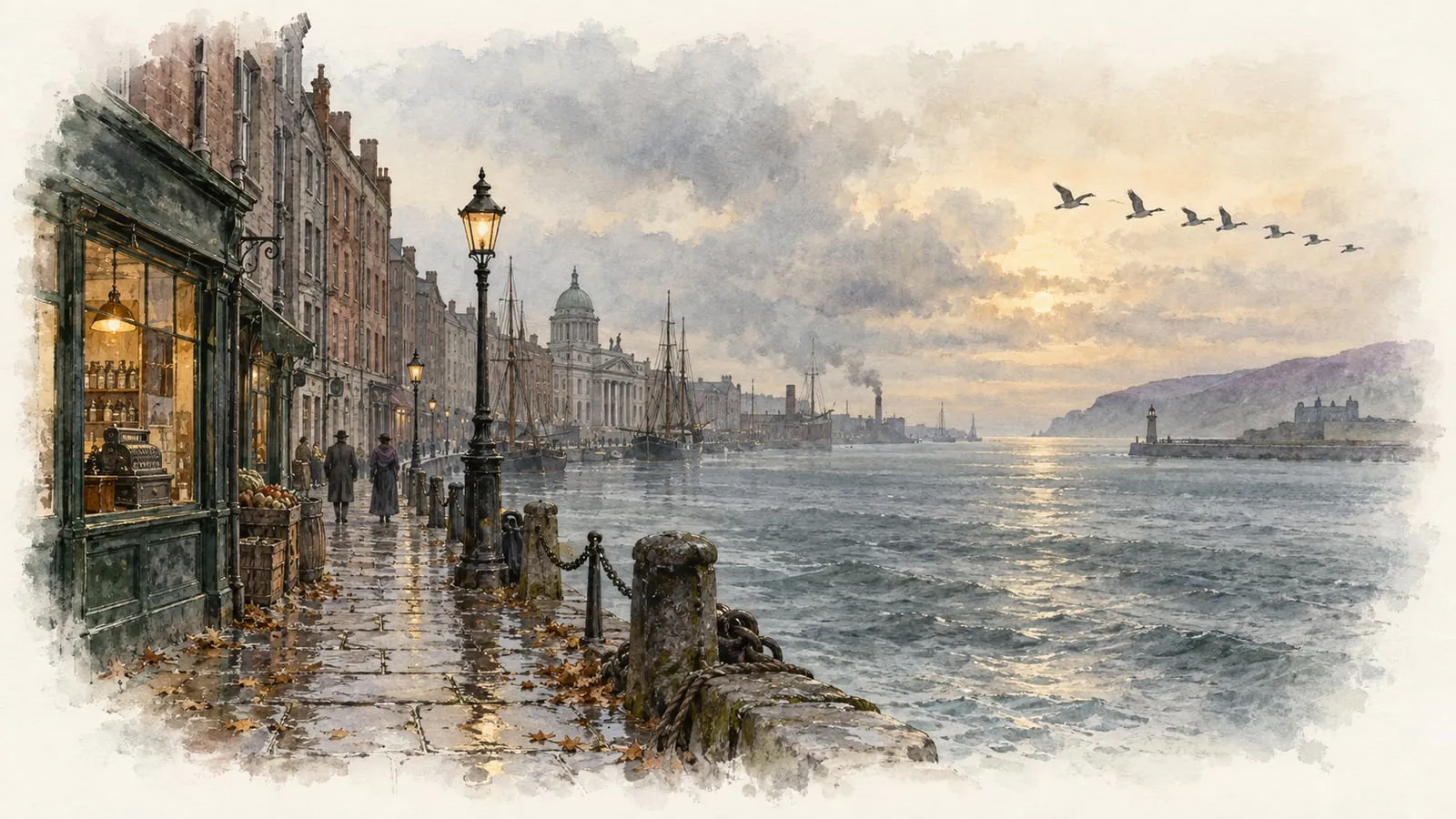
To a Wealthy Man who promised a Second Subscription to the Dublin Municipal Gallery if it were proved the People wanted Pictures
Earlier titled "To a Wealthy Man"
Listen
December 1912.
Text: Poetry, by W. B. Yeats (Standard Ebooks, 2024), from the collected editions of 1908 to 1928. Public domain.
In brief
SummaryYeats urges a rich patron to give like a Renaissance prince.
A wealthy man has given money towards a municipal gallery in Dublin, but will give more only if it is proved that ordinary people want pictures. Yeats answers with history. Duke Ercole of Ferrara did not ask the onion-sellers before staging Roman comedies; Guidobaldo of Urbino sent no runners to learn "the shepherds' will" before making his court a school of courtesy; Cosimo de' Medici, exiled from Florence, spent his time on a library that brought Greek learning to Italy. The patron's hesitation only shows what has been lost. Let the common people play their games, Yeats says, and give what "the exultant heart calls good", so that a later age may build on it: "the right twigs for an eagle's nest".
Lines to remember
But the right twigs for an eagle's nest!
Look up in the sun's eye and give
Delight in Art whose end is peace,
Line by line
Lines 1 to 8The condition
The patron "gave but will not give again" until the coins of "Paudeen" and "Biddy", ordinary Dubliners, add up to "some sort of evidence" that the "blind and ignorant town" wants what it would be a pride to give. The quotation marks hold the cautious phrase up for scorn.
Lines 9 to 13Duke Ercole of Ferrara
Ercole d'Este, Duke of Ferrara, sent his "mummers to the market place" without caring what "th' onion-sellers thought or did", so that his staging of the Roman playwright Plautus could set the pace "For the Italian comedies".
Lines 14 to 19Guidobaldo of Urbino
Guidobaldo, Duke of Urbino, made his court "That grammar school of courtesies" where "wit and beauty learned their trade" on "Urbino's windy hill". He sent no runners out to discover "the shepherds' will" first.
Lines 20 to 28Cosimo de' Medici
When Florence drove Cosimo de' Medici into exile, he ignored the "rancour" and gave his free hours to Michelozzo's plans for the San Marco Library. From it "turbulent Italy" would draw art, logic and law "By sucking at the dugs of Greece", nourished on ancient learning.
Lines 29 to 36An eagle's nest
The patron's "open hand" only shows how far things have fallen. Let "Paudeens play at pitch and toss"; the rich should look "in the sun's eye", like eagles, and give what "the exultant heart calls good": not what the crowd wants, but "the right twigs for an eagle's nest".
Themes
Patronage
The poem argues that a true patron leads rather than follows. Each Italian prince gave without asking permission, and each gift outlasted its moment. Yeats asks the wealthy man to "Look up in the sun's eye and give", trusting "the exultant heart", because great gifts create their public rather than waiting for one.
Art and the crowd
Yeats is scornful of "the blind and ignorant town" and of the pennies of "Paudeen" and "Biddy". His point is that popular taste should not decide what art a city gets. It is an openly aristocratic view: the many will "play at pitch and toss" while a few prepare "the right twigs for an eagle's nest".
The Renaissance
Ferrara, Urbino and Florence stand for an age when rulers made culture flourish, and Yeats holds that age up as a rebuke to Dublin. "Delight in Art whose end is peace" sums up what he believed patronage could do: turn a turbulent country towards beauty and learning.
Context
Hugh Lane, Lady Gregory's nephew, offered his collection of modern pictures to Dublin on condition that the city build a gallery fit to house it. The campaign to raise the money, and Dublin's refusal in 1913, provoked some of Yeats's angriest poems. The "wealthy man" is usually identified as Lord Ardilaun, of the Guinness family, who had given to the fund but made further gifts depend on proof of public demand.
The poem was collected in Responsibilities (Cuala Press, 1914), and was also printed under the shorter title "To a Wealthy Man". Its Italian princes reflect Yeats's love of the Renaissance court of Urbino, described in Castiglione's Book of the Courtier. The gallery that grew out of Lane's collection is now the Hugh Lane Gallery in Parnell Square.
Form
Thirty-six lines of iambic tetrameter, cross-rhymed in fours ("again" and "lain", "pence" and "evidence"), set out as a verse paragraph of 28 lines and a closing one of 8. The Italian examples run on in long, linked sentences, while the short final section turns sharply back to Dublin and ends on the image of the eagle's nest.