Two Songs from a Play
Listen
I
II
Text: The Tower (Macmillan, London, 1928). Public domain.
In brief
SummaryA pagan god dies, Christ is born, and history turns on its wheel.
Two songs about the turning of history. The first begins with a Greek myth: a "staring virgin" tears the still-beating heart from the dying god Dionysus and carries it away, while the Muses sing of the Great Year as if a god's death were only a play. Everything, the second stanza says, will happen again: another Troy, another Argo. Then a new virgin and her Star call out of the darkness, and the Roman Empire drops the reins. The second song brings in Christ, whose death and "Odour of blood" sweep away the calm reason of Greek philosophy and art. Birth, death and rebirth come round in cycles, and each new faith destroys the old order.
Lines to remember
As though God's death were but a play.
Another Troy must rise and set,
Odour of blood when Christ was slain
Line by line
Lines 1 to 8The god's heart
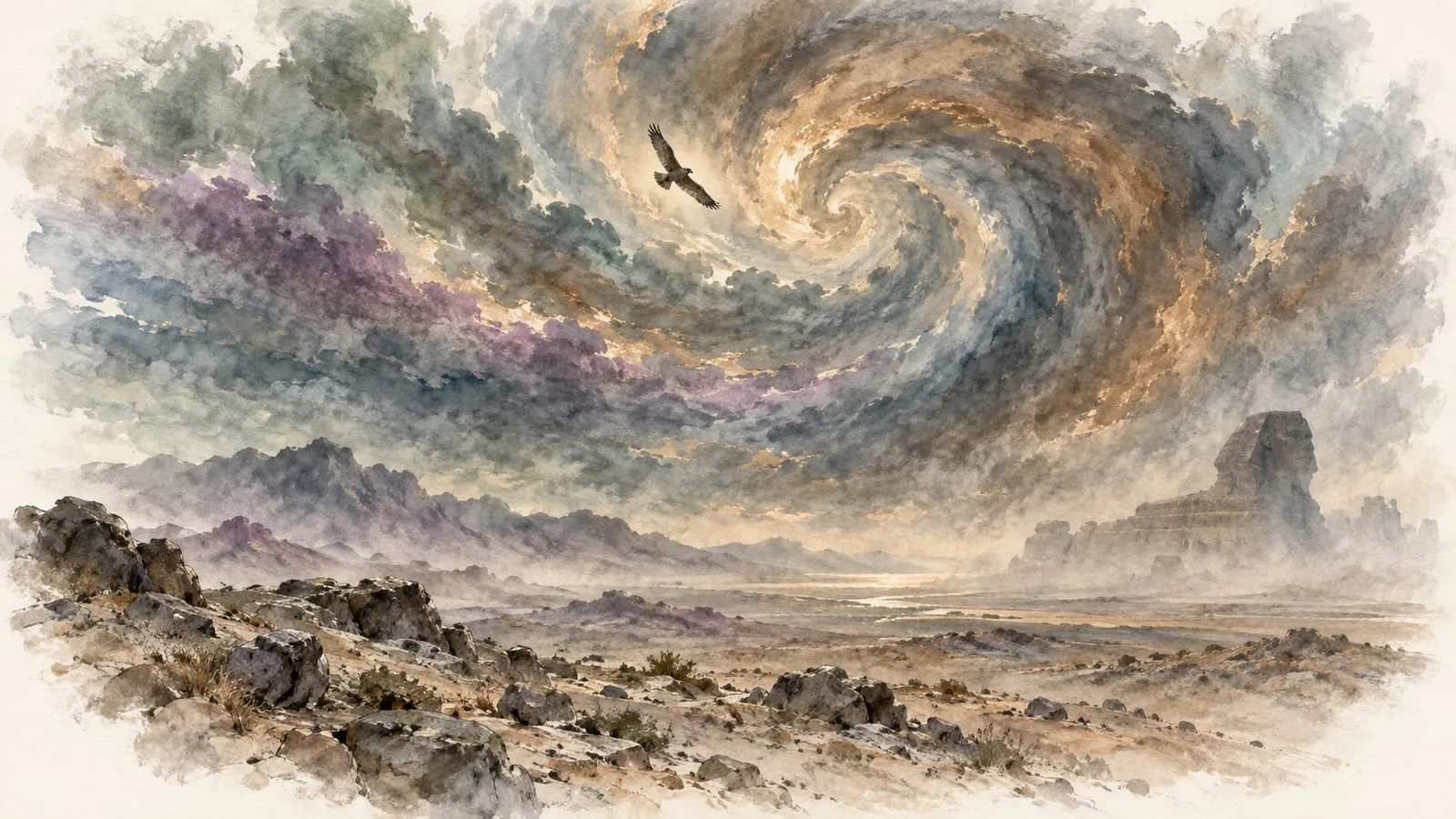
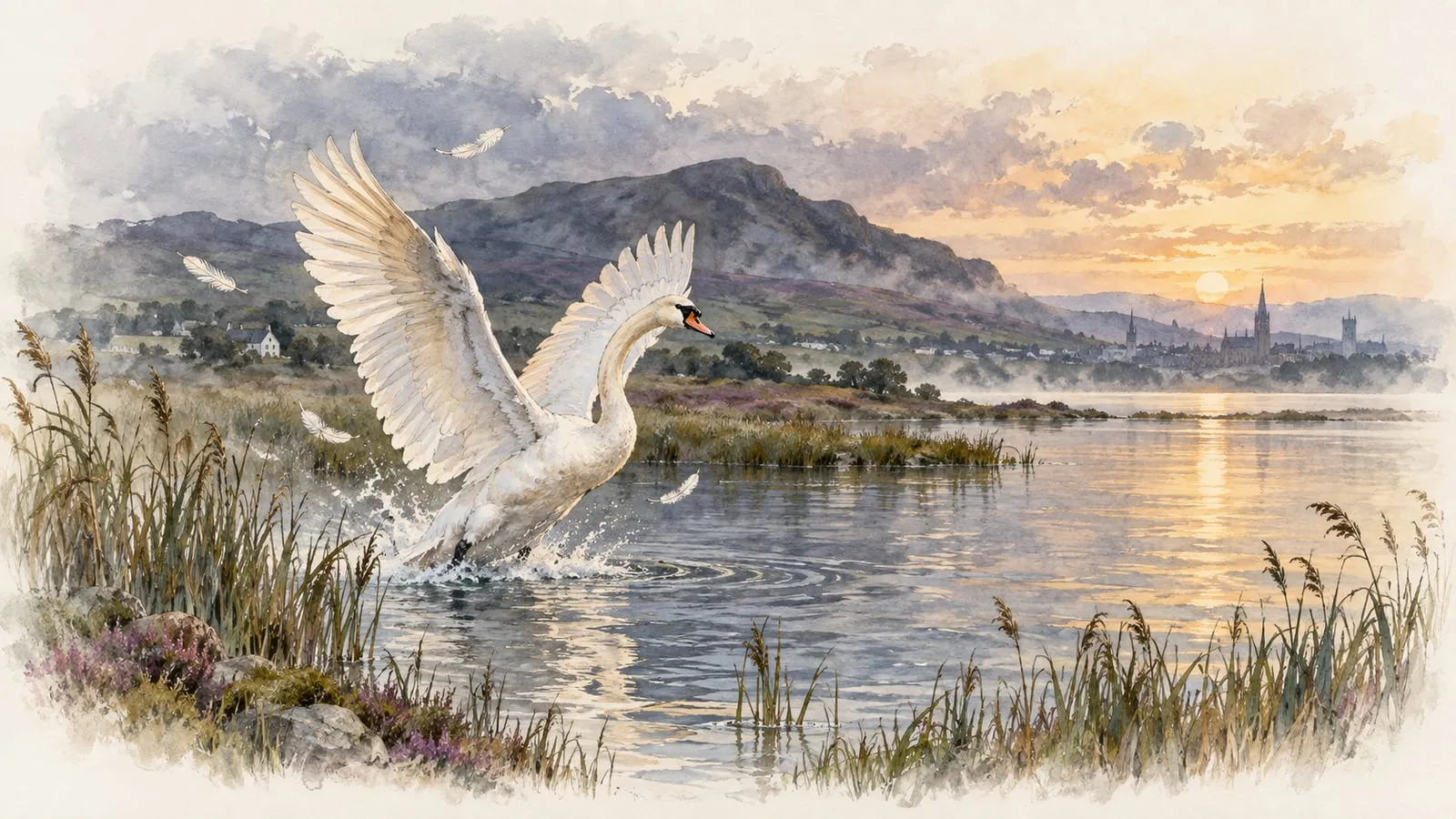
A "staring virgin", usually identified as Athena, snatches the heart of the murdered Dionysus and bears it away still beating, so that the god can be reborn. The Muses sing of "Magnus Annus", the Great Year, "As though God's death were but a play": what is terror for the god is ritual to the watchers.
Lines 9 to 16Another Troy
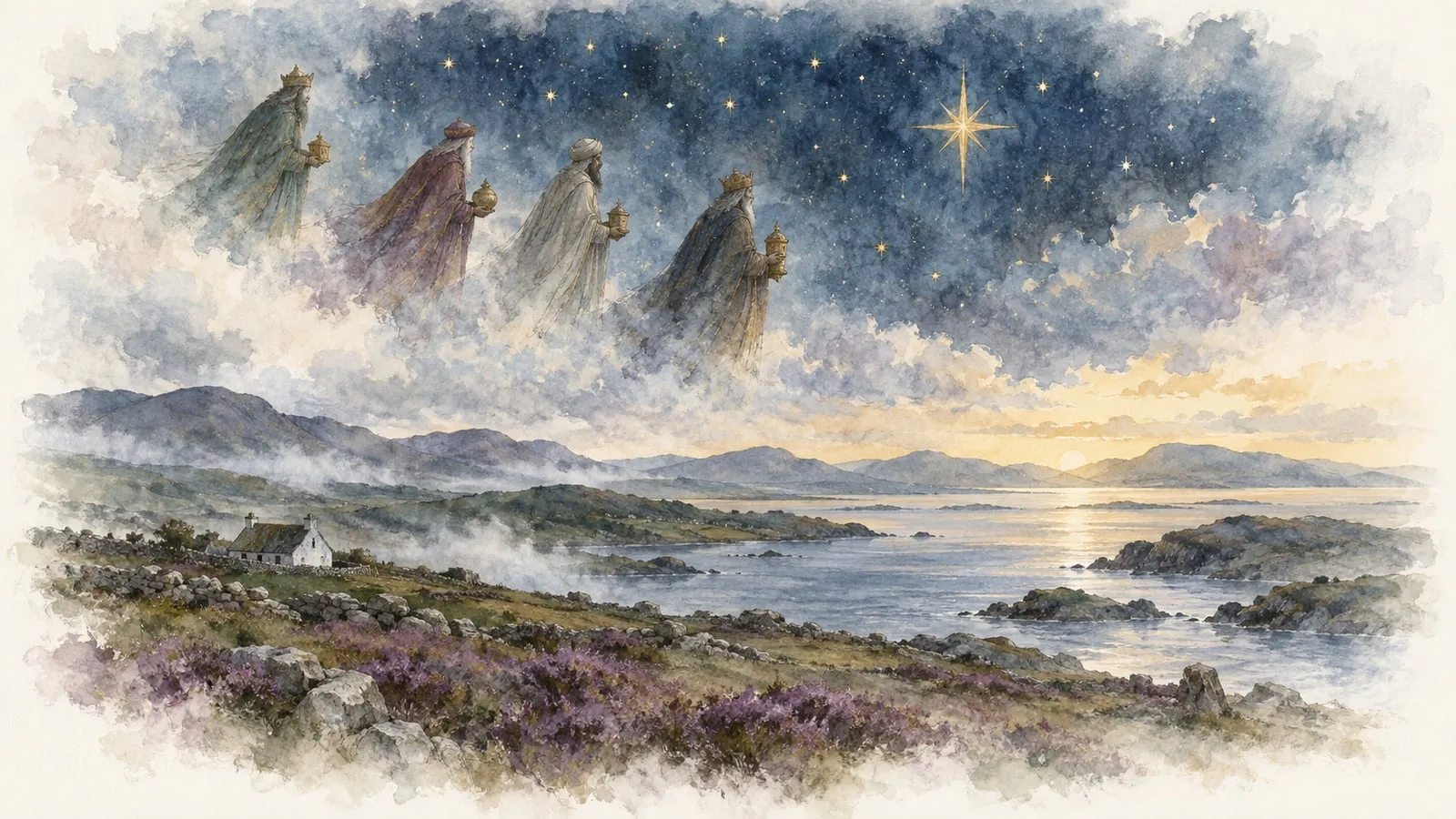
The repeated "Another" makes history a wheel: Troy will rise and fall again, and a new Argo will sail for a "flashier bauble" than the Golden Fleece. Then the pagan world gives way. The Roman Empire "stood appalled" when "that fierce virgin and her Star", often read as Mary and the star of Bethlehem, called "Out of the fabulous darkness".
Lines 17 to 24Christ and the Greeks
Christ walks out of "that room" into "Galilean turbulence", and with him comes a "formless darkness" from the East. The last lines set the new faith against the old world: the "Odour of blood" of the Crucifixion makes "Plato's tolerance" and "the Doric discipline" of Greek thought and building useless.
Themes
History as a cycle
The poem treats history as a wheel that keeps turning. "Magnus Annus" names a great cycle of time, and the drumming "Another Troy", "Another lineage", "Another Argo" insist that the great stories repeat. Each age is born out of the death of the one before, just as Dionysus dies and is carried towards rebirth in the opening lines.
Pagan and Christian
The pagan god torn apart and the Christian God "slain" mirror each other: both are sacrificed, both return. Yet Christianity arrives as violence, "Galilean turbulence" and "Odour of blood", and it ends the balanced world of "Plato's tolerance" and "Doric discipline". The poem does not take sides; it watches one order break another.
Violence and faith
Faith here is born in bloodshed and terror. A heart is torn out, an empire drops "the reins of peace and war", and a darkness that is "fabulous" and "formless" pours in. The strong verbs ("tear", "feed the crow", "slain") keep reminding us that new beliefs cost lives, and that the Muses can make even "God's death" into song.
Context
The songs are sung by the Chorus of musicians at the opening and close of Yeats's play The Resurrection, about the hours after the Crucifixion. They were collected in The Tower (Macmillan, 1928). The text printed here is the 1928 version: in later editions Yeats added a further stanza beginning "Everything that man esteems".
The "Another Troy" and "Another Argo" lines echo Virgil's Fourth Eclogue, which foretells the return of a golden age and a second Trojan War. The idea of history moving in great cycles of about two thousand years, each opened by a divine birth, is the one Yeats set out in A Vision, and it also shapes "The Second Coming" and "Leda and the Swan".
Form
Three eight-line stanzas, two in the first song and one in the second, in short four-beat lines. Each stanza rhymes abbacddc ("stand", "died", "side", "hand"), so it falls into two enclosed halves. The tight, chant-like rhythm suits songs meant for a chorus and makes huge events sound ritual and inevitable.
The Tower (1928, Gutenberg 72985) text lacks the final stanza 'Everything that man esteems', which was added later and is in Collected Poems 1933 (US status of the added stanza: first published after 1930, so still US-copyrighted). Not in Standard Ebooks Poetry.