The New Faces
Listen
Text: Poetry, by W. B. Yeats (Standard Ebooks, 2024), from the collected editions of 1908 to 1928. Public domain.
In brief
SummaryAn ageing poet tells an old friend their shared place stays theirs.
The speaker addresses a friend "that have grown old". If she were to die first, he says, he would never again walk under the catalpa and the lime trees of the garden where they worked together on something that "shall break the teeth of time". The second half turns defiant. Let the "new faces" play what tricks they like in the old rooms: night can outweigh day, their shadows will still rove the garden gravel, and the living will seem more shadowy than the dead.
Lines to remember
Where we wrought that shall break the teeth of time.
The living seem more shadowy than they.
Line by line
Lines 1 to 4If you die first
One long conditional sentence imagines the friend's death. Without her he would not tread the garden again. Their shared work is praised in a bold image: it "shall break the teeth of time", as if time were a beast that could not chew it.
Lines 5 to 8Our shadows remain
The mood hardens. Newcomers may "play what tricks they will" in "the old rooms", but the past has more weight: "night can outbalance day". The last line reverses the usual ghost story, making the living seem thinner than the dead.
Themes
Friendship and loss
The poem is a declaration of loyalty. The garden only means something because they shared it, so without her he would not "tread" there at all. He does not mourn yet; he imagines grief in advance, and answers it by making their bond stronger than death.
Memory and place
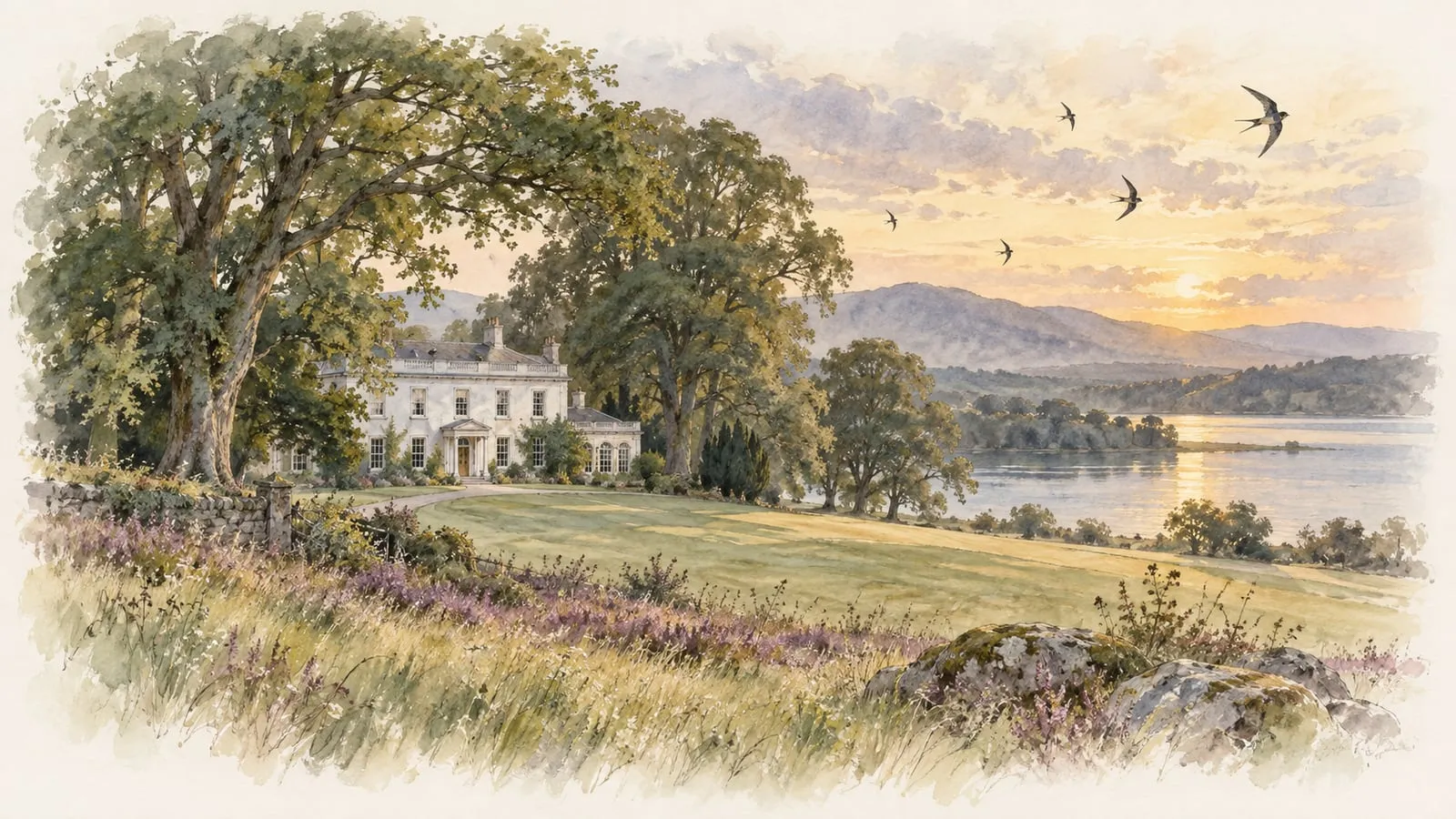
The garden, its "catalpa tree", "scented lime" and "garden gravel", holds the memory of their work. The poem claims that such places belong to those who gave them meaning, not to later owners. "Our shadows rove the garden gravel still" makes the past a living presence in the ground itself.
Context
The poem is usually read as addressed to Lady Gregory, who was thirteen years older than Yeats, and its garden as the garden at Coole Park, where she gave him a second home and where they collected folklore and wrote plays together. It was first printed in Seven Poems and a Fragment (Cuala Press, 1922) and collected in The Tower (Macmillan, 1928).
Lady Gregory died in 1932, so in fact Yeats outlived her. Coole was sold to the state in 1927 and the house was demolished in 1941, which gives the poem's "new faces" in "the old rooms" a sad edge. Yeats returned to Coole and its woods in later poems such as "Coole Park, 1929".
Form
Two quatrains of iambic pentameter rhymed ABABCDCD ("dead" and "tread", "lime" and "time"; "will" and "still", "day" and "they"). The first quatrain is one long hypothetical sentence; the second answers it with short, confident clauses, so the poem moves from fear to defiance.