The Mother of God
About the text
Yeats first published this poem in 1932. It is out of copyright in Ireland and the EU, but in the United States it stays in copyright until the start of 2028, and this site is served partly from American servers. So for now we give the notes without the full text; it will appear here in 2028.
It begins: The three-fold terror of love; a fallen flare
In brief
SummaryMary remembers the terror of the Annunciation and her child.
Mary herself speaks. She recalls the moment of the Annunciation not as serene grace but as terror: a falling light that entered through her ear, wings beating about the room, and the knowledge that she was carrying Heaven in her womb. In the second stanza she asks whether she had not been content with the ordinary life every woman knows, the fireside, the garden, the washing at the stream and the gossip that goes with it. The last stanza turns to the child she nurses and asks what this flesh and this frightening love can be.
Lines to remember
The Heavens in my womb.
Line by line
Lines 1 to 5The Annunciation
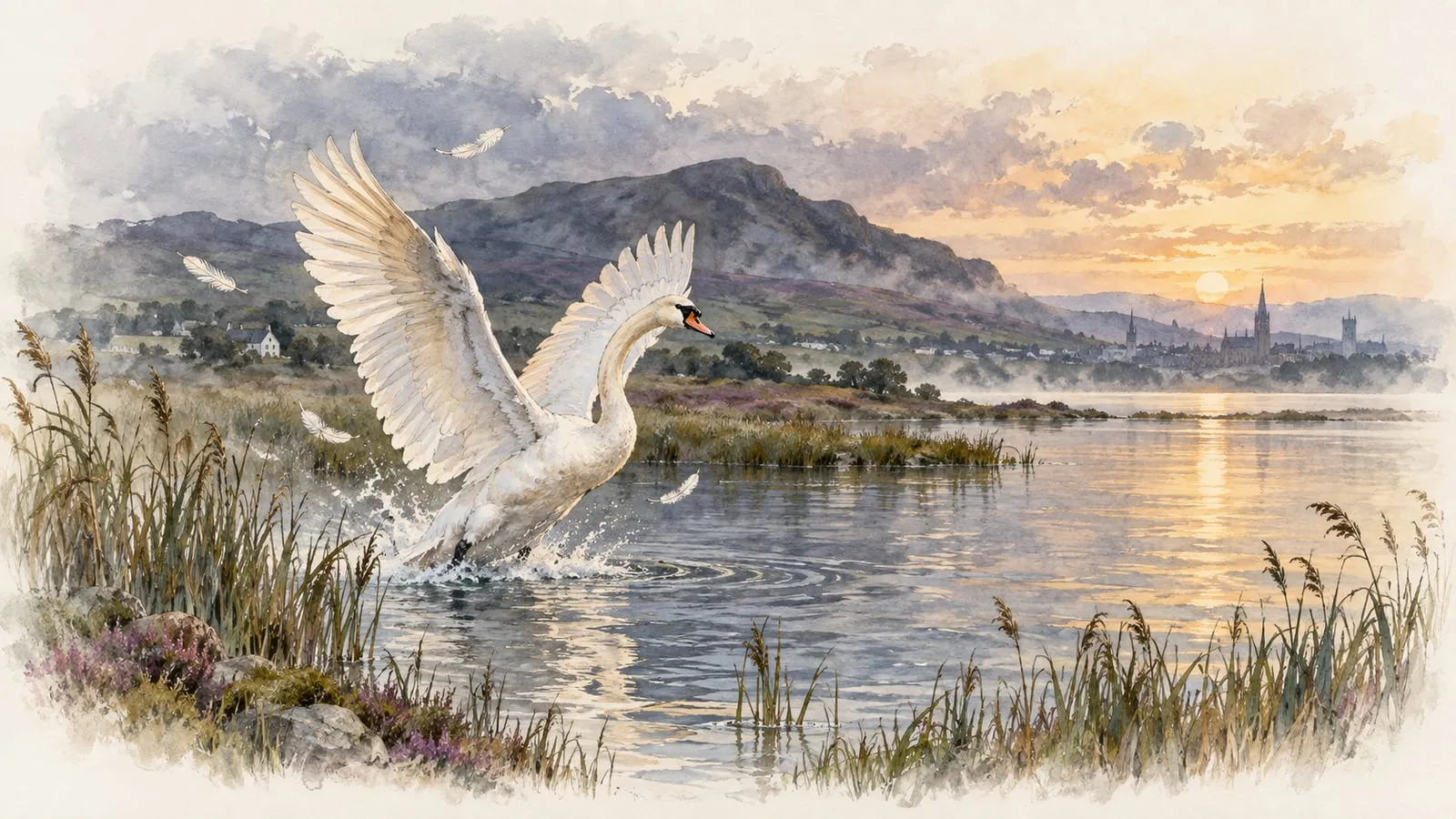
The opening is a rush of fragments, as if Mary still cannot put the event in order. A light falls into "the hollow of an ear" (an old tradition held that Christ was conceived through Mary's ear, by the word of God), and wings beat about the room. The greatest terror is simply that she bore Heaven itself.
Lines 6 to 10A common woman
She asks whether she had not already been content with what every ordinary woman knows: the chimney corner, a walk in the garden, and the stone washing-place where women trample clothes clean and exchange news. The homely details make her a village woman rather than a figure in a stained-glass window.
Lines 11 to 15This fallen star
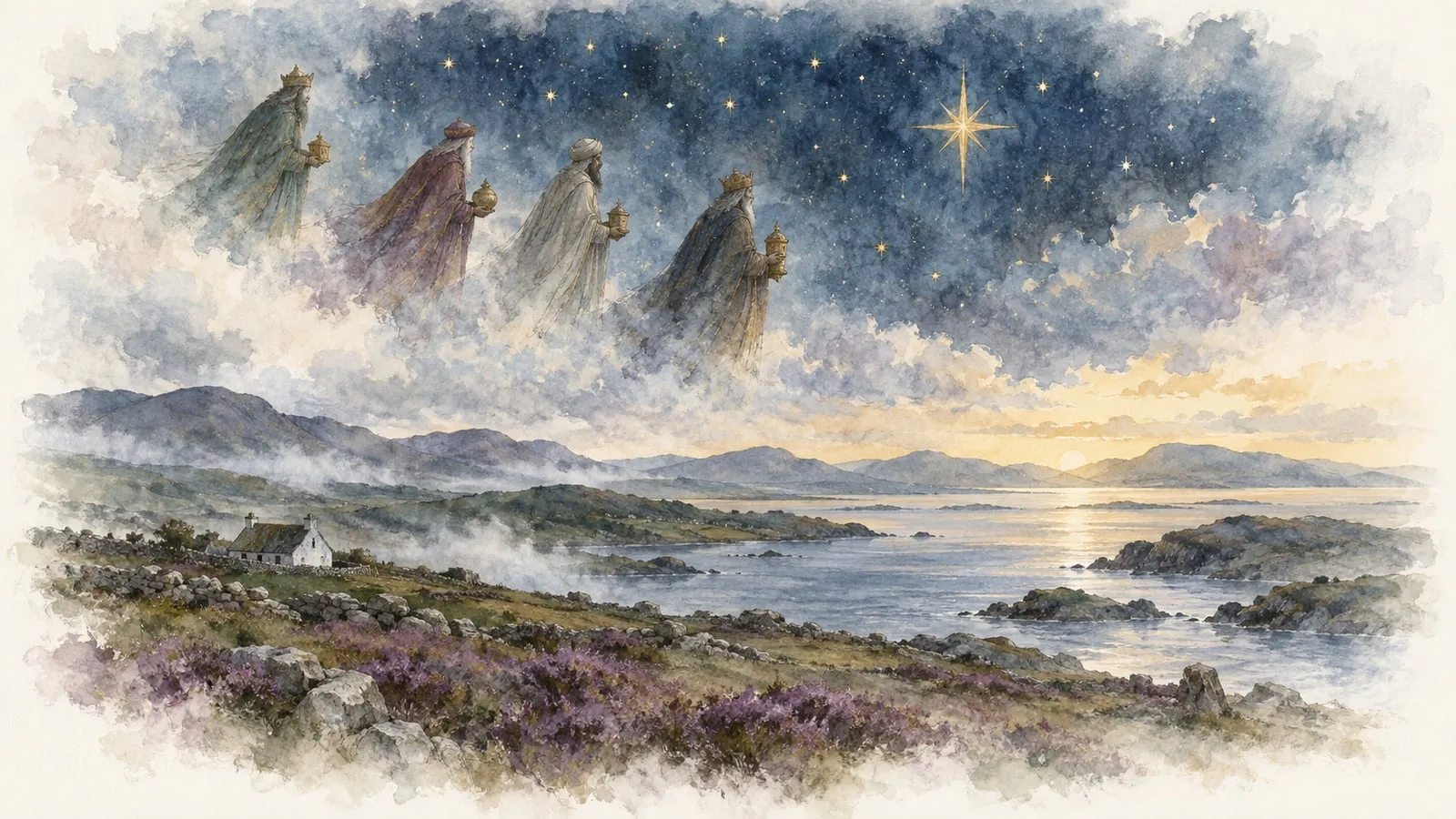
Now she looks at the baby. He is flesh she paid for with labour pains, and also "This fallen star" kept alive by her milk. The love she feels is not tender comfort but a shock that stops her heart, chills her bones and makes her hair stand on end.
Themes
Terror and the sacred
The first line names "terror", and the fourth line doubles it. For Yeats, the meeting of the divine and the human is overwhelming and even violent, as in "Leda and the Swan", where another girl is overtaken by a god in the form of a bird. Here the beating wings and the fallen flare make the Annunciation frightening rather than gentle.
Ordinary life
Against the cosmic event the poem sets the chimney corner, the garden walk and the women treading clothes together while they talk. Mary seems almost to mourn the simple life she has lost. The contrast gives the poem its human warmth: she was a woman who wanted what other women had.
Motherhood
The last stanza is about any mother's bewilderment at her child, raised to the highest degree. The baby is both her own flesh, bought with pain and fed with her milk, and a "fallen star". The physical symptoms of fear, the stopped heart and the rising hair, show love as something that seizes the body.
Context
The poem was collected in The Winding Stair and Other Poems (Macmillan, 1933). Yeats had long been drawn to moments when a god breaks into human life, most famously in "Leda and the Swan" and in the songs from his play The Resurrection. Here he gives the Christian version of that moment to Mary herself, in her own frightened, earthy voice.
Form
Three five-line stanzas rhymed AABAB, with some near-rhymes ("pains" and "bones"). In each stanza the first and fourth lines are long, the others short, so the voice seems to surge and then catch its breath. The poem ends on a question it does not answer.