The Happy Townland
Earlier titled "The Rider from the North"
Listen
From the play of The Country of the Young.
Text: In the Seven Woods (Macmillan, New York, 1903). Public domain.
In brief
SummaryA rider heads for a faery paradise that makes the ordinary world worthless.
The poem describes a townland of the otherworld, a place of endless plenty that would break a strong farmer's heart to see. Trees bear fruit and blossom all year, rivers run with beer, queens dance, and an old man plays the bagpipes in a wood of gold and silver. Warriors fight there, but the dead wake again. Even the archangels Michael and Gabriel join the feast, Gabriel rising from the water with a fish's tail to talk and drink until he falls asleep. Through it all runs a strange refrain: a little red fox asks what is "the world's bane", the moon plucks at the rider's rein to hold him back, and the fox answers that the townland he is riding to is itself the world's bane. Paradise, once glimpsed, spoils everything else.
Lines to remember
There's many a strong farmer
O what is the world's bane?
That is the world's bane.
Line by line
Lines 1 to 8A land of plenty
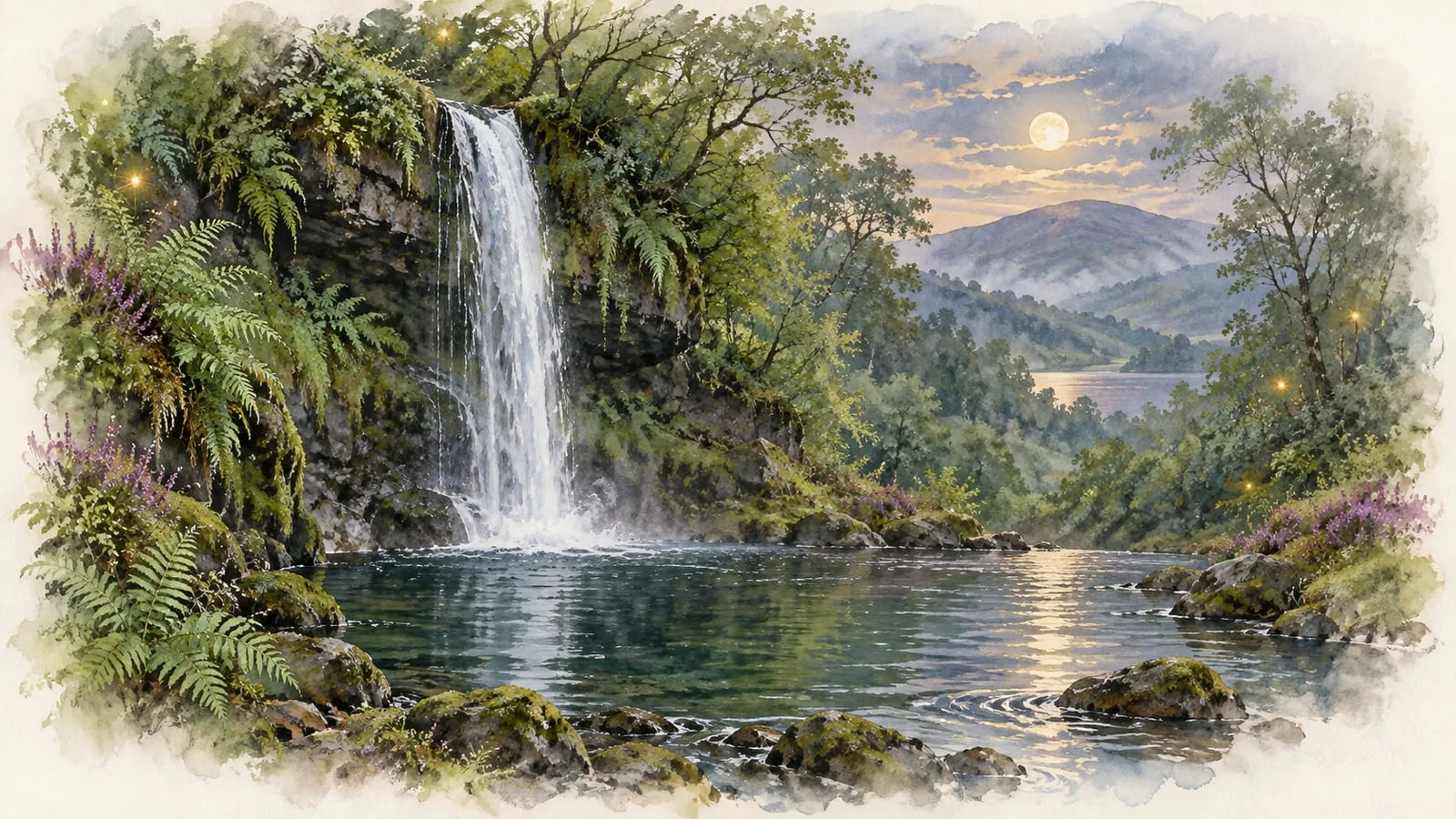
Many a "strong farmer" would be heartbroken to see the townland the riders are heading for. Boughs have "fruit and blossom" at the same time, all year, and rivers overflow "With red beer and brown beer". It is a peasant's dream of abundance, told in simple ballad lines.
Lines 9 to 12Music and dancing
An old piper plays "In a golden and silver wood", and queens with eyes "blue like the ice" dance in a crowd. The cold, bright image of their eyes gives the paradise a slightly unearthly, dangerous edge.
Lines 13 to 20The fox's riddle
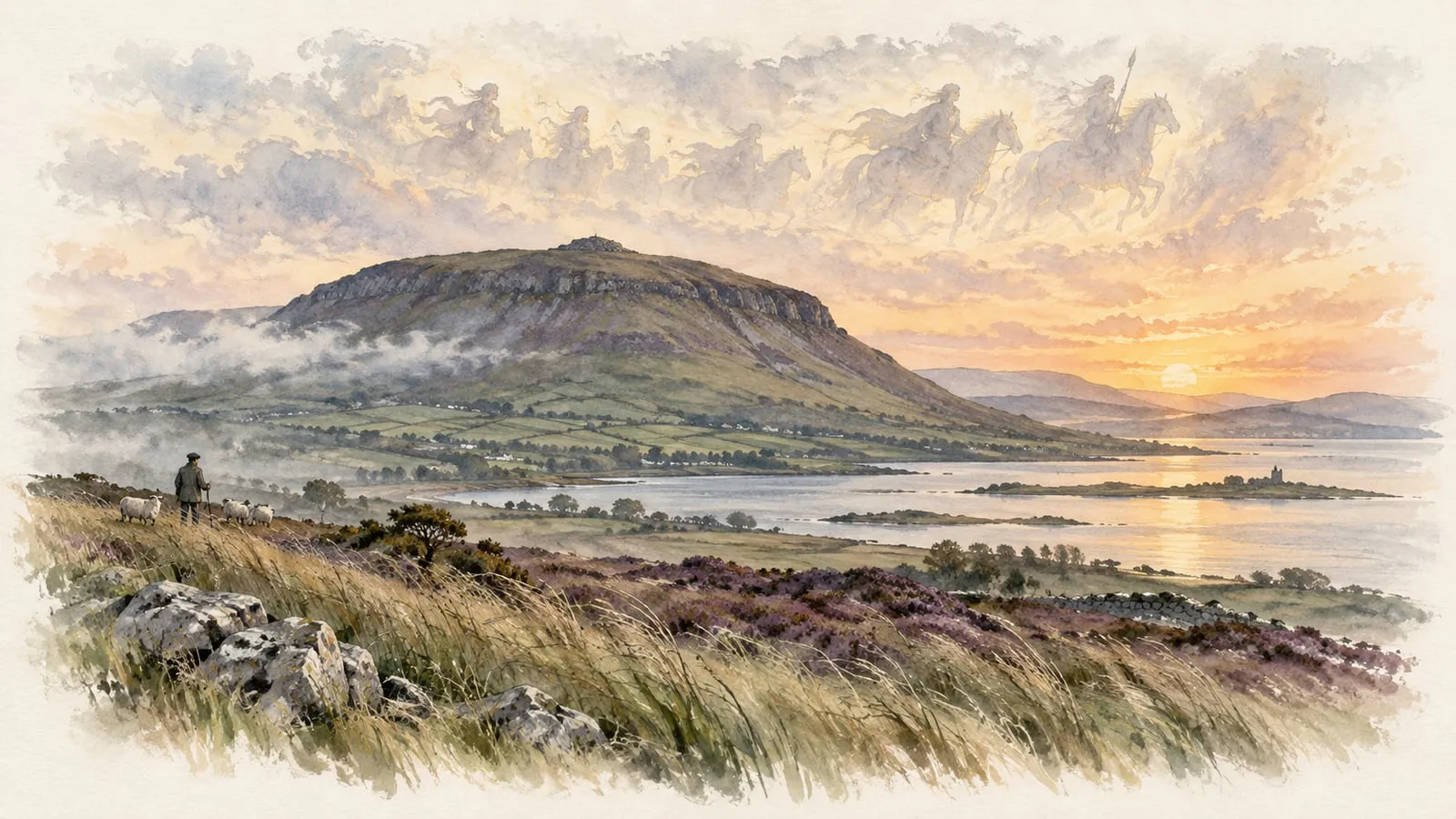
The refrain begins. A little fox asks, "O what is the world's bane?" The sun laughs and the moon plucks at the rider's rein, as if to stop him. The fox tells it not to: he is riding to the townland "That is the world's bane".
Lines 21 to 28Battles without death
When the townland's people grow so high-spirited that they fight, they take "heavy swords" down from the golden and silver boughs. But those killed in battle "Awaken to life again". The speaker adds that it is lucky this is not known among ordinary men.
Lines 29 to 32The farmers' loss
The reason follows: if strong farmers knew, they would "let the spade lie" and stop working, their hearts "like a cup" that someone "had drunk dry". Knowing of paradise would empty ordinary life of its meaning.
Lines 33 to 40The refrain again
The fox, the laughing sun and the moon at the rein return. Coming after the farmers' emptied hearts, the fox's answer now reads more clearly: the townland is the world's bane because it makes the everyday world look poor.
Lines 41 to 52Angels at the feast
Christian and pagan mix. The archangel Michael takes his trumpet from a bough to call everyone to supper, and Gabriel rises "from the water" with "a fish tail", tells of wonders on "wet roads where men walk", then drinks from a silver horn till he falls asleep "Upon the starry brink".
Lines 53 to 60The last refrain
The refrain closes the poem a third time, unchanged. The rider is still on his way, the moon still pulling at his rein, and the poem ends not with arrival but with the fox's verdict on the place he is riding to.
Themes
The otherworld
The townland is Yeats's version of the Irish otherworld, a place outside time where trees fruit and blossom together and the dead wake again. It is described in homely terms, beer, bagpipes and supper, which makes it feel like a country festival as much as a heaven. Angels with trumpets and fish tails sit easily beside faery queens.
Paradise as danger
The fox's refrain names the townland "the world's bane": the thing that ruins the world. Once a farmer had seen it, he would "let the spade lie" and his heart would be "drunk dry". The moon plucks at the rider's rein as if to hold him back, but he rides on towards it.
Folk song
The poem sounds like a ballad sung at a fireside. Its short lines, its talking animals and its repeated refrain come from folk tradition, and its humour (Gabriel falling asleep after too much drink) keeps it light. The simplicity makes the strangeness of the vision easier to accept.
Context
The poem was published in In the Seven Woods (Dun Emer Press, 1903) with the title "The Rider from the North", and later took its present name. It is the last of that book's lyrics, and it draws on the country beliefs about the faery world that Yeats and Lady Gregory were gathering from people in the west of Ireland in these years.
Form
Three twenty-line stanzas in short, three-beat ballad lines, with the second and fourth line of each group rhyming ("two" and "to", "year" and "beer"). The last eight lines of every stanza are the same refrain about the fox, the sun and the moon, so the poem circles back three times to its riddle, like a song with a chorus.
Titled 'The Rider from the North' in In the Seven Woods (1903). Not in Standard Ebooks Poetry.